Impact of self-administered pulse oximetry among non-hospitalized patients at risk of severe COVID-19 in Honduras: A pragmatic, cluster-randomized trial with temporal clustering
Kathryn W. Roberts, Berta Alvarez, Michael de St. Aubin, Omar Diaz, Salomé Garnier, C. Daniel Schnorr, Saul Cruz, Lorenzo Pavon, Angela Ochoa, Rachel See, Shiony Medice, Homer Mejía Santos, Jonatán Ochoa, Sogeiry Solis, Devan Dumas, Margaret Baldwin, Alcides Martinez, Avi Hakim

TL;DR
A study in Honduras found that using self-administered pulse oximetry for non-hospitalized high-risk COVID-19 patients increased referrals for care but did not reduce hospitalizations.
Contribution
This is the first pragmatic trial in a lower-income country assessing the impact of self-administered pulse oximetry on severe COVID-19 outcomes.
Findings
Self-administered pulse oximetry increased referrals for clinical evaluation among high-risk patients.
There was no significant difference in hospitalization rates between the groups.
The study found low incidence of severe outcomes, making it hard to assess the intervention's impact on mortality or ventilation.
Abstract
The World Health Organization recommends remote monitoring and self-administered pulse oximetry to identify silent hypoxia and the need for medical intervention in non-hospitalized high-risk COVID-19 patients. These interventions have been evaluated previously, but evidence is needed to determine the impact on morbidity and mortality, particularly in lower- and middle-income countries. A prospective, pragmatic, open-label trial was conducted in Tegucigalpa and Comayagüela, Honduras to evaluate the impact of self-administered pulse oximetry to reduce morbidity and mortality among non-hospitalized patients at high risk of adverse COVID-19 outcomes enrolled in a remote monitoring program. Participants were cluster-randomized, with temporal clustering by day, to remote monitoring plus self-administered pulse oximetry versus remote monitoring alone. Participants received daily calls to…
Genes, proteins, chemicals, diseases, species, mutations and cell lines named across the full text — each resolved to its canonical identifier and authoritative record.
Click any figure to enlarge with its caption.
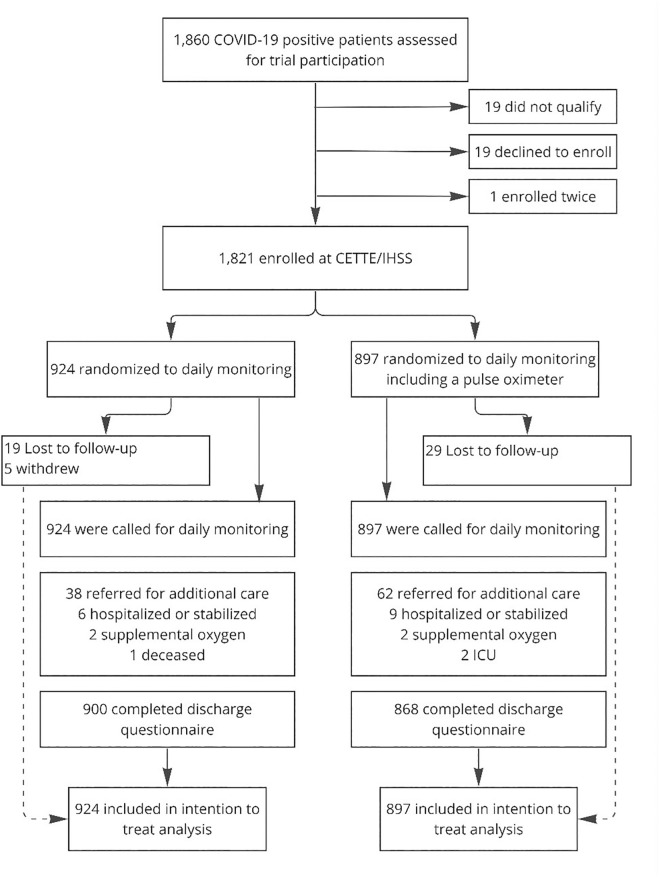 Figure 1
 Figure 2
 Figure 3
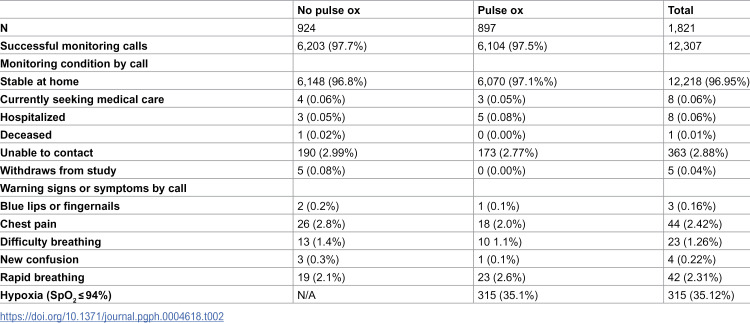 Figure 4
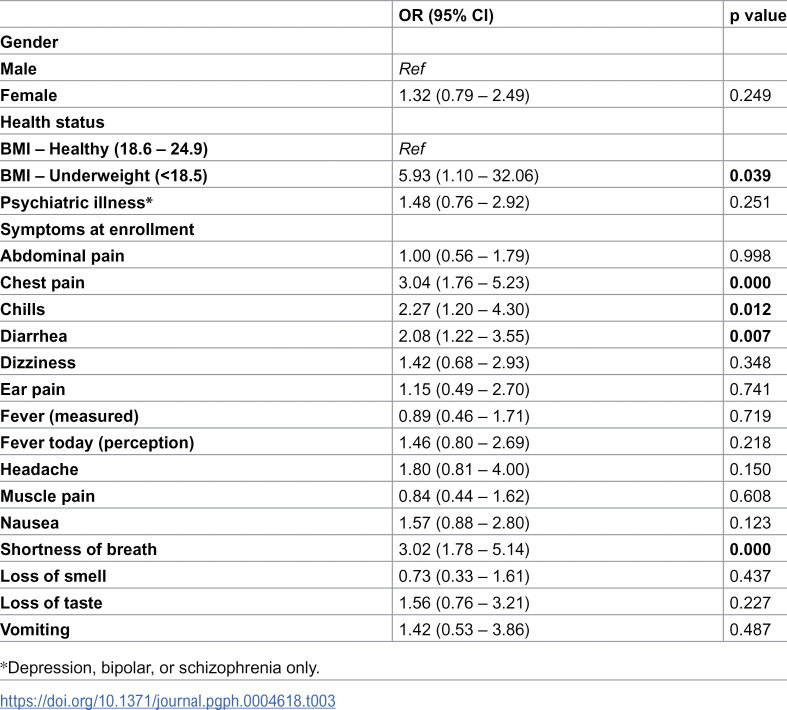 Figure 5
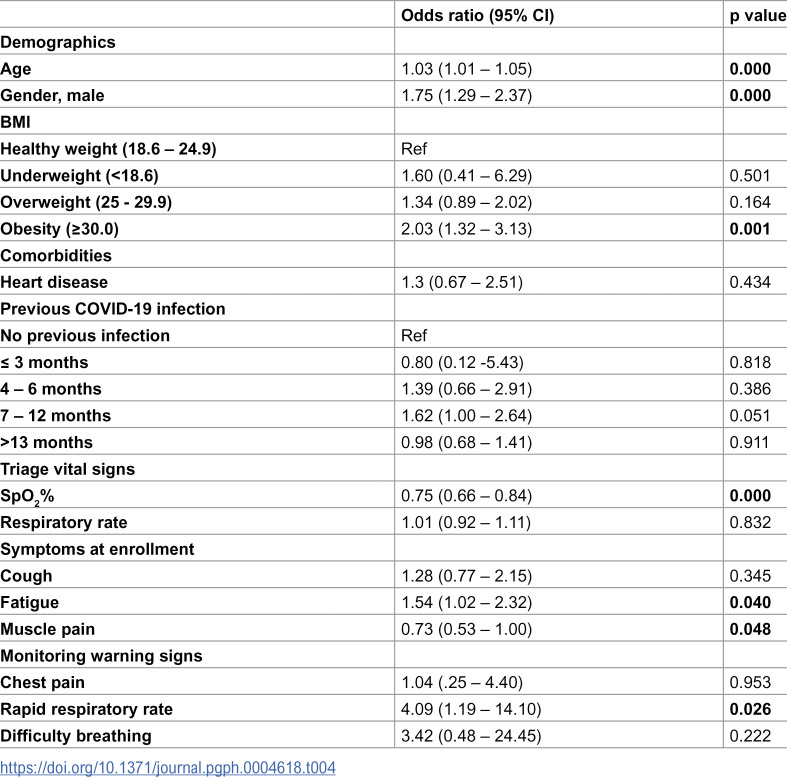 Figure 6
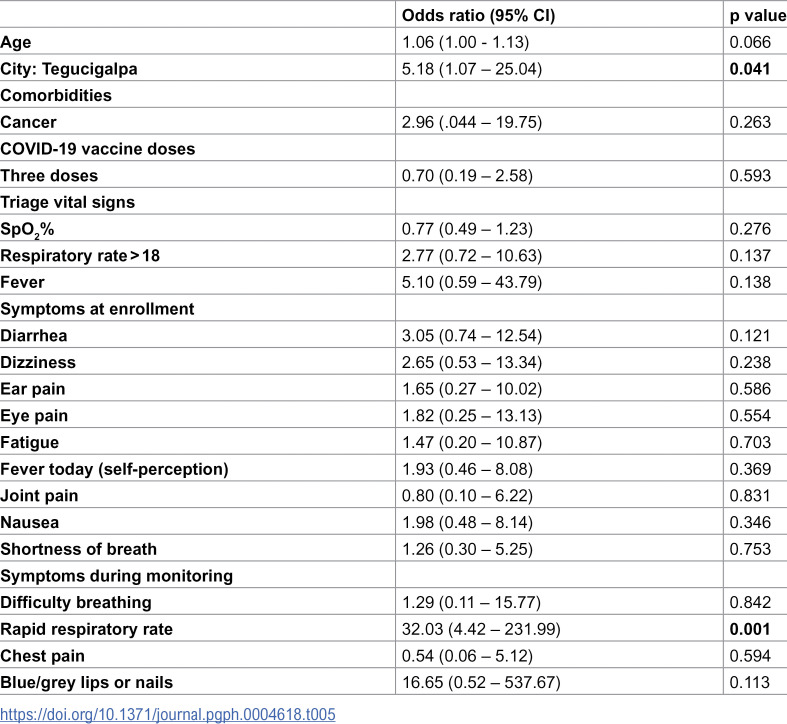 Figure 7
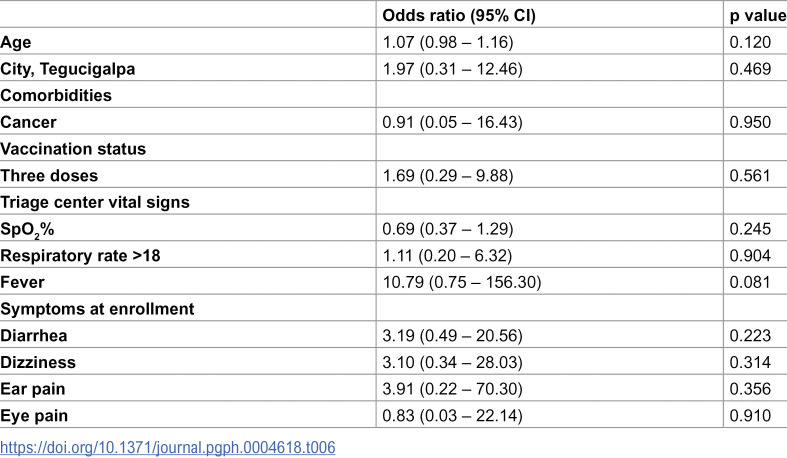 Figure 8
Peer Reviews
No public reviews on file for this paper yet. If you reviewed it on a platform where reviews are public (OpenReview, ICLR, NeurIPS, ICML), you can paste yours below so the community can read it here.
Videos
No videos yet. Explain this paper in a talk, walkthrough, or lecture? Add one.
Taxonomy
TopicsNon-Invasive Vital Sign Monitoring · Respiratory Support and Mechanisms · Thermal Regulation in Medicine