Trends in non-pharmacological treatment for insomnia: A nationwide study
Mingee Choi, Junbok Lee, Jeahyung Lee, Suonaa Lee, Eun Lee, Jaeyong Shin

TL;DR
This study shows that non-drug treatments for insomnia are rarely used in Korea, despite being recommended, but their use has slightly increased recently.
Contribution
The study provides real-world data on non-pharmacological insomnia treatment usage in Korea using nationwide health insurance data.
Findings
Only 0.01% of patients received non-pharmacological treatment at first diagnosis.
Non-pharmacological treatment use increased slightly after 2018 due to insurance coverage changes.
Most patients (97.5%) did not receive non-pharmacological treatment during the study period.
Abstract
As the prevalence of insomnia disorder in Korea is gradually increasing, understanding real-world treatment patterns is essential for designing appropriate clinical guidelines. Although non-pharmacological treatments are recommended as first-line interventions, their actual use in clinical settings remains insufficiently studied. This study examined the current status of non-pharmacological treatments for insomnia implemented by Korean doctors. Data from the National Health Insurance Service (NHIS) sample cohort, comprising 518,119 patients diagnosed with insomnia disorder (ICD-10 code: G47) between 2002 and 2019, were analyzed. Treatment types at the time of first diagnosis and the timing of non-pharmacological treatment initiation were assessed. Only 0.01% of patients received non-pharmacological treatment at their first diagnosis, and 97.5% did not receive such treatment during the…
Genes, proteins, chemicals, diseases, species, mutations and cell lines named across the full text — each resolved to its canonical identifier and authoritative record.
Click any figure to enlarge with its caption.
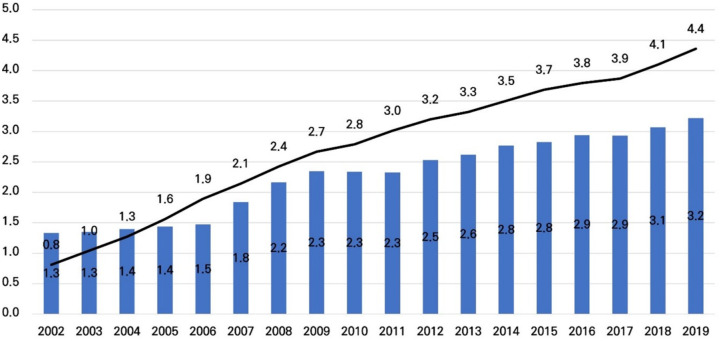 Figure 1
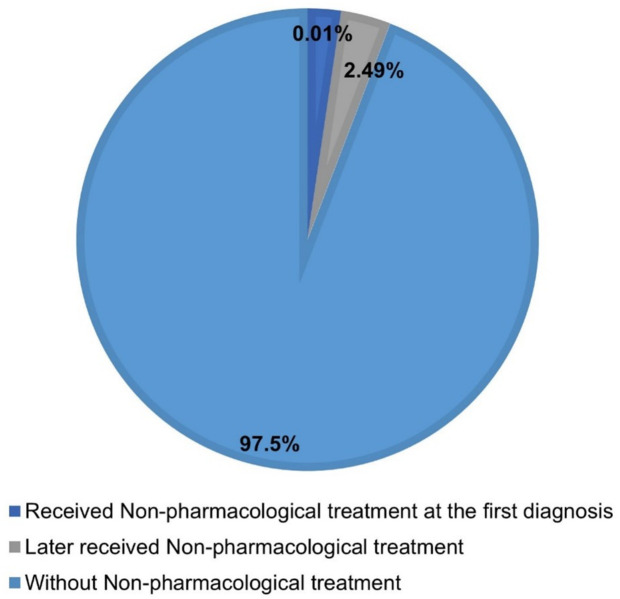 Figure 2
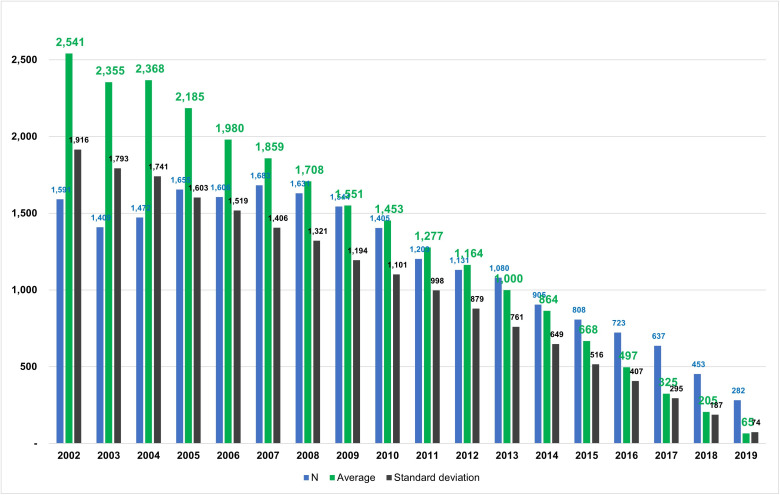 Figure 3
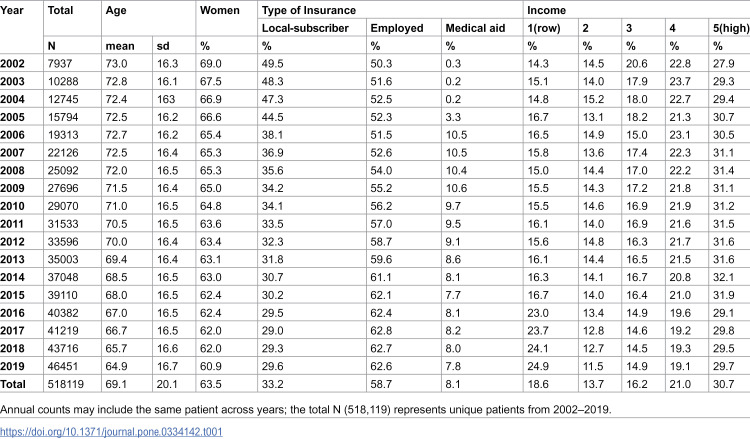 Figure 4
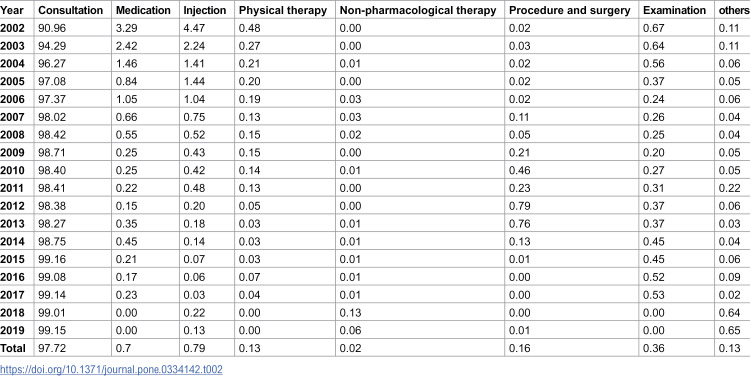 Figure 5
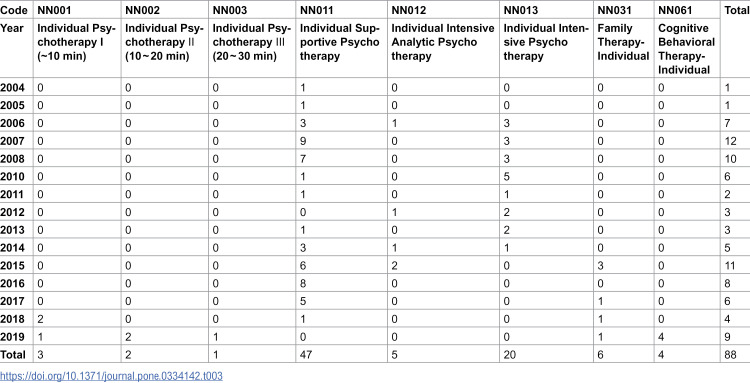 Figure 6
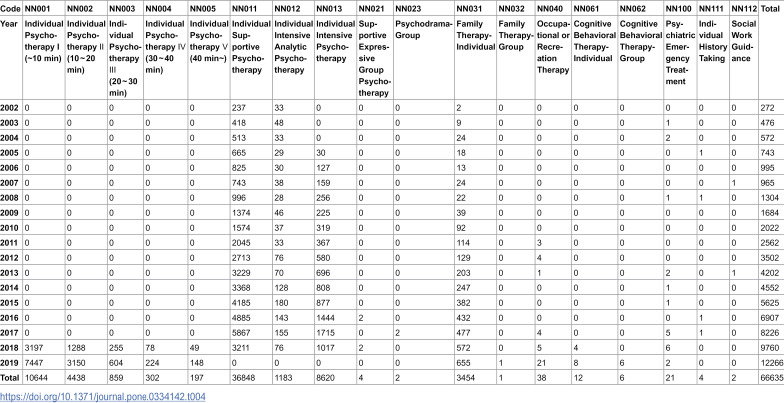 Figure 7
Peer Reviews
No public reviews on file for this paper yet. If you reviewed it on a platform where reviews are public (OpenReview, ICLR, NeurIPS, ICML), you can paste yours below so the community can read it here.
Videos
No videos yet. Explain this paper in a talk, walkthrough, or lecture? Add one.
Taxonomy
TopicsSleep and related disorders · Sleep and Wakefulness Research · Psychiatric care and mental health services