Orbital Compartment Syndrome as a Complication of Blepharoplasty: A Case Report
Lev Libet, Jairo Garcia, Lawrence Liu

TL;DR
A patient experienced vision loss after an eyelid surgery, and quick treatment restored their vision.
Contribution
This case report highlights blepharoplasty as a potential cause of orbital compartment syndrome.
Findings
A 67-year-old male developed vision loss shortly after blepharoplasty.
Lateral canthotomy restored visual acuity despite normal intraocular pressure.
Orbital compartment syndrome can occur post-blepharoplasty and requires urgent intervention.
Abstract
Acute vision loss constitutes a true medical emergency, as a delay in diagnosis and treatment may lead to permanent visual impairment. Orbital compartment syndrome is most commonly associated with blunt trauma causing a retro-orbital hematoma and resulting compromise of the optic nerve. Orbital compartment syndrome, however, can occur in other scenarios including status post blepharoplasty. This is a case of a 67-year-old male who presented less than 24 hours after a bilateral upper blepharoplasty due to decreased visual acuity of his right eye. A lateral canthotomy was performed despite the absence of elevated intraocular pressures on tonometry. He regained visual acuity in his right eye shortly after the cantholysis. It is vital to consider the range of entities that can cause orbital compartment syndrome, including blepharoplasty. Recognition and emergent intervention improved the…
Genes, proteins, chemicals, diseases, species, mutations and cell lines named across the full text — each resolved to its canonical identifier and authoritative record.
Click any figure to enlarge with its caption.
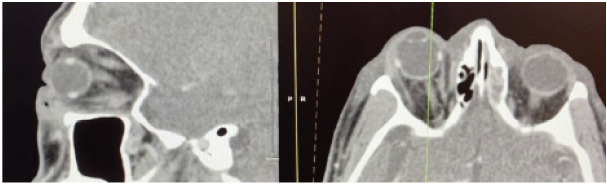 Figure 1
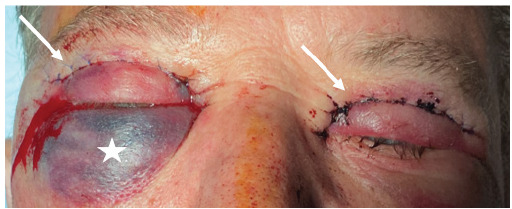 Figure 2
Peer Reviews
No public reviews on file for this paper yet. If you reviewed it on a platform where reviews are public (OpenReview, ICLR, NeurIPS, ICML), you can paste yours below so the community can read it here.
Videos
No videos yet. Explain this paper in a talk, walkthrough, or lecture? Add one.
Taxonomy
TopicsFacial Rejuvenation and Surgery Techniques · Dermatologic Treatments and Research · Botulinum Toxin and Related Neurological Disorders