Sonographic Visualization of a Tortuous Optic Nerve: Case Report of a Novel Finding on Point-of-Care Ultrasound
Lucas Delicio, Adam Pearl, Vu Huy Tran

TL;DR
A case report shows that ultrasound can detect a twisted optic nerve, potentially aiding in early diagnosis of a brain pressure disorder.
Contribution
This is the first reported case of optic nerve tortuosity visualized using point-of-care ultrasound.
Findings
Point-of-care ultrasound detected optic nerve tortuosity in a patient with idiopathic intracranial hypertension.
This finding may serve as an early diagnostic marker for the condition.
Ultrasound could offer a faster and more accessible diagnostic tool compared to MRI.
Abstract
Idiopathic intracranial hypertension is a disorder typically affecting females with common complaints of headaches and visual disturbances. Diagnostic criteria have been described with clinical findings, high opening pressures in lumbar punctures, and magnetic resonance imaging (MRI) findings. A 36-year-old female presented with double vision and headaches. Point-of-care ultrasound demonstrated tortuosity of the optic nerve, a finding previously described in MRI studies, which may serve as an additional marker for ideopathic intracranial hypertension. This case highlights the potential of point-of-care ultrasound to detect tortuous optic nerves, which may help in the early diagnosis of ideopathic intracranial hypertension, facilitating more timely and effective management.
Genes, proteins, chemicals, diseases, species, mutations and cell lines named across the full text — each resolved to its canonical identifier and authoritative record.
Click any figure to enlarge with its caption.
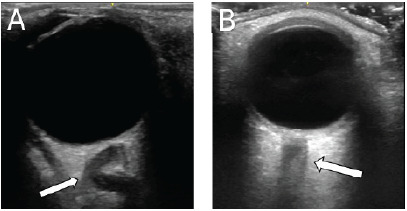 Figure 1
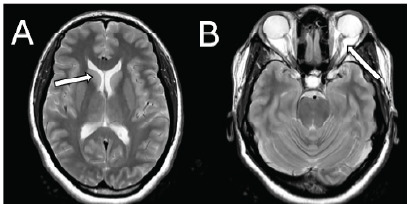 Figure 2
Peer Reviews
No public reviews on file for this paper yet. If you reviewed it on a platform where reviews are public (OpenReview, ICLR, NeurIPS, ICML), you can paste yours below so the community can read it here.
Videos
No videos yet. Explain this paper in a talk, walkthrough, or lecture? Add one.
Taxonomy
TopicsTraumatic Ocular and Foreign Body Injuries · Meningioma and schwannoma management