An Unreported Variant of the Rhomboideus Muscle With an Additional Cervical Origin in a Cross‐Breed Dog Cadaver
Younes Kamali

TL;DR
A new muscle variant in a dog cadaver shows an unusual cervical origin and nerve supply, offering insights into carnivore anatomy and evolution.
Contribution
The discovery of an unreported rhomboideus muscle variant with a cervical origin in a dog cadaver.
Findings
A ribbon-shaped muscle slip originated from the second cervical vertebra's transverse process in a dog cadaver.
The slip was innervated by cervical spinal nerve ventral branches, distinct from neighboring muscles.
This anatomical variant has not been previously documented in canines.
Abstract
The m. rhomboideus of domestic dogs typically originates from the dorsal median raphe of the neck and cranial thorax, with a distinct slip from the occiput, and is composed of the three parts: cervicis, thoracis and capitis. Here, an additional muscular slip was identified on the left side of an adult male cross‐breed dog cadaver. This ribbon‐shaped slip arose indirectly via tendinous fibres from the transverse process of the second cervical vertebra and extended caudodorsally to join the capital part near its scapular insertion. The slip was innervated by ventral branches of the cervical spinal nerves, consistent with the usual supply of the rhomboideus complex and distinct from the neighbouring m. serratus ventralis cervicis, despite their segmental overlap. Such a variant of the m. rhomboideus has not been previously reported in dogs. Recognition of incidental muscular variations,…
Genes, proteins, chemicals, diseases, species, mutations and cell lines named across the full text — each resolved to its canonical identifier and authoritative record.
Click any figure to enlarge with its caption.
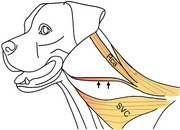 Figure 1
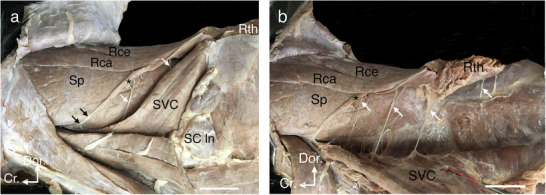 Figure 2
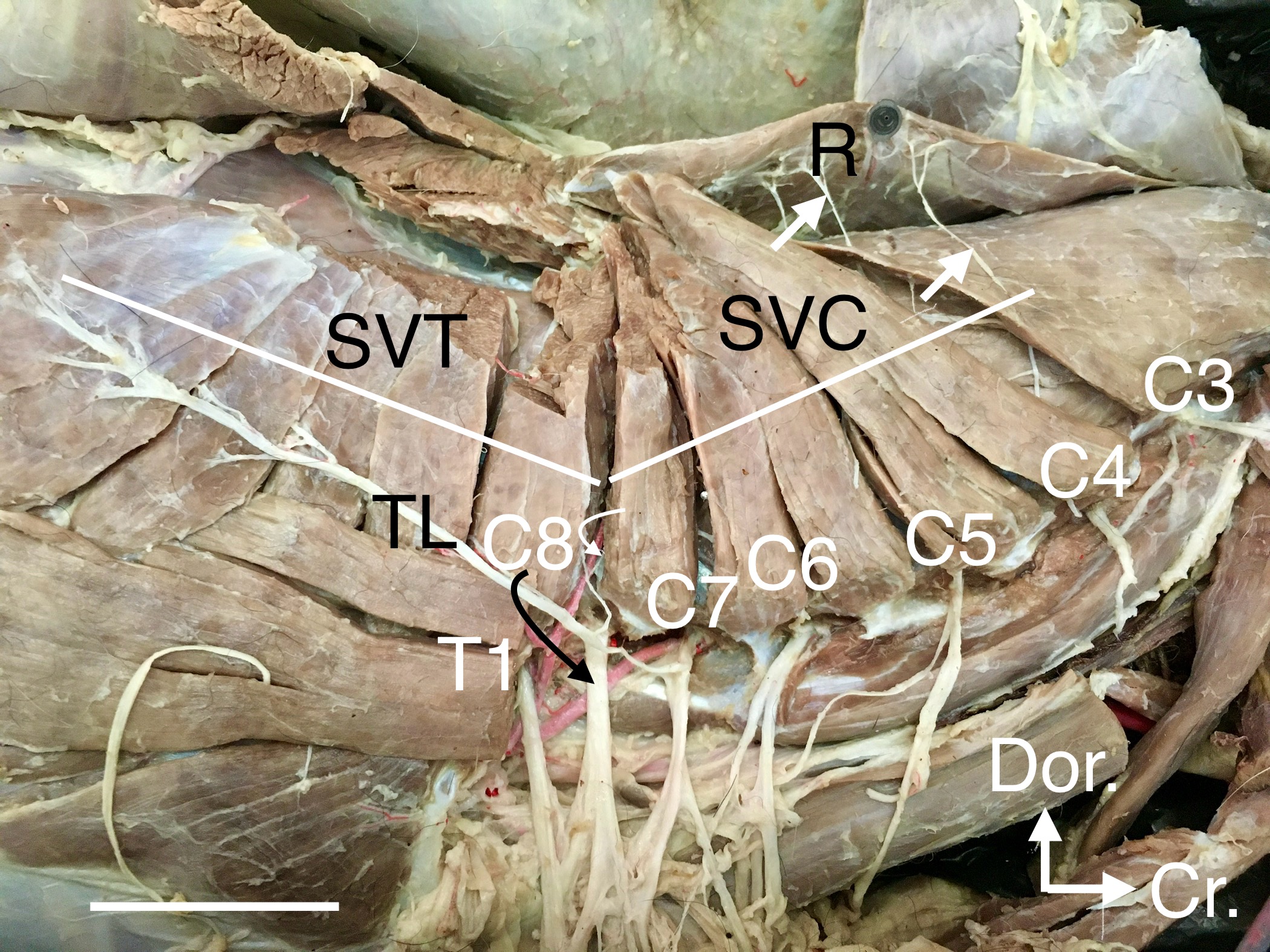 Figure 3
Peer Reviews
No public reviews on file for this paper yet. If you reviewed it on a platform where reviews are public (OpenReview, ICLR, NeurIPS, ICML), you can paste yours below so the community can read it here.
Videos
No videos yet. Explain this paper in a talk, walkthrough, or lecture? Add one.
Taxonomy
TopicsComparative Animal Anatomy Studies · Veterinary Orthopedics and Neurology · Evolution and Paleontology Studies