Role of the DPP4 Receptor in SARS‐CoV Entry: Insights From Docking and Molecular Dynamics Simulations
Patrícia Pereira Duzi Carvalho, Nelson Augusto Alves

TL;DR
This study explores how the DPP4 receptor interacts with SARS-CoV and MERS-CoV using simulations, revealing insights into their binding stability and energy barriers.
Contribution
The study provides novel insights into the role of DPP4 as a potential coreceptor for SARS-CoV through molecular simulations.
Findings
The SARS-CoV/DPP4 complex has a high free-energy barrier, indicating significant stability despite being energetically unfavorable.
The MERS-CoV/DPP4 complex is the most likely to form and least resistant to dissociation due to its low free-energy barrier.
There is an inverse relationship between electrostatic complementarity and complex stability due to competing interactions.
Abstract
Protein–receptor interactions play a critical role in viral entry and pathogenesis. While ACE2 is the primary receptor for SARS‐CoV, the role of DPP4 as potential coreceptor remains underexplored. This study investigates the binding mechanisms and dissociation dynamics of the SARS‐CoV/DPP4, SARS‐CoV/ACE2 and MERS‐CoV/DPP4 complexes using molecular docking and molecular dynamics simulations. The SARS‐CoV/DPP4 complex exhibited the highest free‐energy barrier (ΔF=6.77kBT), suggesting significant stability despite being energetically unfavorable. In contrast, the MERS‐CoV/DPP4 complex, with the lowest free‐energy barrier (ΔF=2.17kBT), was the most likely to form and the least resistant to dissociation. The SARS‐CoV/ACE2 complex demonstrated the highest Qbound, reflecting well‐organized interfacial side chains that facilitate hydrogen bonding, yet its relatively low free‐energy barrier and…
Genes, proteins, chemicals, diseases, species, mutations and cell lines named across the full text — each resolved to its canonical identifier and authoritative record.
Click any figure to enlarge with its caption.
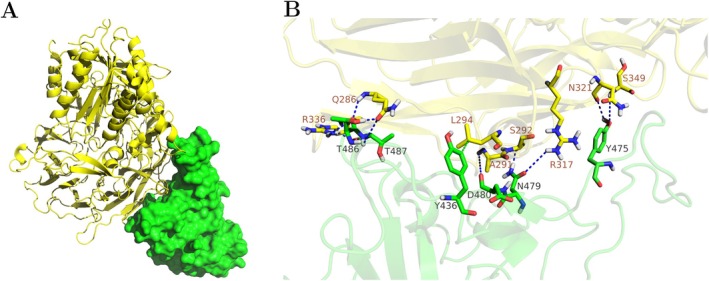 Figure 1
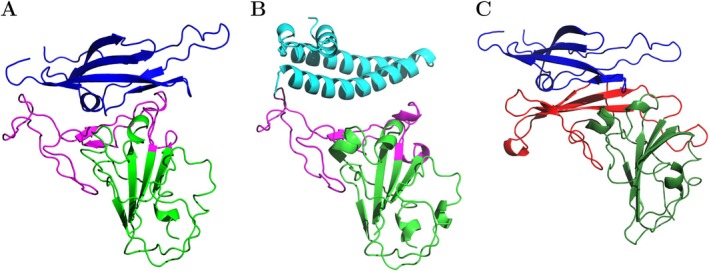 Figure 2
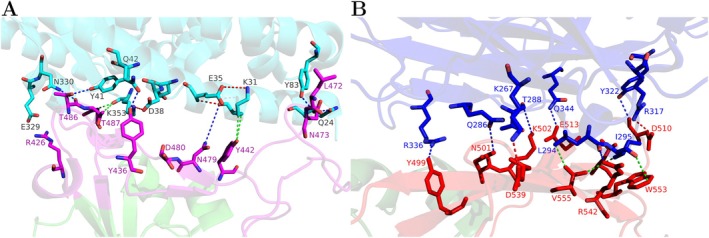 Figure 3
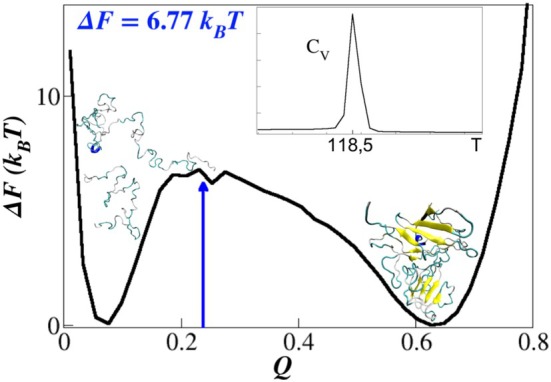 Figure 4
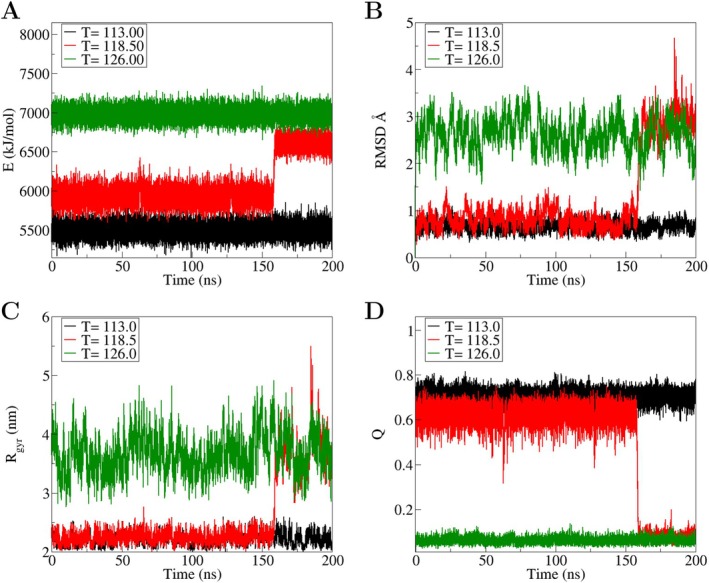 Figure 5
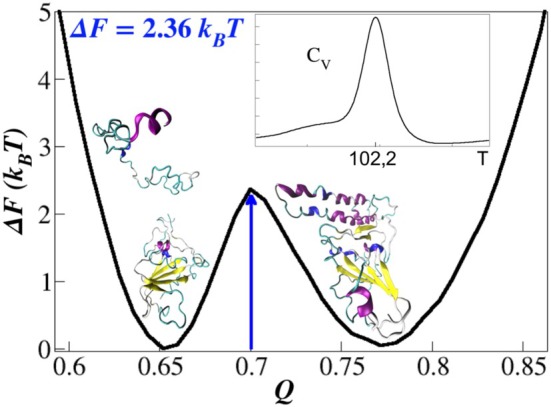 Figure 6
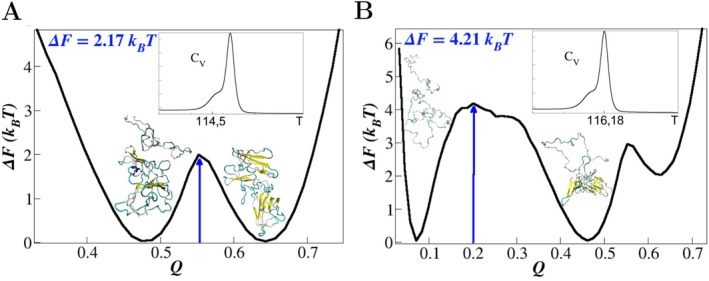 Figure 7
Peer Reviews
No public reviews on file for this paper yet. If you reviewed it on a platform where reviews are public (OpenReview, ICLR, NeurIPS, ICML), you can paste yours below so the community can read it here.
Videos
No videos yet. Explain this paper in a talk, walkthrough, or lecture? Add one.
Taxonomy
TopicsSARS-CoV-2 and COVID-19 Research · Protein Structure and Dynamics · Influenza Virus Research Studies