Pfs230 domain 12 is a potent malaria transmission–blocking vaccine candidate
Maartje R. Inklaar, Roos M. de Jong, Dari F. Da, Lisanne L. Hubregtse, Maartje Meijer, Karina Teelen, Ezra T. Bekkering, Sanne Grievink, Marga van de Vegte-Bolmer, Geert-Jan van Gemert, Rianne Stoter, Hikaru Nagaoka, Takafumi Tsuboi, Eizo Takashima, Cornelia G. Spruijt

TL;DR
A new malaria vaccine candidate, Pfs230D12, was found to block parasite transmission to mosquitoes, offering a promising approach to stop the spread of malaria.
Contribution
Pfs230D12 is identified as a potent and novel malaria transmission-blocking vaccine candidate.
Findings
Antibodies against Pfs230D12 reduced parasite transmission in membrane feeding assays.
D12-specific antibodies also reduced mosquito transmission of parasites from naturally infected carriers.
Pfs230D12 antigen was recognized by sera from individuals naturally exposed to malaria.
Abstract
Malaria transmission–blocking vaccines (TBV) target sexual stage parasites that are transmitted to mosquitoes and are critical for spread of the pathogen. The clinically most advanced TBV candidate contains part of the Pro-domain (Pro) and Domain 1 (D1) of Plasmodium falciparum surface protein Pfs230. Subunit vaccines that contain other domains of Pfs230 have so far failed to induce functional antibodies. Here, we produced eight single-domain fragments of Pfs230 in Drosophila melanogaster S2 cells and assessed their immunogenicity in mouse immunizations. In addition to D1-specific antibodies, antibodies raised against D12 showed strong functional transmission-reducing activity in membrane feeding assays with cultured parasites, an activity that was complement dependent. Murine D12-specific antibodies further reduced mosquito transmission of parasites acquired from naturally infected…
Genes, proteins, chemicals, diseases, species, mutations and cell lines named across the full text — each resolved to its canonical identifier and authoritative record.
Click any figure to enlarge with its caption.
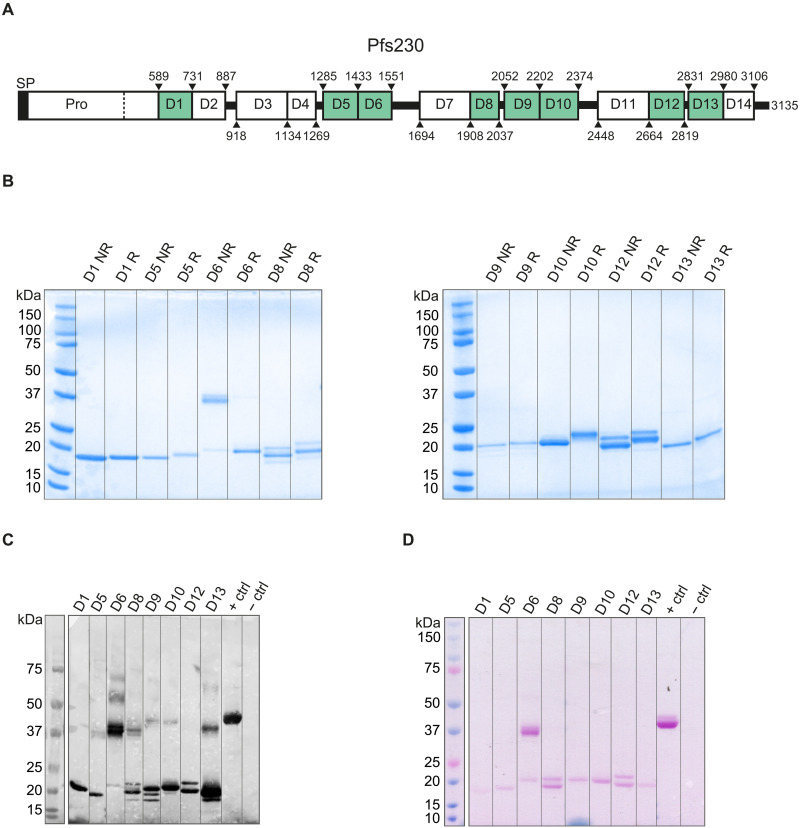 Figure 1
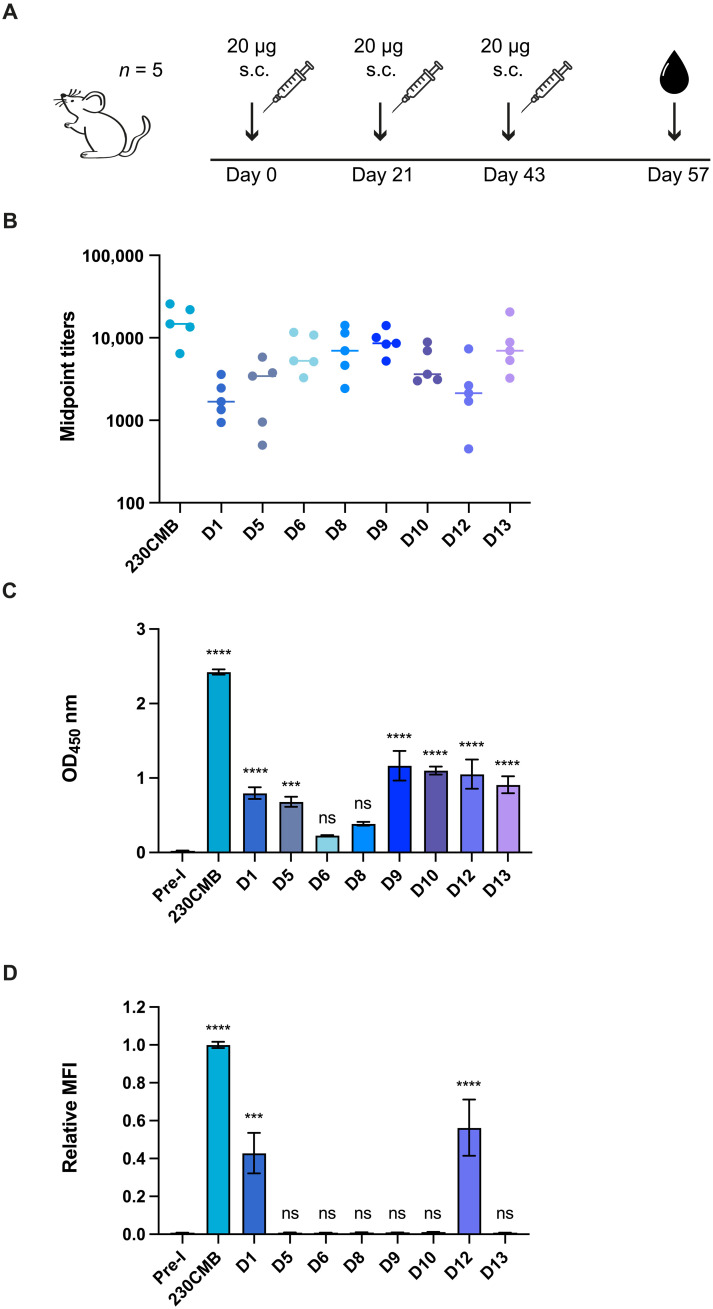 Figure 2
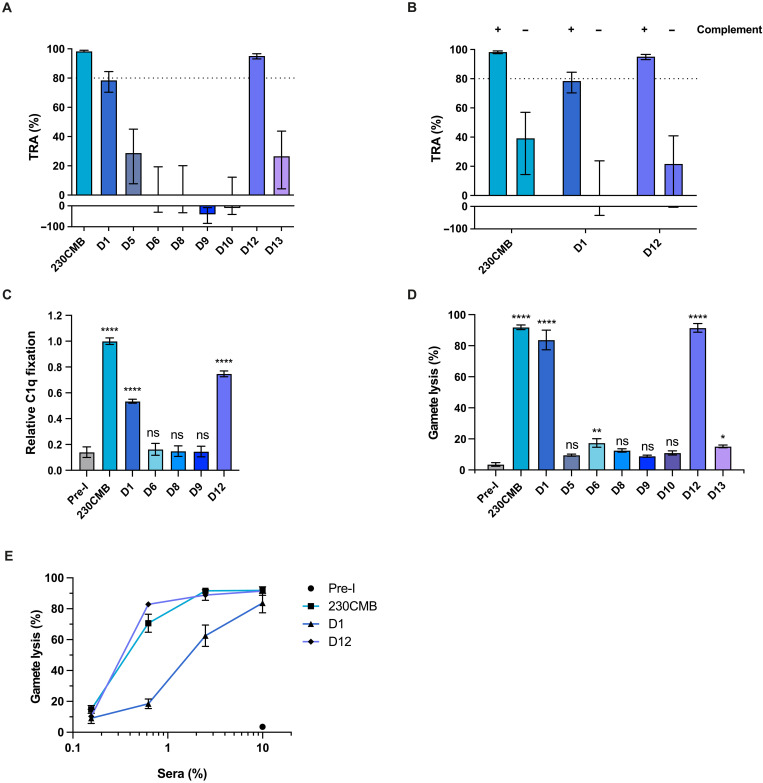 Figure 3
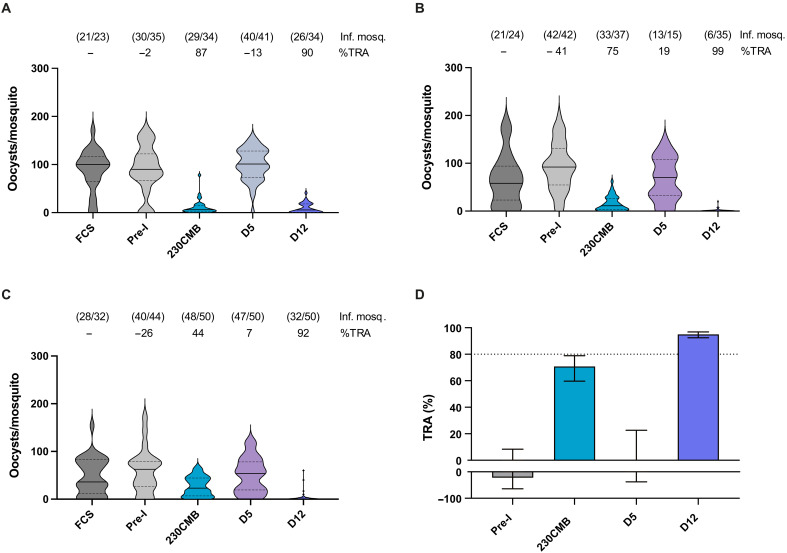 Figure 4
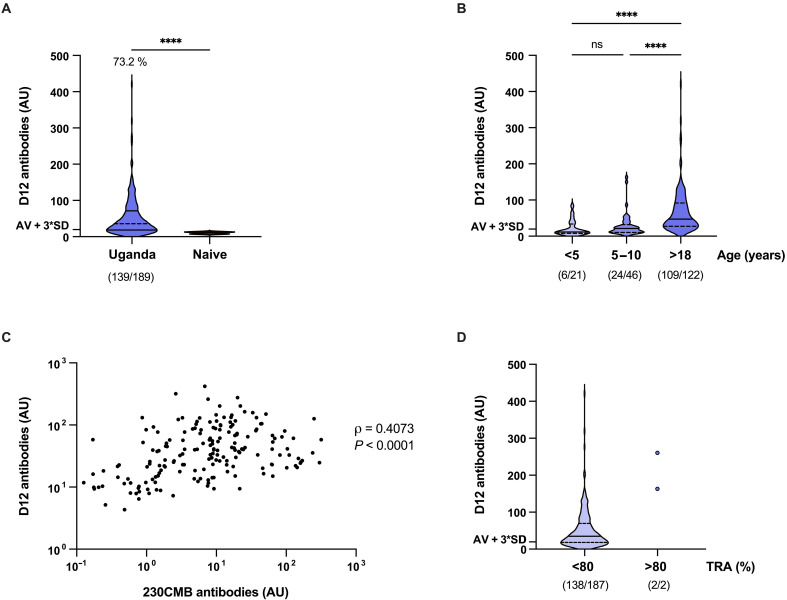 Figure 5
Peer Reviews
No public reviews on file for this paper yet. If you reviewed it on a platform where reviews are public (OpenReview, ICLR, NeurIPS, ICML), you can paste yours below so the community can read it here.
Videos
No videos yet. Explain this paper in a talk, walkthrough, or lecture? Add one.
Taxonomy
TopicsInvertebrate Immune Response Mechanisms · Malaria Research and Control · Mosquito-borne diseases and control