The SIRT1 N‐Terminal Domain as a Common Binding Interface for PPARγ Anchoring
Caique Camargo Malospirito, Gabriel Ernesto Jara, Víctor Ulian Antunes, Giovanna Blazutti Elias, Marieli Mariano Goncalves Dias, Fernanda Aparecida Heleno Batista, Paulo Sergio Lopes de Oliveira, Ana Carolina Migliorini Figueira

TL;DR
This study identifies the SIRT1 N-terminal domain as a key region for binding to PPARγ, which could help in developing treatments for insulin resistance.
Contribution
The study reveals a common binding interface between SIRT1 and PPARγ and shows how this interaction affects insulin sensitivity.
Findings
The SIRT1 N-terminal domain (NTD(3HB)) consistently binds to the same region of PPARγ in multiple models.
Removing or mutating the NTD(3HB) or PPARγ-LBD reduces binding affinity, showing their importance in anchoring.
SIRT1 dimerization is influenced by substrate binding, forming a heterodimer with PPARγ.
Abstract
Insulin resistance, a global health threat linked to type 2 diabetes and obesity, can be addressed by modulating the activity of the Sirtuin 1 (SIRT1), a deacetylase that enhances insulin sensitivity by deacetylating the Peroxisome Proliferator‐Activated Receptor Gamma (PPARγ) at lysine 268 and 293. Understanding the binding interfaces between SIRT1 and PPARγ is critical to developing new strategies to combat insulin resistance. In this study, we present four experimentally supported binding models of SIRT1 with acetylated PPARγ: one at position 268 and three at position 293 (SIRT1‐K268PPARγ and SIRT1‐K293PPARγ1‐3 models). These models were generated through an integration of in silico modeling and in vitro binding affinity assays. Our models revealed that the SIRT1:PPARγ binding interface is structured by SIRT1's 3‐helix bundle in N‐terminus domain (NTD(3HB)) and the catalytic domain…
Genes, proteins, chemicals, diseases, species, mutations and cell lines named across the full text — each resolved to its canonical identifier and authoritative record.
Click any figure to enlarge with its caption.
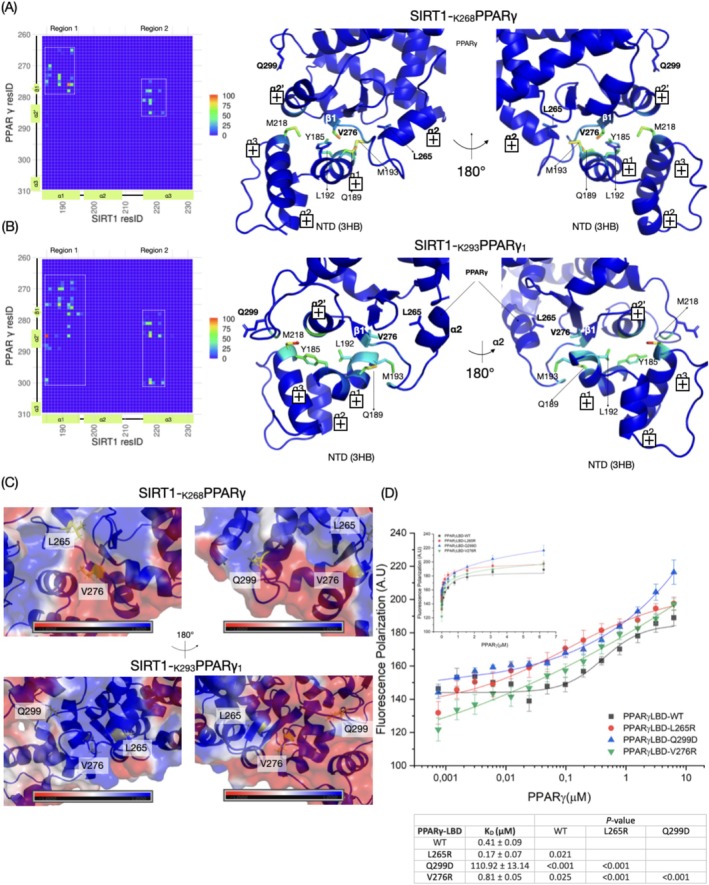 Figure 1
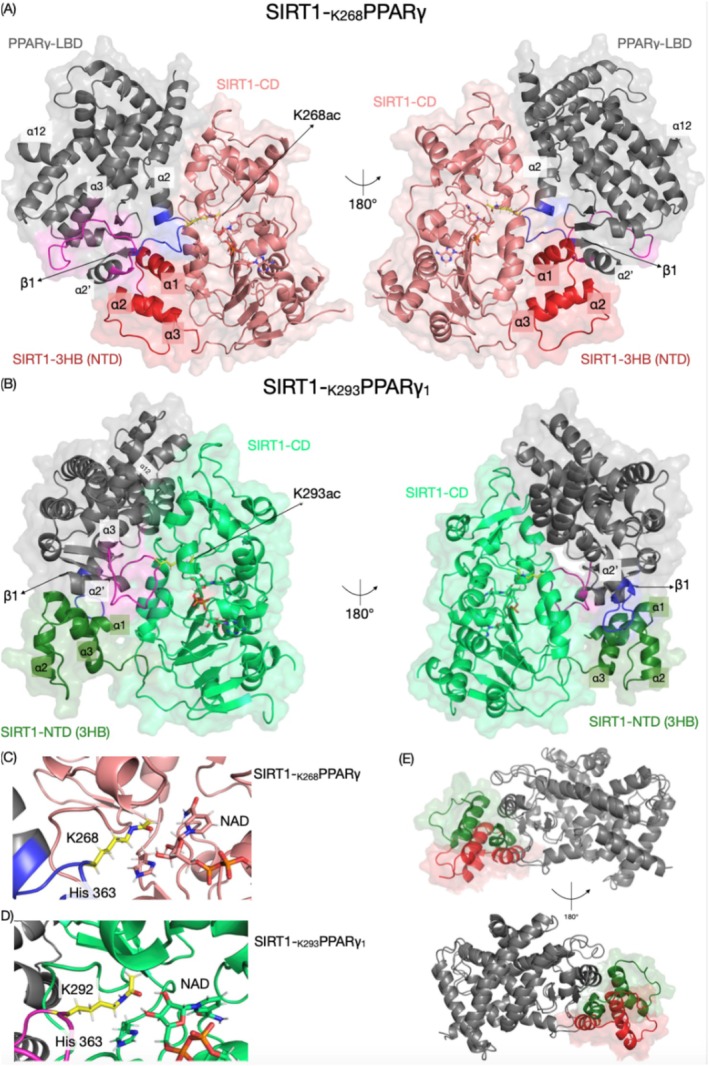 Figure 2
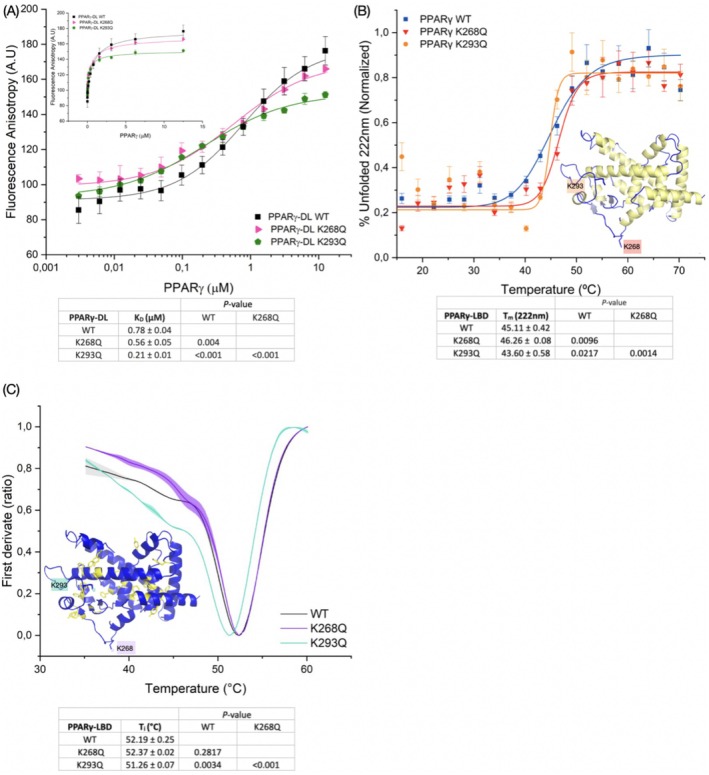 Figure 3
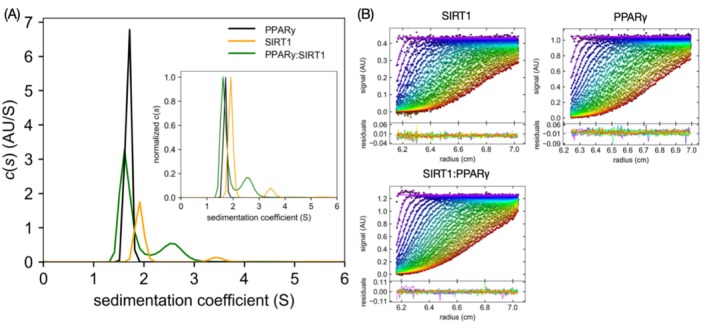 Figure 4
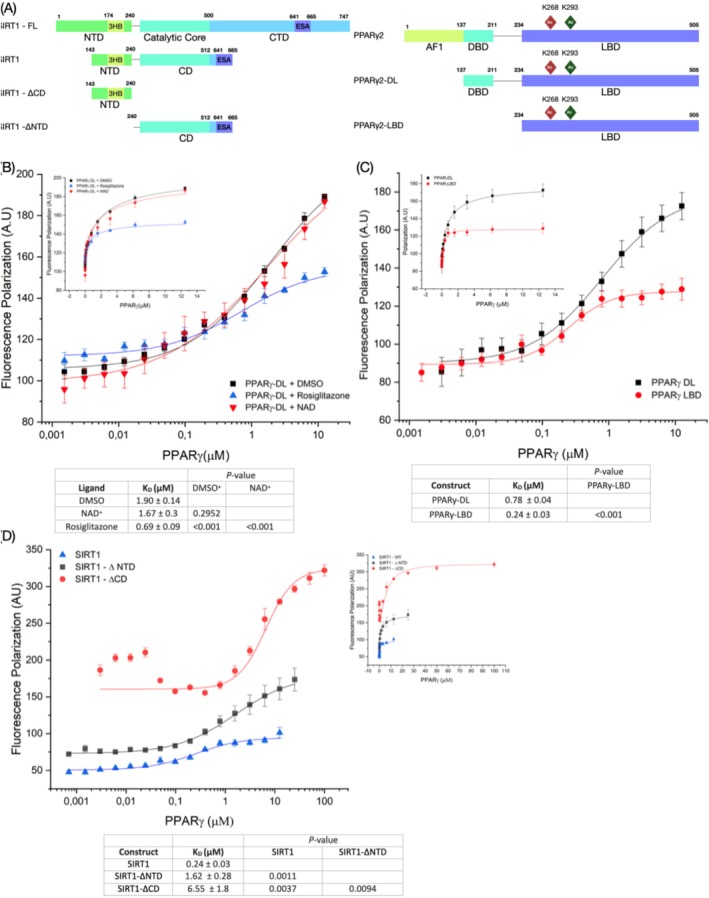 Figure 5
Peer Reviews
No public reviews on file for this paper yet. If you reviewed it on a platform where reviews are public (OpenReview, ICLR, NeurIPS, ICML), you can paste yours below so the community can read it here.
Videos
No videos yet. Explain this paper in a talk, walkthrough, or lecture? Add one.
Taxonomy
TopicsSirtuins and Resveratrol in Medicine · Adipose Tissue and Metabolism · Peroxisome Proliferator-Activated Receptors