Fractal Dimension in Healthy Hippocampi and Hippocampi With Mesial Temporal Sclerosis: An Observational Study
Guillermo A Gutiérrez-Aceves, Alan M Solís-Velázquez, Jesús A Rodríguez-Torres, Alejandro I Landero Sánchez, Alberto González-Aguilar, Iris E Martínez-Juárez, Alejandro Rivas-Castro, Jos A Herrera-Gonzalez

TL;DR
This study compares the fractal dimension of healthy and diseased hippocampi to explore its potential as a biomarker for hippocampal degeneration in mesial temporal sclerosis.
Contribution
The study introduces fractal dimension as a novel quantitative biomarker for hippocampal degeneration in mesial temporal sclerosis.
Findings
Healthy hippocampi had a mean fractal dimension of 1.305, while those with MTS had 1.243.
The 4.75% reduction in fractal dimension was statistically significant (p = 0.008).
Abstract
A fractal is a geometric shape that has the same structure across a wide range of scales. The existence of fractal dimension has been demonstrated in various natural structures and translated into a mathematical method through which anatomical structures can be measured with high precision. The hippocampus, located in the mesial area of the temporal lobe, is affected in diseases such as epilepsy, tumors, and viral infections. Mesial temporal sclerosis (MTS) is a condition that significantly degenerates hippocampal neurons and is a major cause of drug-resistant epilepsy. This study aimed to compare the fractal dimension between healthy hippocampi and hippocampi with MTS, and to determine whether there is a difference between them. We analyzed preoperative magnetic resonance imaging (MRI) scans from 12 patients with MTS, calculating the fractal dimension of both the diseased and the…
Genes, proteins, chemicals, diseases, species, mutations and cell lines named across the full text — each resolved to its canonical identifier and authoritative record.
Click any figure to enlarge with its caption.
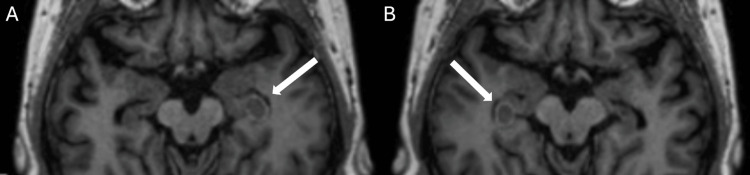 Figure 1
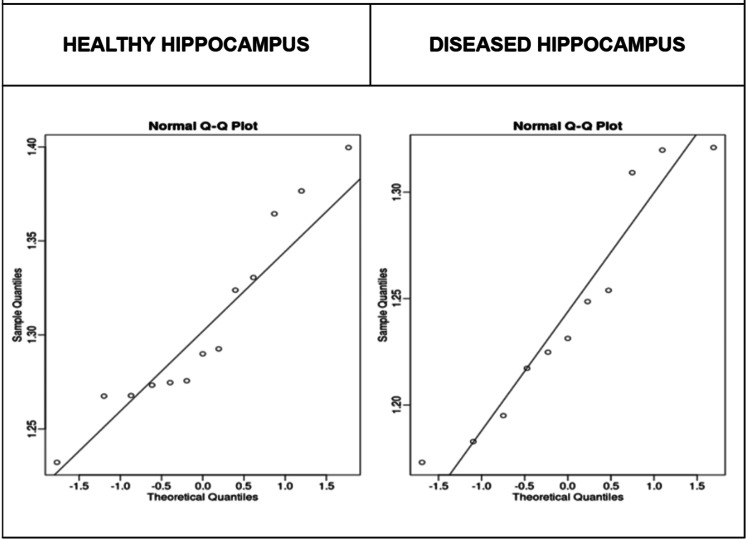 Figure 2
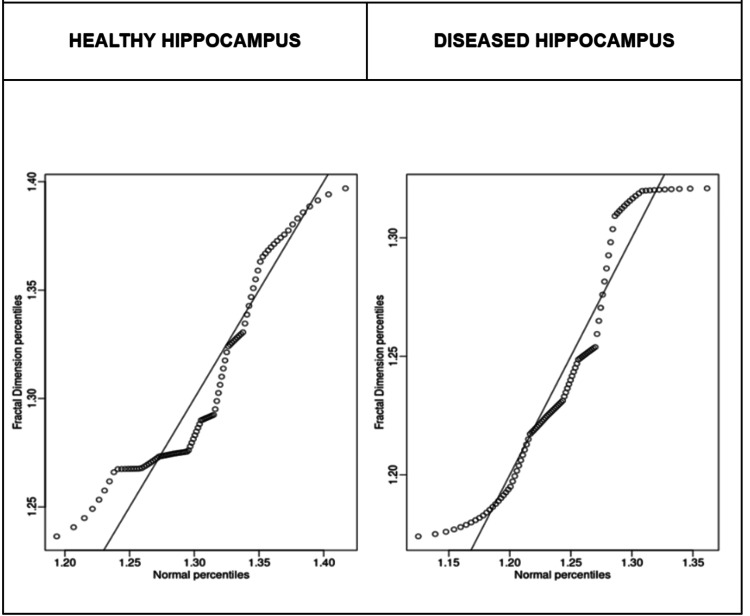 Figure 3
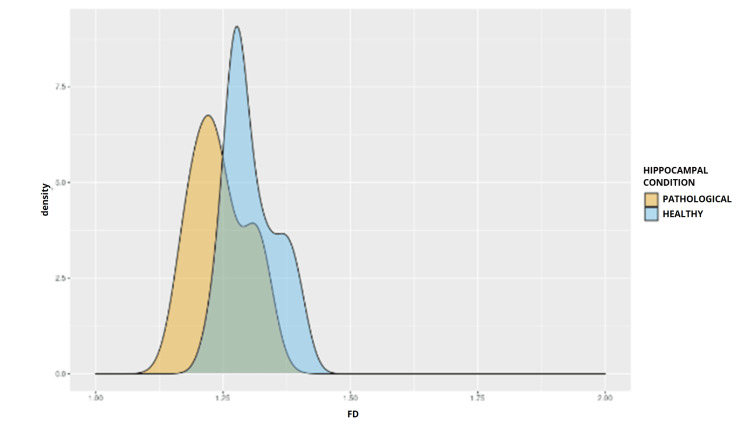 Figure 4
Peer Reviews
No public reviews on file for this paper yet. If you reviewed it on a platform where reviews are public (OpenReview, ICLR, NeurIPS, ICML), you can paste yours below so the community can read it here.
Videos
No videos yet. Explain this paper in a talk, walkthrough, or lecture? Add one.
Taxonomy
TopicsAdvanced Neuroimaging Techniques and Applications · Brain Tumor Detection and Classification · Fractal and DNA sequence analysis