Pore-Scale Analysis and Visualization of Tertiary Cationic Surfactant Flooding in a Complex Carbonate
Hussain M. AlZahrani, Branko Bijeljic, Rukuan Chai, Martin J. Blunt

TL;DR
This study uses advanced imaging to show how a cationic surfactant improves oil recovery in complex carbonate rocks by altering wettability and reducing interfacial tension.
Contribution
The study demonstrates that DTAB flooding enhances oil recovery in carbonates without requiring ultralow interfacial tension, offering a cost-effective EOR method.
Findings
DTAB flooding reduced interfacial tension and altered wettability, increasing oil recovery from small pores.
Switching from brine to surfactant injection caused a transition from oil-wet to mixed-wet states.
DTAB flooding was more effective than brine in displacing oil trapped in complex carbonate structures.
Abstract
We investigate the pore-scale mechanisms of displacement using cationic surfactant dodecyltrimethylammonium bromide (DTAB) flooding as a tertiary enhanced oil recovery (EOR) technique in a complex carbonate rock using high-resolution X-ray microcomputed tomography (micro-CT). A carbonate sample was initially altered to be oil-wet through contact with crude oil, followed by sequential brine and surfactant injection to evaluate the impact on oil displacement and investigate oil recovery mechanisms. We used a concentration of DTAB above the critical micelle concentration, CMC, with no cosolvent. Image-based pore-scale analysis of fluid occupancy, wettability alteration, contact angles, interfacial areas, capillary pressure, and fluid connectivity was performed. The contact angles, mean curvatures, and capillary pressures indicated a transition from oil-wet to a mixed-wet state when we…
Genes, proteins, chemicals, diseases, species, mutations and cell lines named across the full text — each resolved to its canonical identifier and authoritative record.
Click any figure to enlarge with its caption.
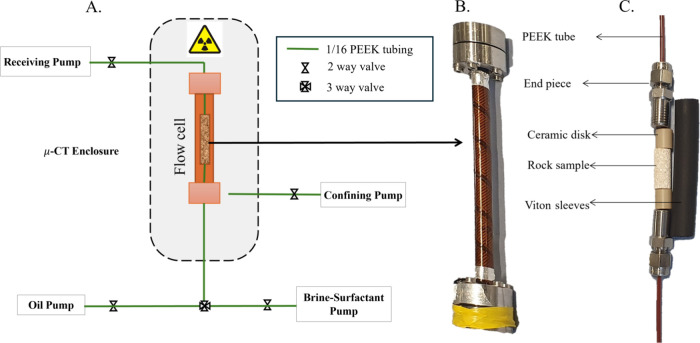 Figure 1
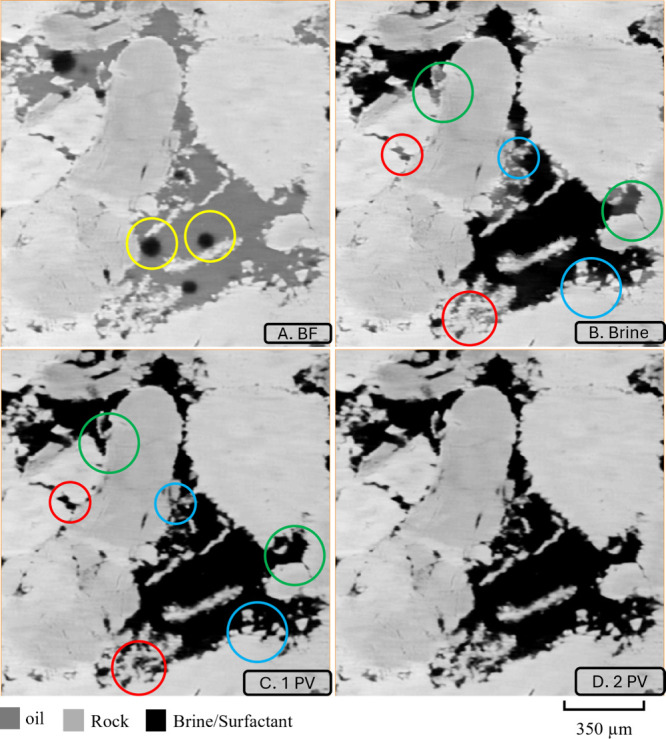 Figure 2
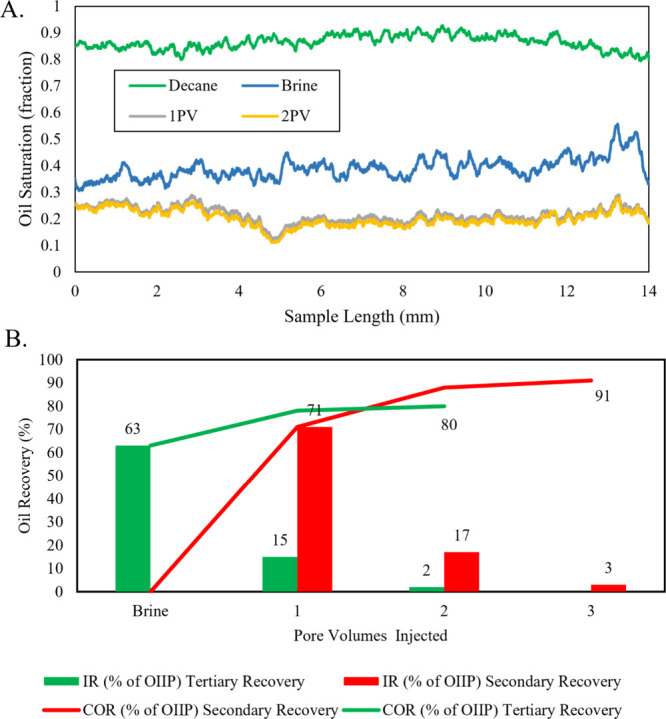 Figure 3
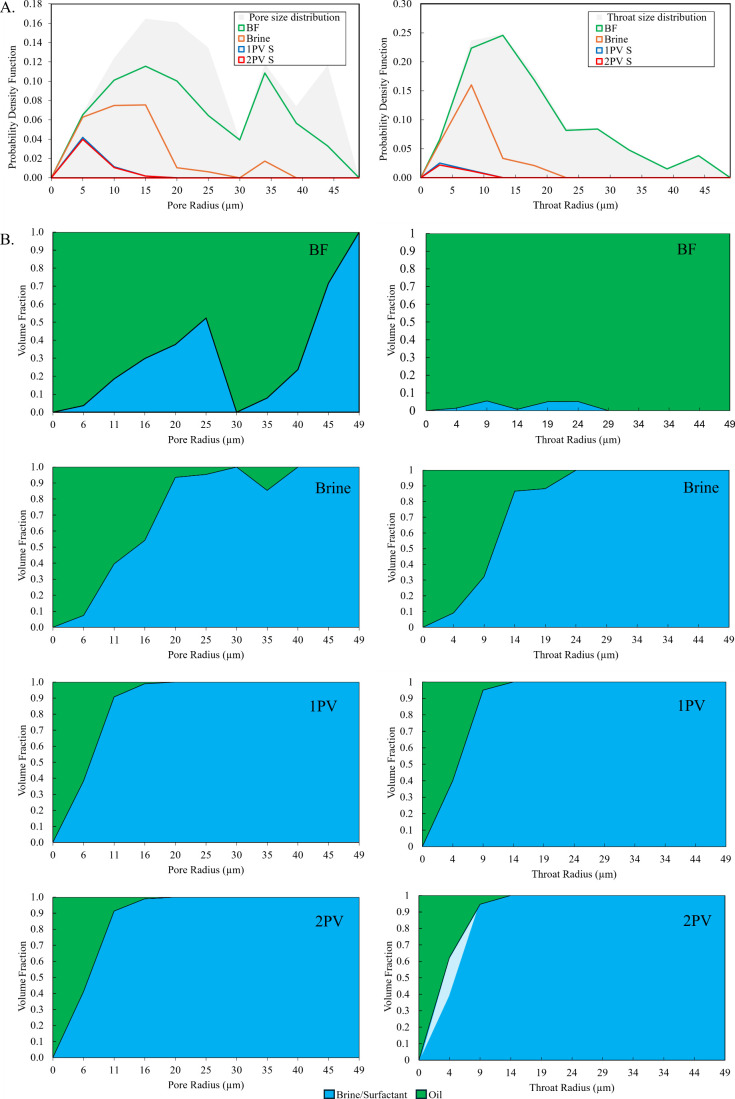 Figure 4
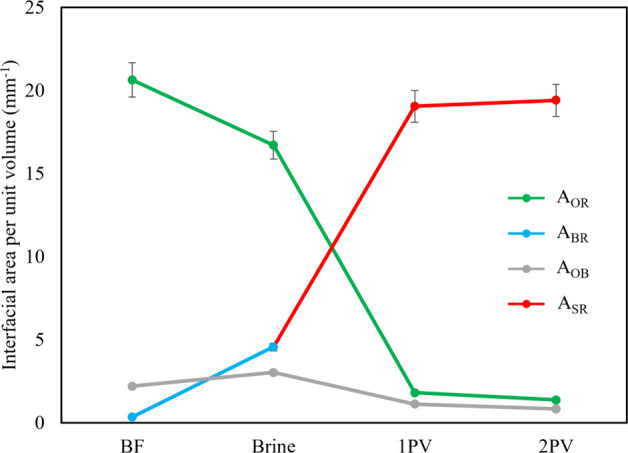 Figure 5
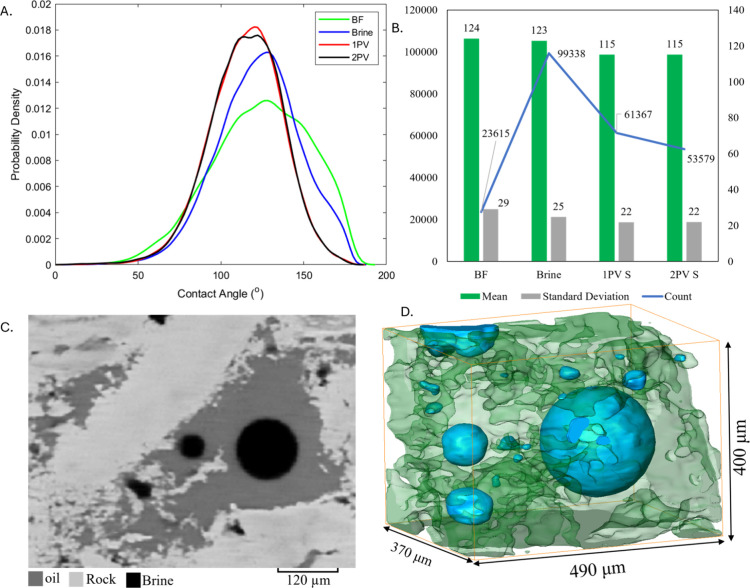 Figure 6
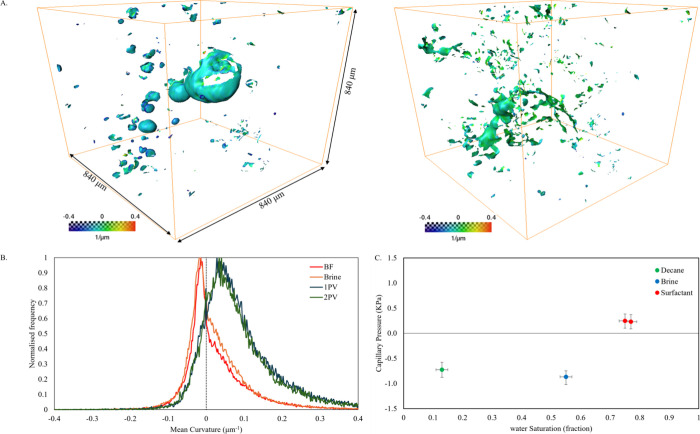 Figure 7
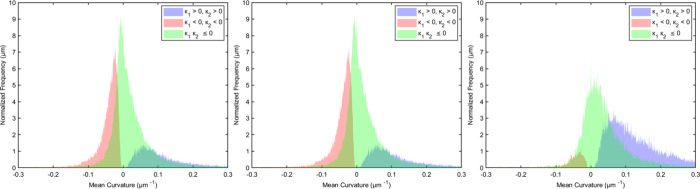 Figure 8
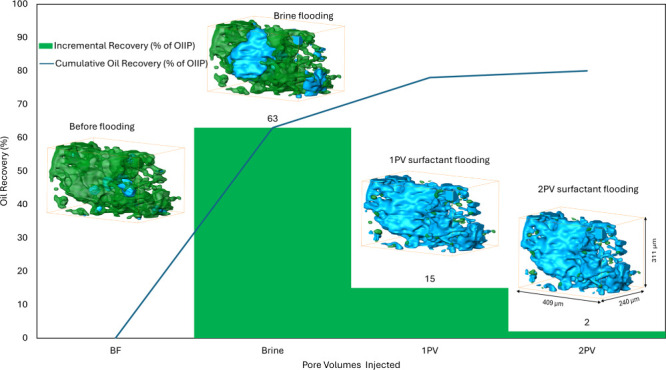 Figure 9
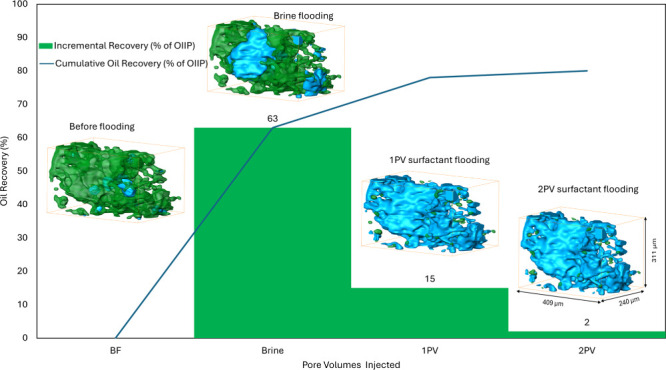 Figure 10
 Figure 11
Peer Reviews
No public reviews on file for this paper yet. If you reviewed it on a platform where reviews are public (OpenReview, ICLR, NeurIPS, ICML), you can paste yours below so the community can read it here.
Videos
No videos yet. Explain this paper in a talk, walkthrough, or lecture? Add one.
Taxonomy
TopicsEnhanced Oil Recovery Techniques · Hydrocarbon exploration and reservoir analysis · Hydraulic Fracturing and Reservoir Analysis