A Switchable Deep Eutectic System Based on Diarylethene
Hugo Cruz, Noémi Jordão, Sara Santiago, Silvia Mena, Andreia F. M. Santos, M. Teresa Viciosa, Karolina Zalewska, Luis C. Branco, Jordi Hernando, Gonzalo Guirado

TL;DR
A new switchable deep eutectic solvent changes color and properties in response to light or electricity, offering potential for tunable industrial applications.
Contribution
The paper introduces a photo- and electro-responsive deep eutectic system based on diarylethene.
Findings
The system changes color from yellowish to pinkish-red under UV light due to photoisomerization.
Visible light or oxidative electrolysis can revert the color change and alter hydrogen bonding strength.
The solvent's thermal and electrical properties are externally controllable via stimuli.
Abstract
Deep eutectic solvents (DESs) have emerged as promising alternative solvents for a wide range of applications, such as extraction and separation processes. To broaden their functionality, the development of responsive DESs (RDESs) has attracted particular interest due to their ability to abruptly change their properties in response to external stimuli. Herein, we aim to prepare a new RDES comprising a photo- and electrochromic dicarboxylic diarylethene derivative (DTE) and quadrol (Q). The prepared system exhibits a color change from yellowish to pinkish-red under UV irradiation due to the photoisomerization of DTE, which can be reverted by visible light or oxidative electrolysis. Interestingly, this process also alters the strength of the hydrogen bonds between DTE and Q, leading to an externally controlled change in the thermal and electrical properties of the eutectic mixture.…
Genes, proteins, chemicals, diseases, species, mutations and cell lines named across the full text — each resolved to its canonical identifier and authoritative record.
Click any figure to enlarge with its caption.
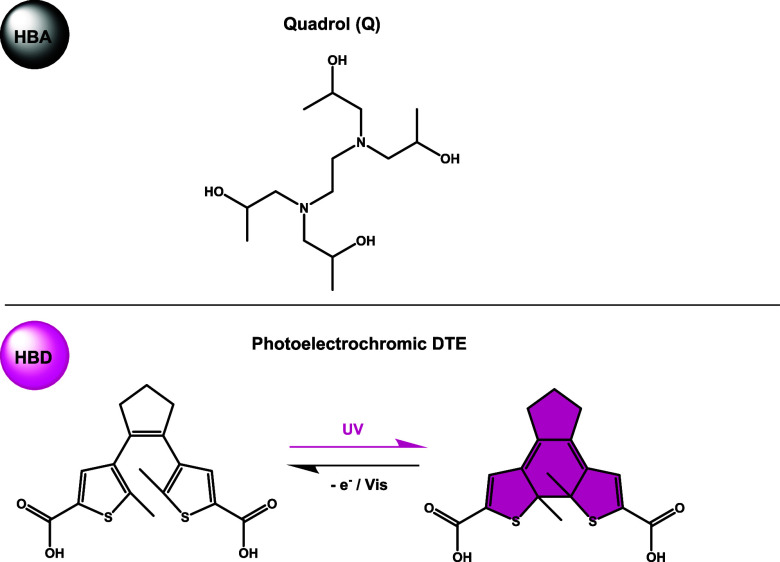 Figure 1
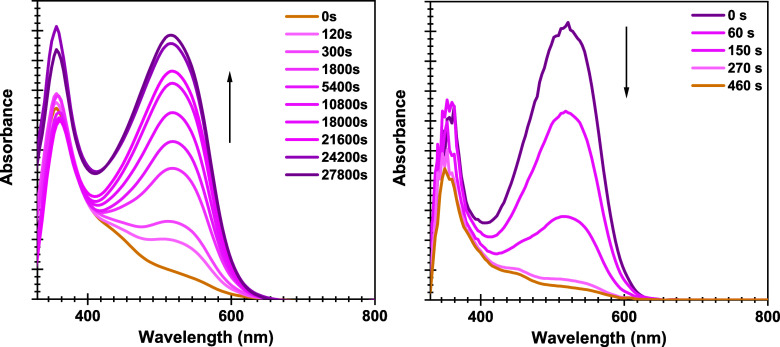 Figure 2
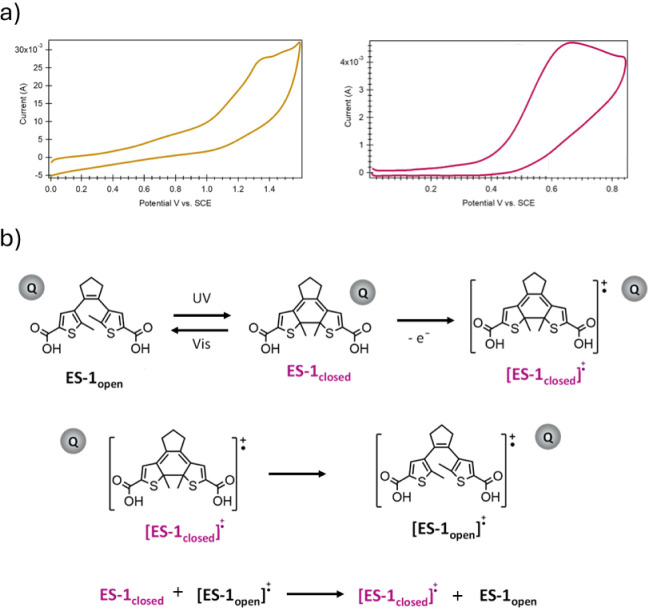 Figure 3
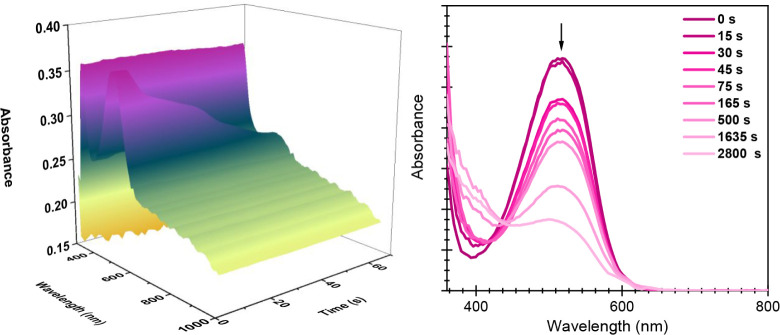 Figure 4
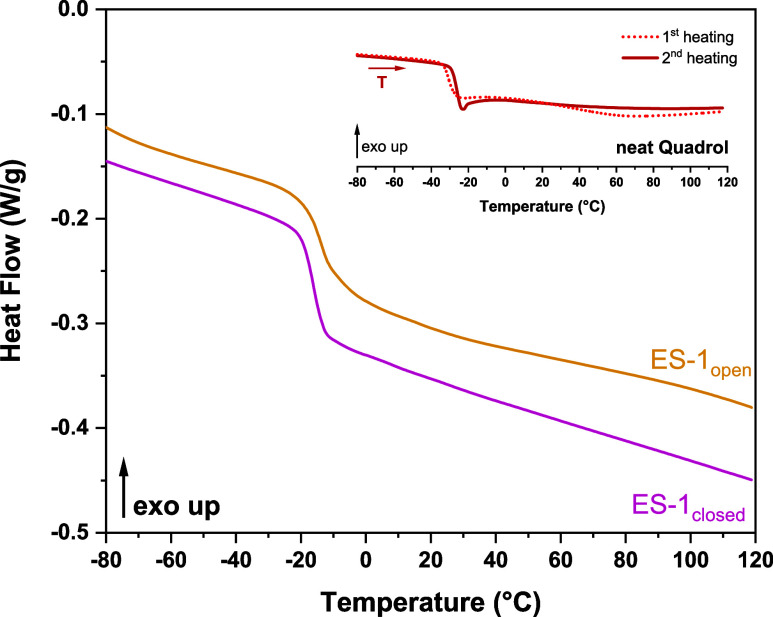 Figure 5
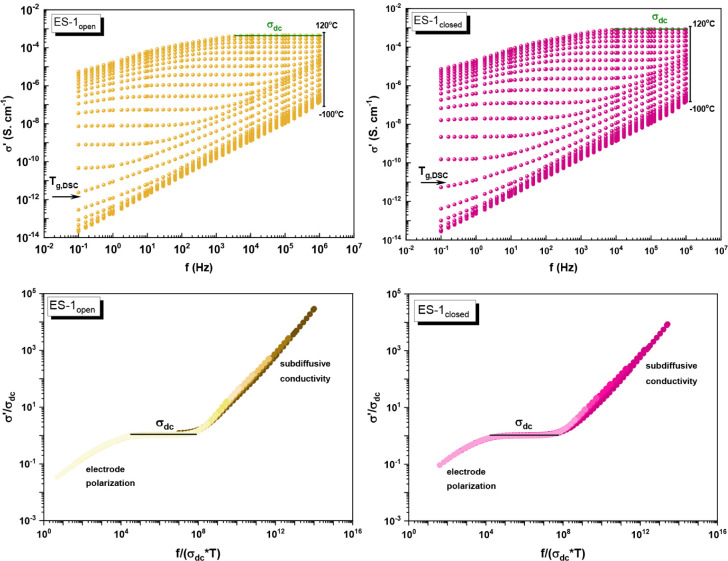 Figure 6
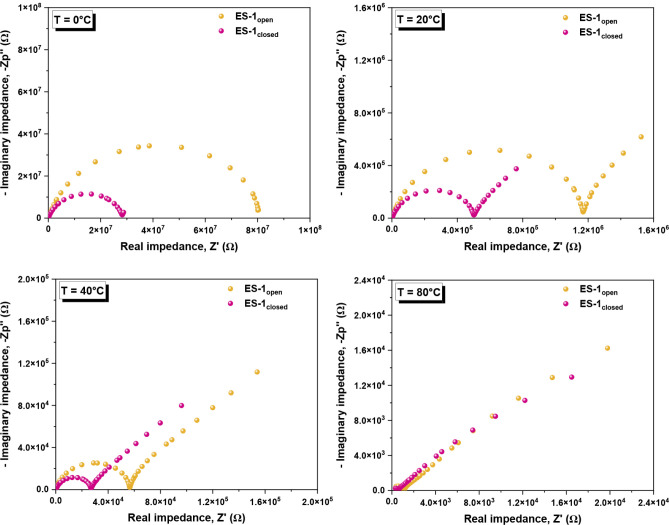 Figure 7
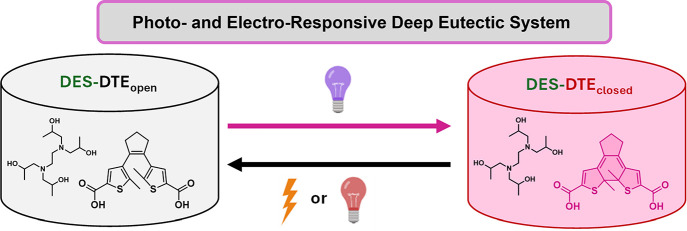 Figure 8
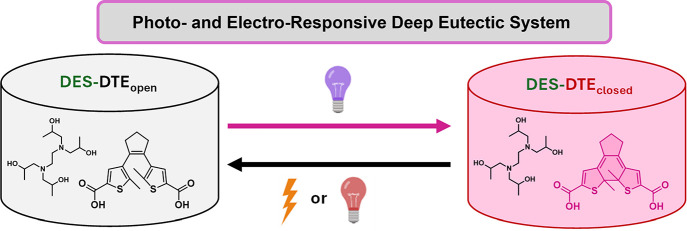 Figure 9
Peer Reviews
No public reviews on file for this paper yet. If you reviewed it on a platform where reviews are public (OpenReview, ICLR, NeurIPS, ICML), you can paste yours below so the community can read it here.
Videos
No videos yet. Explain this paper in a talk, walkthrough, or lecture? Add one.
Taxonomy
TopicsPhotochromic and Fluorescence Chemistry · Photoreceptor and optogenetics research · Luminescence and Fluorescent Materials