INFLUENCE OF GAIT-SYNCHRONIZED FUNCTIONAL ELECTRICAL STIMULATION DURING EXOSKELETON-ASSISTED AMBULATION ON CARDIORESPIRATORY OUTCOMES IN INDIVIDUALS WITH INCOMPLETE SPINAL CORD INJURY
Robert VOICU, Daniela B. KUCHEN, Claudio PERRET, Ines BERSCH, Mario WIDMER

TL;DR
Adding electrical muscle stimulation to a robotic exoskeleton during walking increases physical effort in people with spinal cord injuries, potentially improving rehabilitation outcomes.
Contribution
This study is the first to show that gait-synchronized functional electrical stimulation during exoskeleton-assisted walking increases cardiorespiratory demand in individuals with incomplete spinal cord injury.
Findings
Functional electrical stimulation increased oxygen consumption by 6% during exoskeleton-assisted walking.
Heart rate and ventilation increased with stimulation, indicating higher workout intensity.
Breathing frequency and perceived exertion remained unchanged despite increased effort.
Abstract
To evaluate the impact of gait-synchronized functional electrical stimulation during exoskeleton-assisted ambulation on cardiorespiratory demand in individuals with incomplete spinal cord injury. Cross-sectional study employing a randomized crossover arrangement of measurements. Convenience sample of 11 individuals with chronic incomplete spinal cord injury and partial walking ability. Participants completed 2 x 6-min walking tests (6MWTs) with the EksoNR, 1 with and 1 with-out gait-synchronized functional electrical stimulation targeting gait-related muscles in a randomized order. Cardiorespiratory and metabolic parameters were measured breath-by-breath via ergospirometry. The primary outcome was oxygen consumption (V̇O2/kg). Secondary outcomes included further cardiovascular and metabolic parameters. Data from the final 2 min of each 6MWT were analysed using linear mixed-effect…
Genes, proteins, chemicals, diseases, species, mutations and cell lines named across the full text — each resolved to its canonical identifier and authoritative record.
Click any figure to enlarge with its caption.
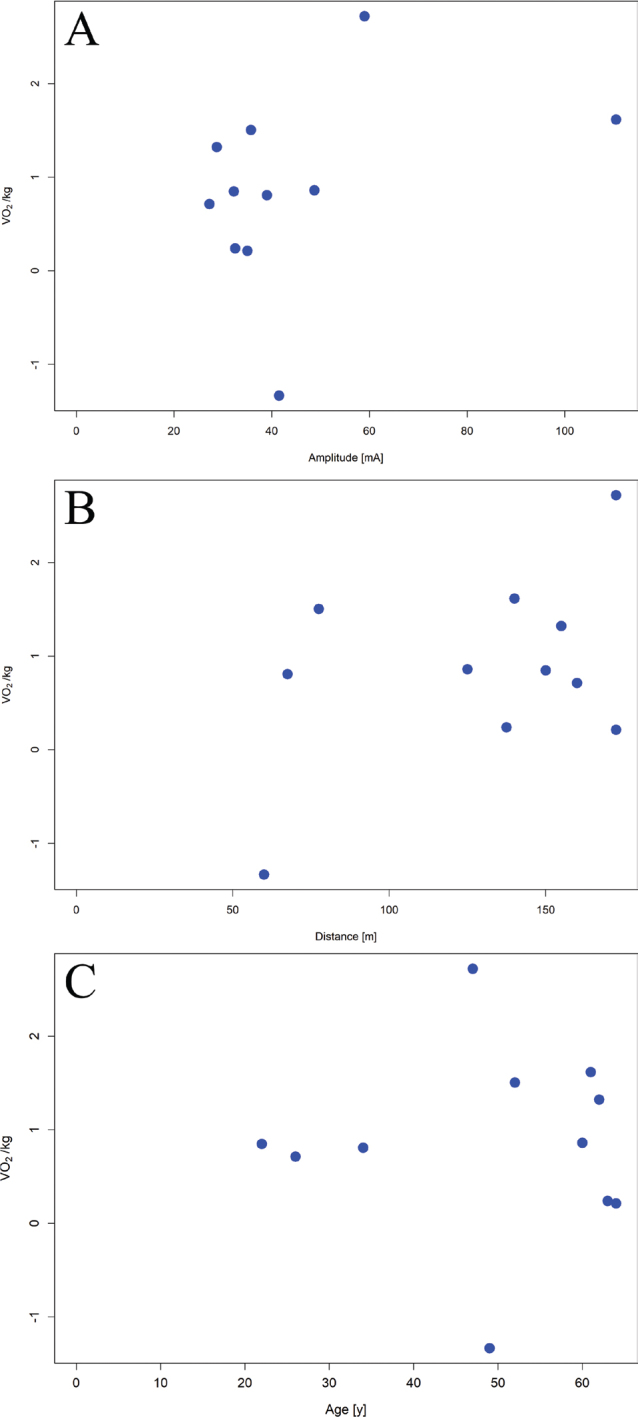 Figure 1
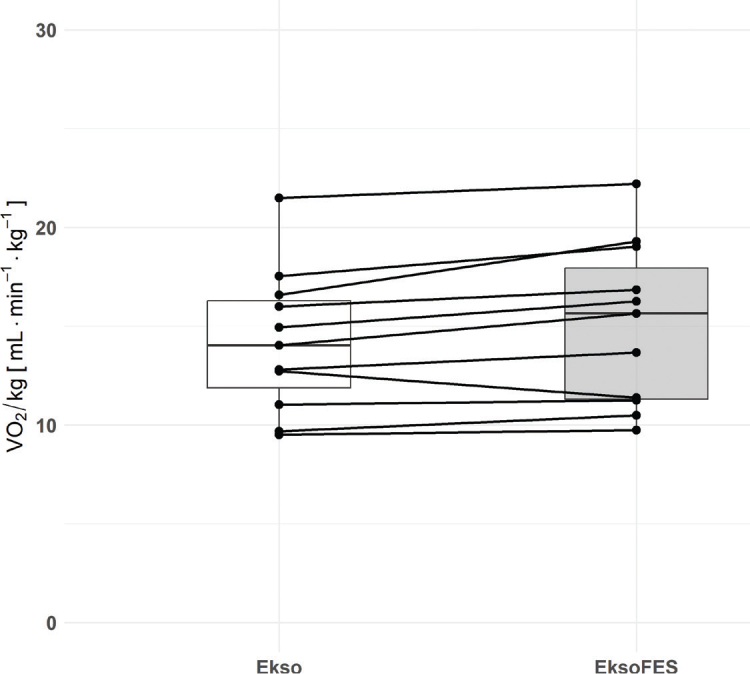 Figure 2
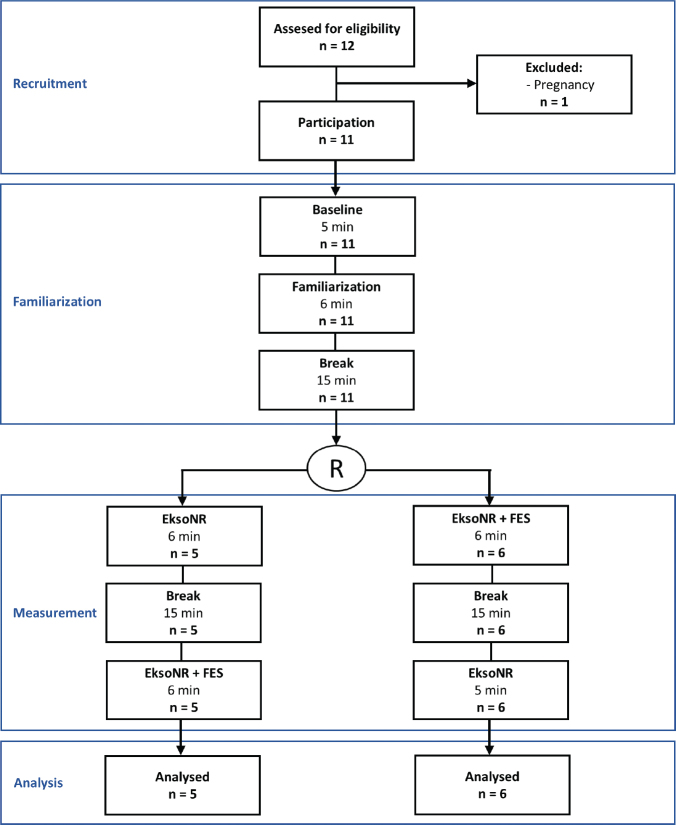 Figure 3
Peer Reviews
No public reviews on file for this paper yet. If you reviewed it on a platform where reviews are public (OpenReview, ICLR, NeurIPS, ICML), you can paste yours below so the community can read it here.
Videos
No videos yet. Explain this paper in a talk, walkthrough, or lecture? Add one.
Taxonomy
TopicsSpinal Cord Injury Research · Muscle activation and electromyography studies · Prosthetics and Rehabilitation Robotics