Agathis vs. Hymenaea—trapping biases to interpret arthropod assemblages in ambers
Mónica M. Solórzano-Kraemer, Antonio Monleón-Getino, Enrique Peñalver, Atahualpa S. Kraemer, Mélanie C. M. Herbert, David Peris, Antonio Arillo, Vincent Perrichot, Eduardo Barrón, Romain Garrouste, Maria Paulsen, Xavier Delclòs

TL;DR
This study compares how two types of tree resins trap arthropods, showing differences in the kinds of fossils they preserve.
Contribution
The study reveals distinct trapping biases between Agathis and Hymenaea resins, impacting interpretations of ancient arthropod ecosystems.
Findings
Agathis resin traps fewer and less uniformly distributed arthropods compared to Hymenaea resin.
Hymenaea resin captures arthropods similar to those in nearby traps, suggesting a closer ecological link.
Agathis resin's rapid polymerization limits arthropod inclusions, affecting fossil record interpretations.
Abstract
The genera Agathis (Coniferales: Araucariaceae) and Hymenaea (Fabales: Fabaceae) contain resin-producing tree species that are crucial for actuotaphonomic studies. While certain Cretaceous ambers likely originated from Agathis or Agathis-like trees, Hymenaea is the primary source of many Miocene ambers. Field studies were conducted in New Caledonia and Madagascar to collect Defaunation resin (resin produced after 1760 AD (Anno Domini)). Arthropods were collected with yellow sticky and Malaise traps in New Caledonia, Madagascar, and Mexico. Cretaceous and Miocene ambers, copals (2.58 Ma to 1760 AD), and Defaunation resins from various regions were analysed to compare arthropod trapping patterns. Actuotaphonomic results show lower number of arthropods trapped in Agathis Defaunation resin, with a non-uniform distribution, compared to the abundant and uniformly distributed arthropods…
Genes, proteins, chemicals, diseases, species, mutations and cell lines named across the full text — each resolved to its canonical identifier and authoritative record.
Click any figure to enlarge with its caption.
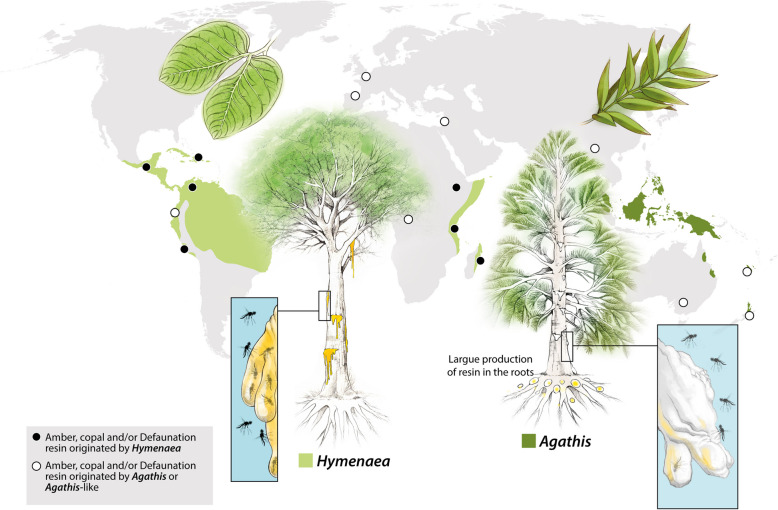 Figure 1
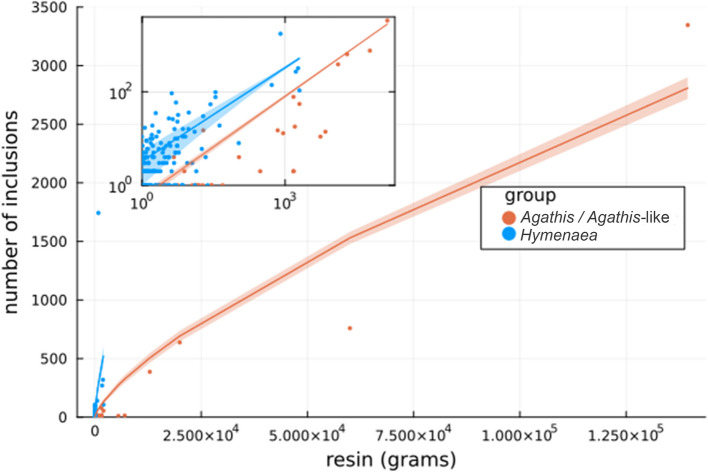 Figure 2
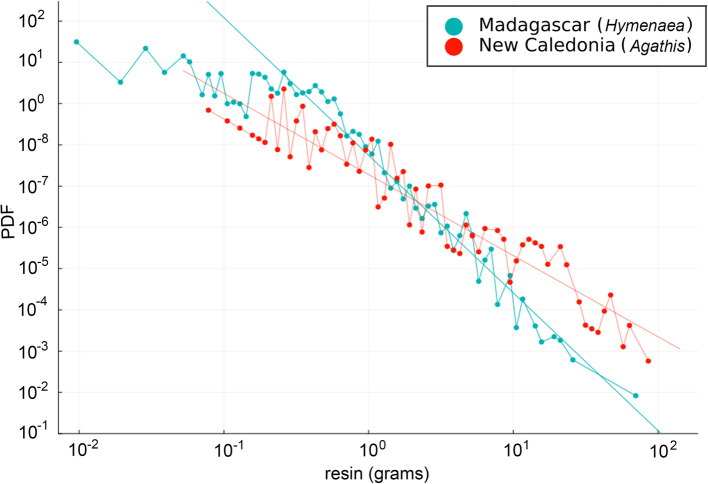 Figure 3
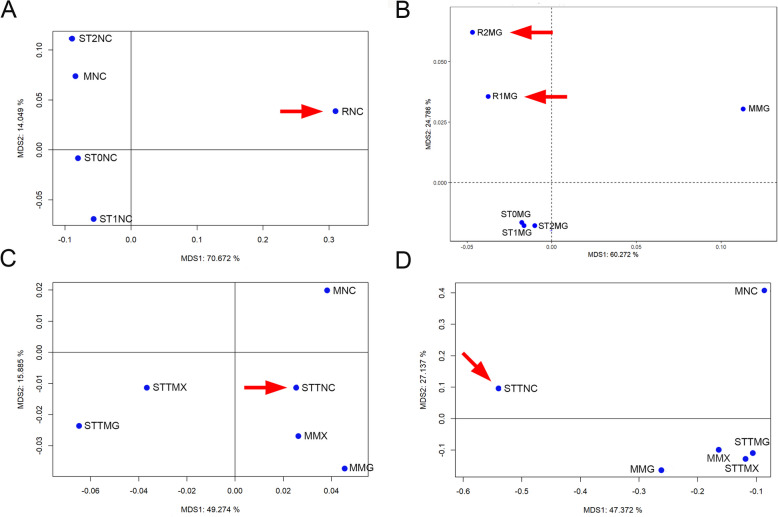 Figure 4
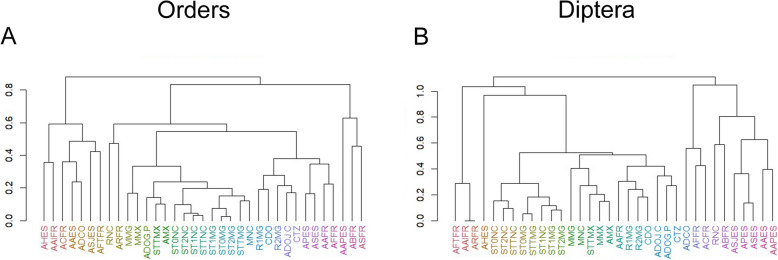 Figure 5
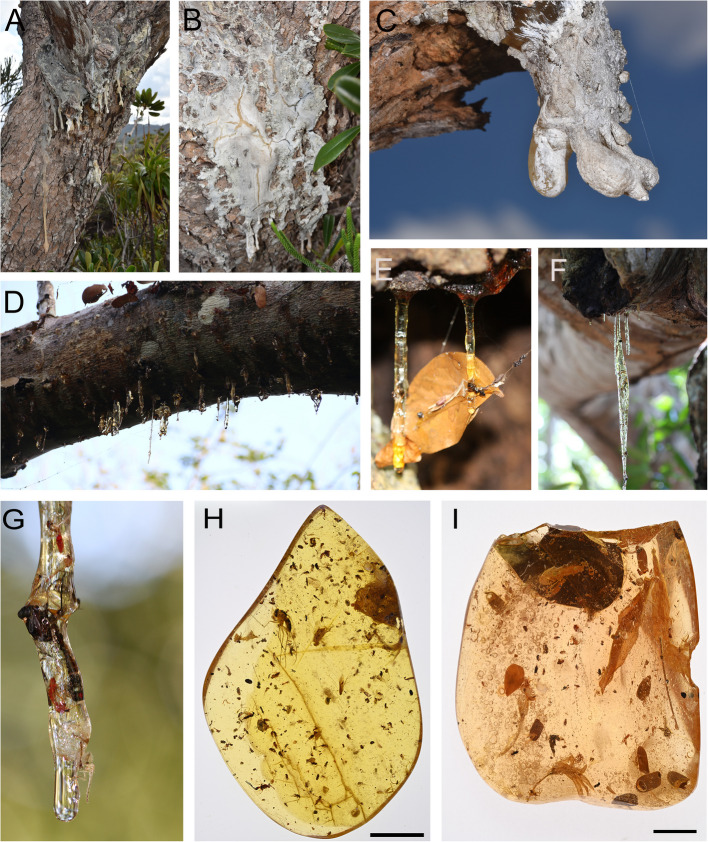 Figure 6
Peer Reviews
No public reviews on file for this paper yet. If you reviewed it on a platform where reviews are public (OpenReview, ICLR, NeurIPS, ICML), you can paste yours below so the community can read it here.
Videos
No videos yet. Explain this paper in a talk, walkthrough, or lecture? Add one.
Taxonomy
TopicsFossil Insects in Amber · Coleoptera Taxonomy and Distribution · Scarabaeidae Beetle Taxonomy and Biogeography