Limited radiographic detectability of novel 3D printed materials used in dental surgery
Christian Niederau, Rogerio B. Craveiro, Michael Wolf, Philipp Becker, Andreas Pabst, Alexander-N Zeller

TL;DR
Modern 3D-printed dental materials are hard to detect in X-ray scans, making them risky if they break during surgery.
Contribution
This study quantifies the radiodetectability of 3D-printed dental materials in soft tissues using CT and CBCT.
Findings
Modern 3D-printed dental materials have radiodensities similar to muscle tissue (68.94–130.47 HU).
Small splinters of these materials are nearly invisible in CT and CBCT scans compared to conventional dental materials.
Conventional materials like Futar D® and Luxatemp® show much higher radiopacity (up to 3243.96 HU).
Abstract
The digitalization of numerous dental workflows has significantly expanded the possibilities of digital treatment planning in recent years. By using additively manufactured templates and guides, preoperative planning can be realized reliably and minimally invasively on the patient. However, these devices may break under mechanical stress during use, so that fragments may remain in the surgical field, be swallowed or aspirated. This study investigates the radiologic detectability of additively manufactured materials in surrounding soft tissue. The visual detectability of standardized scan bodies and splinters of 15 different materials used in dentistry was analyzed using cone-beam computed tomography (CBCT). Porcine muscle and subcutaneous tissue were used as surrounding structures. In addition, computed tomography (CT) was used to measure the radiation densities of the materials in…
Genes, proteins, chemicals, diseases, species, mutations and cell lines named across the full text — each resolved to its canonical identifier and authoritative record.
Click any figure to enlarge with its caption.
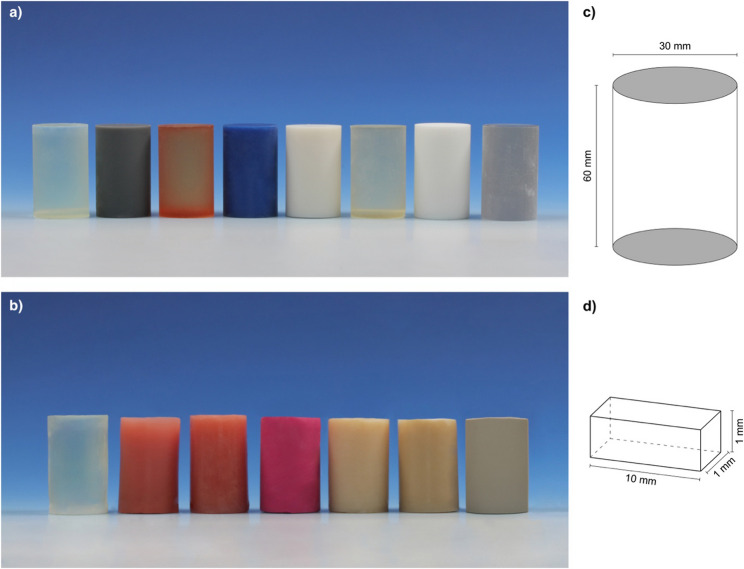 Figure 1
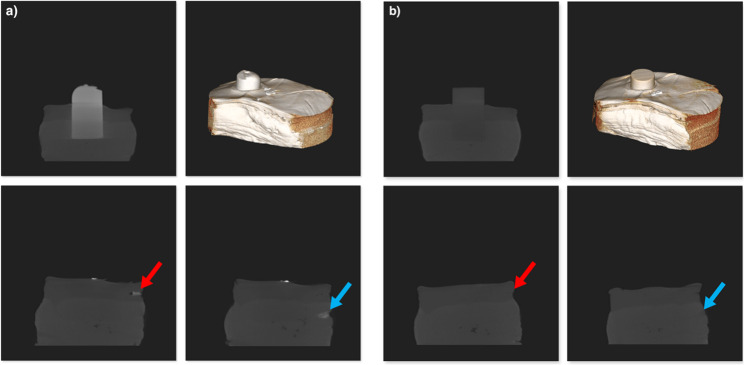 Figure 2
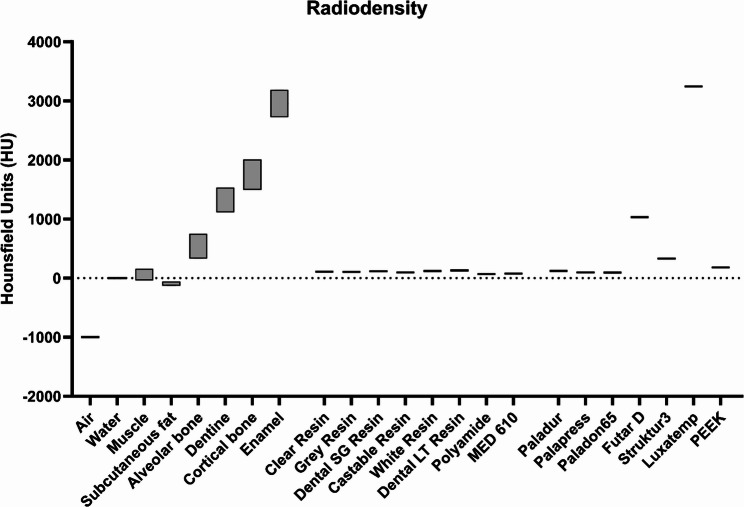 Figure 3
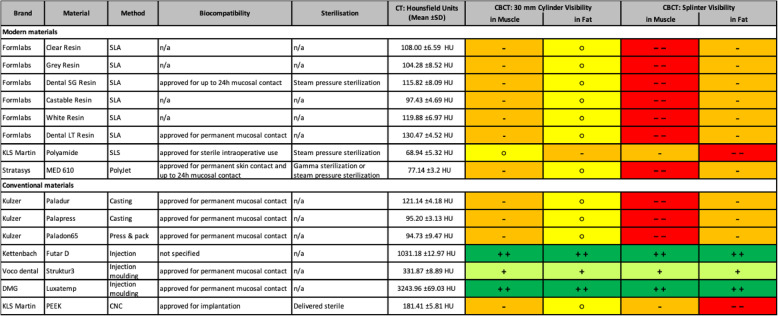 Figure 4
Peer Reviews
No public reviews on file for this paper yet. If you reviewed it on a platform where reviews are public (OpenReview, ICLR, NeurIPS, ICML), you can paste yours below so the community can read it here.
Videos
No videos yet. Explain this paper in a talk, walkthrough, or lecture? Add one.
Taxonomy
TopicsAnatomy and Medical Technology · Dental Radiography and Imaging · Dental materials and restorations