Impact of collective orientation on the quality of teamwork of emergency medical personnel in simulated prehospital emergency medical care - a prospective observational study
Lennart Meyer, Hendrik Eismann, Gordon Heringshausen, Vera Hagemann, Jan Carlo Del Tedesco, Markus Flentje

TL;DR
This study explores how willingness to work in teams (collective orientation) affects the performance of paramedics in simulated emergency scenarios.
Contribution
The study introduces empirical evidence on the impact of collective orientation on teamwork in prehospital emergency care.
Findings
High collective orientation improved teamwork factors like leadership and task management.
No significant difference was found in speed or completeness of patient care between high and low collective orientation teams.
Collective orientation appears most valuable in complex emergencies requiring diverse problem-solving.
Abstract
High-responsibility teams in prehospital emergency medicine regularly face multidimensional challenges. Collaboration in such teams is vital for the care, safety and outcome of our patients. Collective Orientation (CO) is simply defined as the individual willingness to work with others in a team. Collective Orientation has been proven to have a positive effect on team performance in clinical healthcare. However, data on prehospital emergency medicine is still lacking. This prospective observational study measured the collective orientation of n = 64 paramedic students in their third year of training using a validated questionnaire. Teams were formed based on the students’ collective orientation (high or low). Two simulation scenarios (tension pneumothorax and bronchospasm) were evaluated using the Time Key Item Product (TKIP) and Team Emergency Assessment Measure (TEAM). There was no…
Genes, proteins, chemicals, diseases, species, mutations and cell lines named across the full text — each resolved to its canonical identifier and authoritative record.
Click any figure to enlarge with its caption.
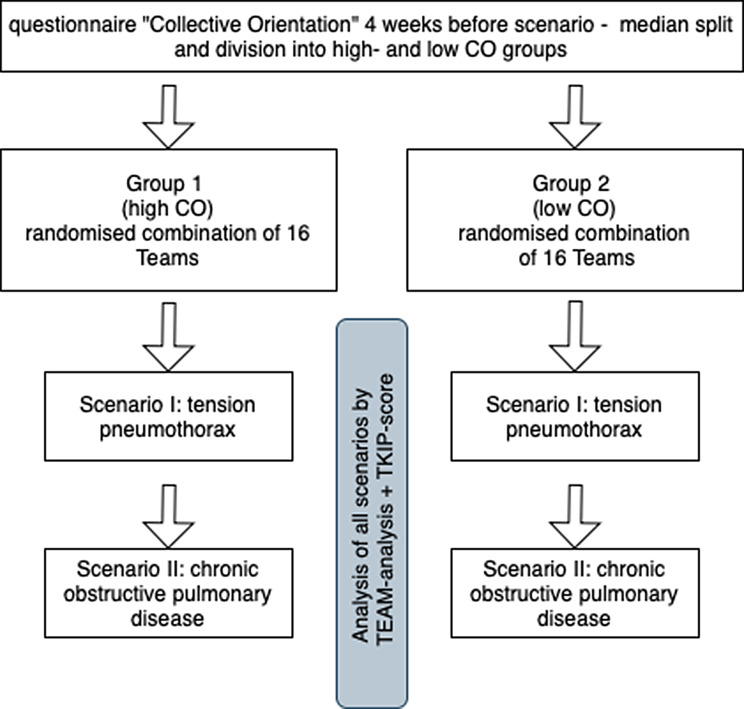 Figure 1
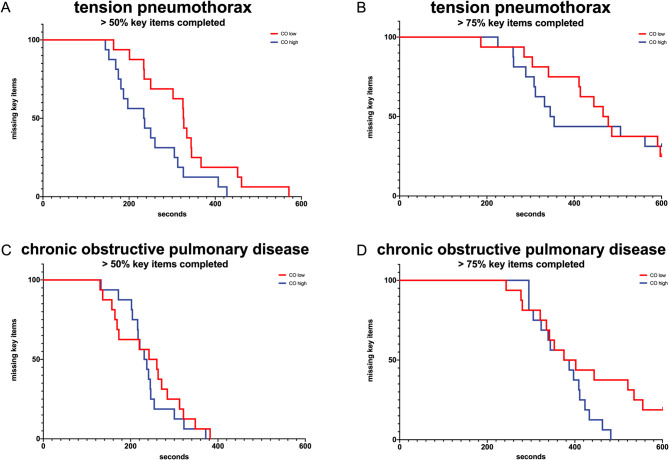 Figure 2
Peer Reviews
No public reviews on file for this paper yet. If you reviewed it on a platform where reviews are public (OpenReview, ICLR, NeurIPS, ICML), you can paste yours below so the community can read it here.
Videos
No videos yet. Explain this paper in a talk, walkthrough, or lecture? Add one.
Taxonomy
TopicsSimulation-Based Education in Healthcare · Clinical Reasoning and Diagnostic Skills · Interprofessional Education and Collaboration