Structural and transduction patterns of human-specific polymorphic SVA insertions
Ashley E. Kirby, Mark Loftus, Emily C. Golba, Haley J Abel, Haley J Abel, Hufsah Ashraf, Peter A Audano, Anna O Basile, Marc Jan Bonder, Harrison Brand, Marta Byrska-Bishop, Mark JP Chaisson, Junjie Chen, Yu Chen, Zechen Chong, Nelson T Chuang, Wayne E Clarke, André Corvelo

TL;DR
This study explores the structure and transduction patterns of polymorphic SVA elements in the human genome, revealing their role in genetic diversity and disease.
Contribution
The study identifies SVA_F1 as a major driver of SVA expansion and reports a higher transduction rate with a bias toward 3’ events.
Findings
SVA_F1 subfamily contributes significantly to SVA expansion in the human population.
40% of non-reference SVAs carry transduced sequences, with 69% originating from genes.
55 active source elements were identified, responsible for 84% of TD-carrying SVAs.
Abstract
SINE variable number tandem repeat Alu elements (SVAs) are a unique group of hominid-specific composite retrotransposons with highly variable internal structure. They represent the youngest TE family in humans and contribute to genetic diversity, evolution, and disease. Recent findings indicate that SVA mobilization rates may exceed previous estimates, and many SVAs exhibit insertion polymorphism. SVAs facilitate transduction (TD) events when transcription initiates upstream of a source element, or when their internal termination signal is bypassed, mobilizing adjacent 5’ and/or 3’ sequence. To investigate features of non-reference SVA elements currently polymorphic in the human genome, we analyzed a structural variant callset built upon 35 diverse human genomes generated by the Human Genome Structural Variation Consortium. In our curated dataset of 543 polymorphic, non-reference SVAs,…
Genes, proteins, chemicals, diseases, species, mutations and cell lines named across the full text — each resolved to its canonical identifier and authoritative record.
Click any figure to enlarge with its caption.
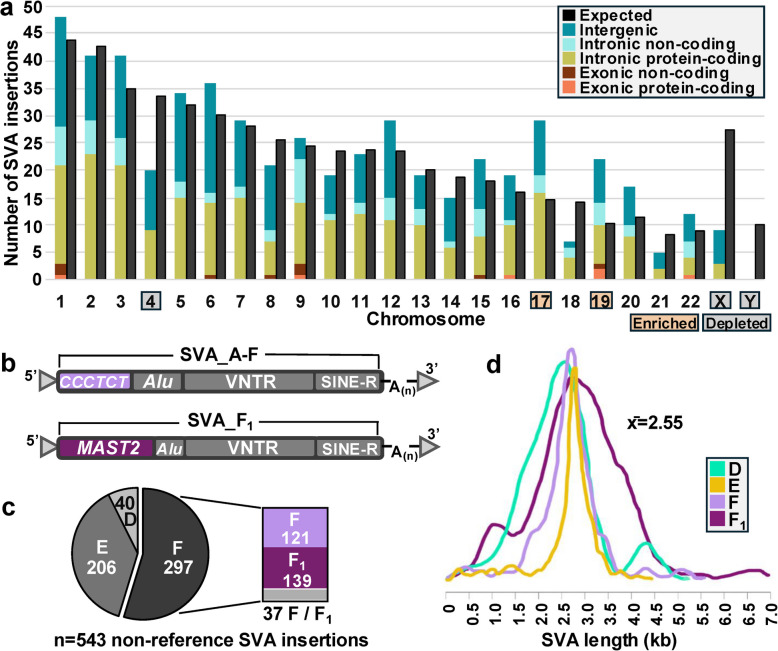 Figure 1
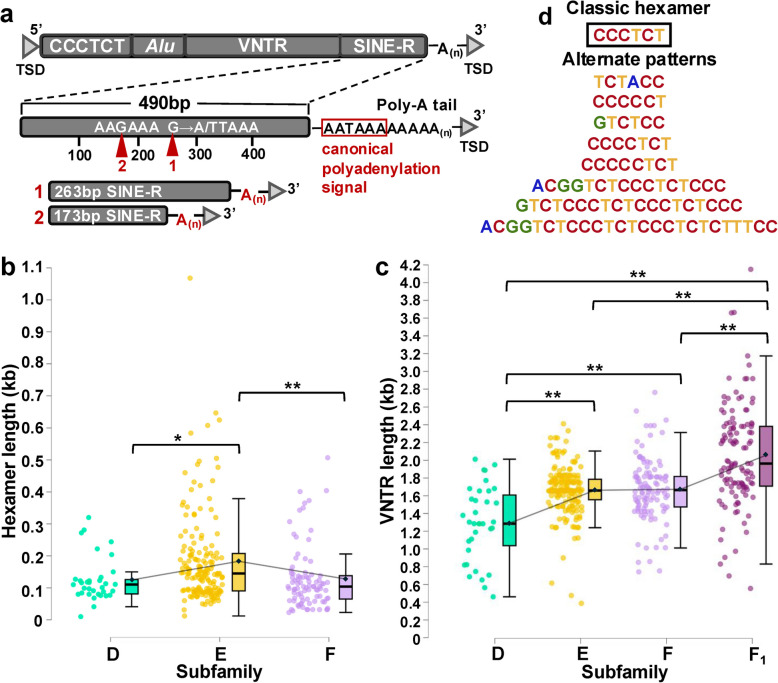 Figure 2
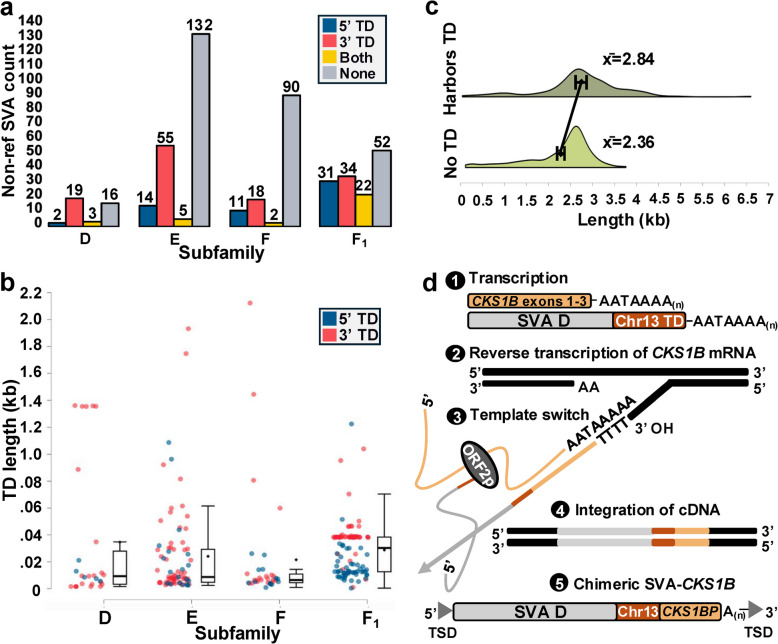 Figure 3
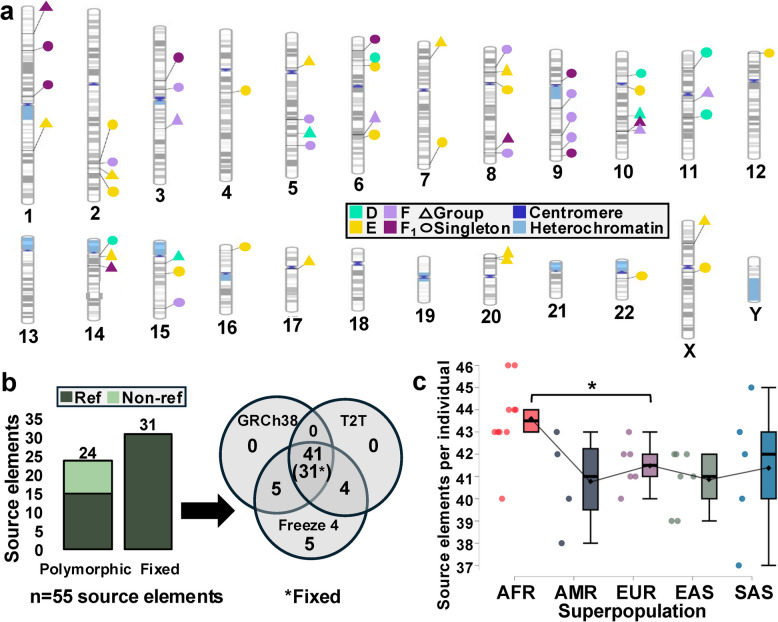 Figure 4
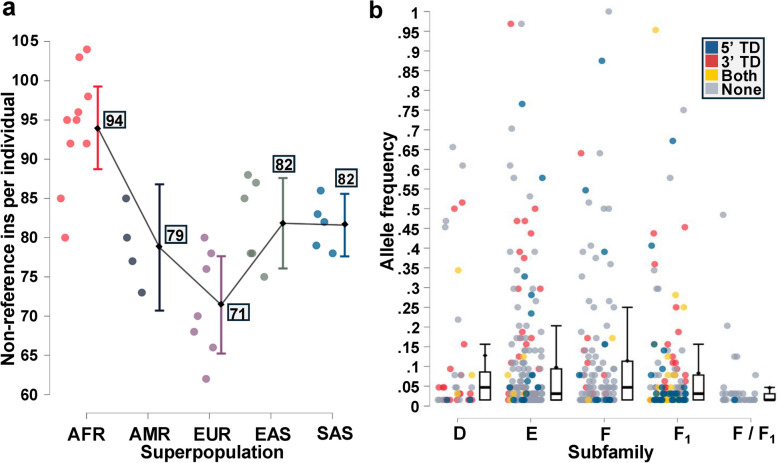 Figure 5
Peer Reviews
No public reviews on file for this paper yet. If you reviewed it on a platform where reviews are public (OpenReview, ICLR, NeurIPS, ICML), you can paste yours below so the community can read it here.
Videos
No videos yet. Explain this paper in a talk, walkthrough, or lecture? Add one.
Taxonomy
TopicsGenetic Neurodegenerative Diseases · Fetal and Pediatric Neurological Disorders · Genomics and Rare Diseases