A biofluid-repellent nanograss coating enhances flow of protein solutions and preserves transparency of glass capillaries upon exposure to blood
Mubashir Hussain, Mohammad Awashra, Christoffer Kauppinen, Seyed Mehran Mirmohammadi, Nicholas Addy-Tayie, Rosa Peltola, Juho Leskinen, Sami Puustinen, Heikki A. Nurmi, Robin H. A. Ras, Sami Franssila, Ville Jokinen

TL;DR
A new transparent coating on glass capillaries repels blood and protein solutions, reducing resistance and staying clean.
Contribution
A novel biofluid-repellent nanograss coating is developed for glass capillaries, enhancing flow and transparency.
Findings
The coating reduces hydraulic resistance for protein-rich fluids by up to 50%.
The capillaries remain transparent and clean after short-term blood exposure.
The repellence effect is strongest in small tubes and at low Reynolds numbers.
Abstract
A transparent and superhydrophobic (SHB) nanograss coating makes glass capillaries repellent toward protein solutions and blood. The coating is fabricated using atomic layer deposited alumina which is converted into grass-like alumina (GLA) by hot water treatment (HWT). The resulting tubes are transparent and highly repellent towards water and protein solutions (sliding angle <6° for a concentrated albumin solution). The biofluid repellence of the coating reduces hydraulic resistances for protein-rich biofluids, including fetal bovine serum, by 0–50% with the strongest effect for the smallest tubes and lowest Reynolds numbers. This work addresses a knowledge gap where previous studies have mostly focused on pure water for the drag reduction effect. The tubes also show a promising ability to stay clean and transparent on short term exposure to blood, unlike unmodified glass or polymer…
Genes, proteins, chemicals, diseases, species, mutations and cell lines named across the full text — each resolved to its canonical identifier and authoritative record.
Click any figure to enlarge with its caption.
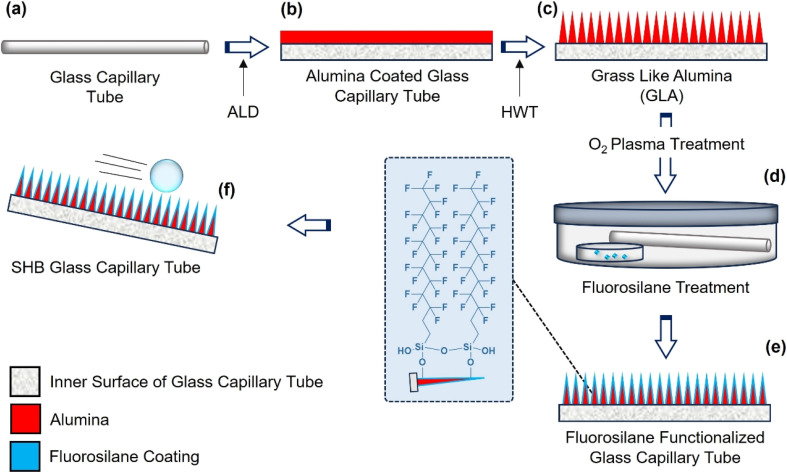 Figure 1
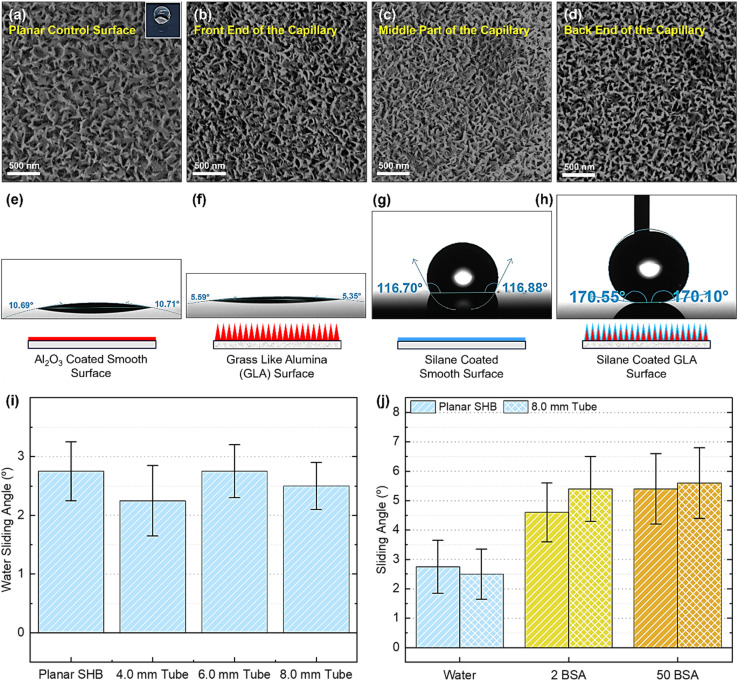 Figure 2
 Figure 3
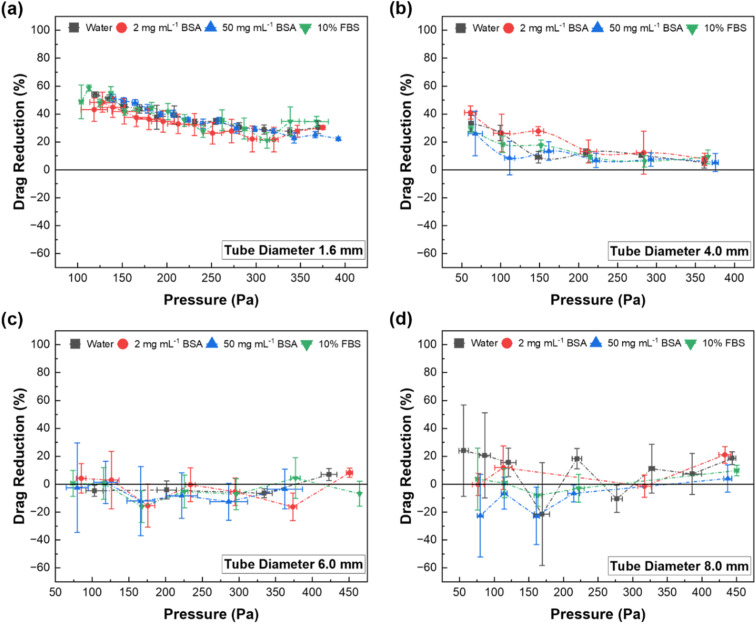 Figure 4
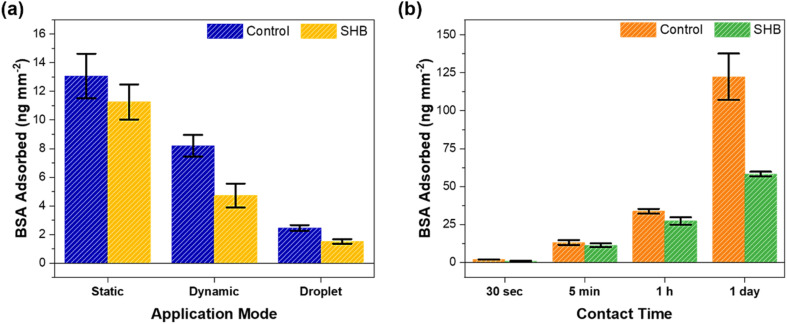 Figure 5
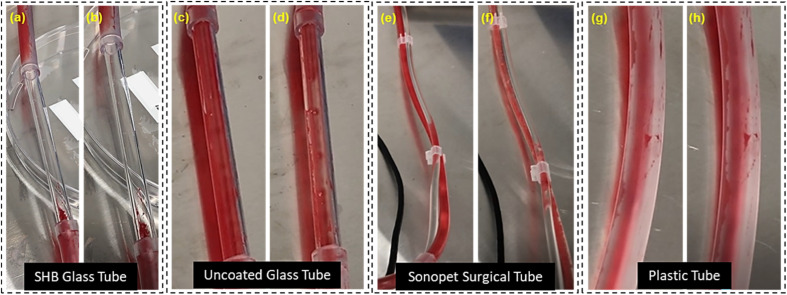 Figure 6
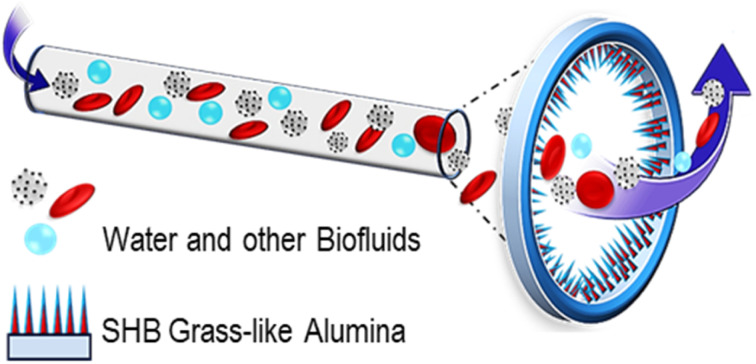 Figure 7
 Figure 8
 Figure 9
 Figure 10
Peer Reviews
No public reviews on file for this paper yet. If you reviewed it on a platform where reviews are public (OpenReview, ICLR, NeurIPS, ICML), you can paste yours below so the community can read it here.
Videos
No videos yet. Explain this paper in a talk, walkthrough, or lecture? Add one.
Taxonomy
TopicsSurface Modification and Superhydrophobicity · Innovative Microfluidic and Catalytic Techniques Innovation · Blood properties and coagulation