Membrane-associated estrogen receptor α prevents the amyloid β-induced suppression of GIRK channel activity in hippocampal neurons from female mice
Haichang Luo, Ezequiel Marron Fernandez de Velasco, Jaeyoon Kim, Praseuth Yang, Paul Mermelstein, Joseph V. Bonventre, Paul S. Cooke, Kevin Wickman

TL;DR
Estrogen protects female mouse brain cells from a harmful protein linked to Alzheimer's, which may explain why women are more likely to develop the disease.
Contribution
The study identifies membrane-associated estrogen receptor α as a sex-specific resilience factor against amyloid β-induced suppression of GIRK channels in female hippocampal neurons.
Findings
Local estrogen production in female hippocampal neurons protects GIRK channel activity from suppression by oligomeric amyloid β.
Resilience to oAβ suppression in female neurons requires membrane-associated estrogen receptor α and caveolin-1.
Blocking estrogen receptor α in females unmasked the same suppression mechanism previously observed in male neurons.
Abstract
Amyloid β oligomers (oAβ) are a key pathogenic driver in Alzheimer’s Disease (AD). Neuronal G protein-gated inwardly rectifying K+ (GIRK/Kir3) channels are important regulators of neuronal excitability and prominent somatodendritic effectors for inhibitory G protein-coupled receptors, including the γ-aminobutyric acid type B receptor (GABABR). We previously reported a male-specific suppression of GIRK channel activity in hippocampal (HPC) neurons evoked by oAβ in in vitro, ex vivo, and in vivo mouse models of AD, and showed that this adaptation correlated with synaptic and cognitive impairment. Using pharmacological approaches, we showed that this adaptation is mediated by co-activation of cellular prion protein (PrPC) and metabotropic glutamate receptor 5 (mGluR5) and requires activation of cytosolic phospholipase A2 α (cPLA2α). However, the mechanisms underlying the sex specificity…
Genes, proteins, chemicals, diseases, species, mutations and cell lines named across the full text — each resolved to its canonical identifier and authoritative record.
Click any figure to enlarge with its caption.
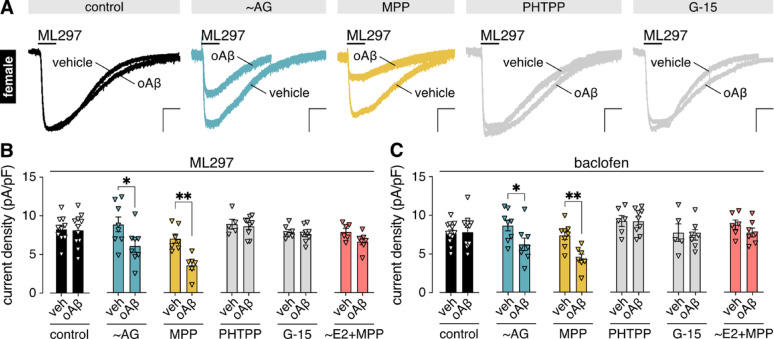 Figure 1
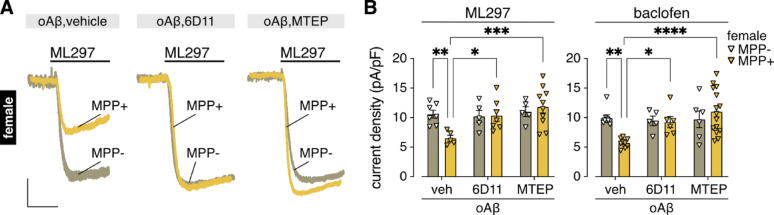 Figure 2
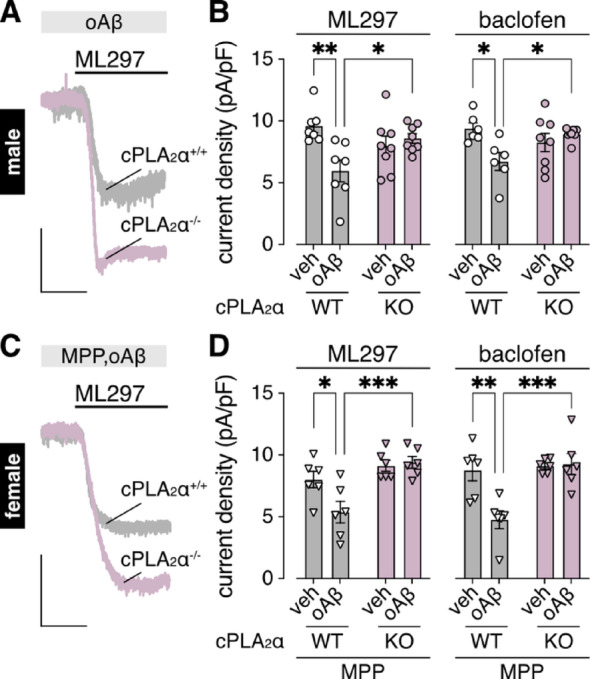 Figure 3
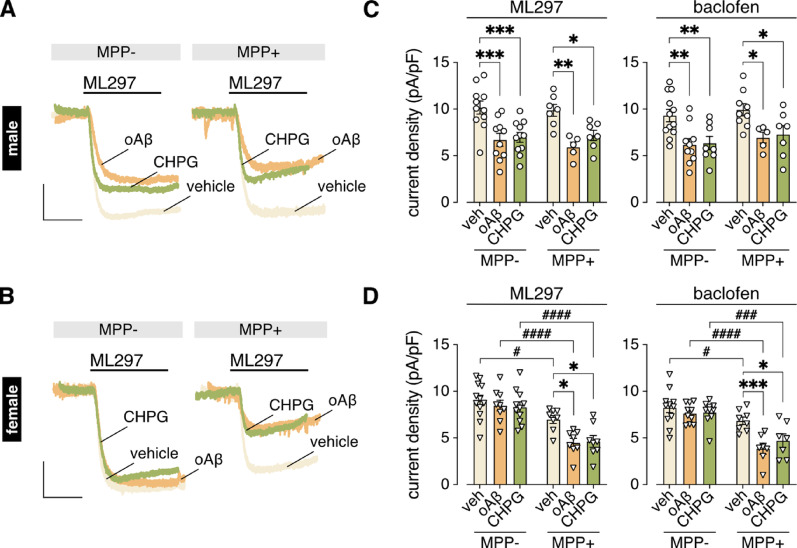 Figure 4
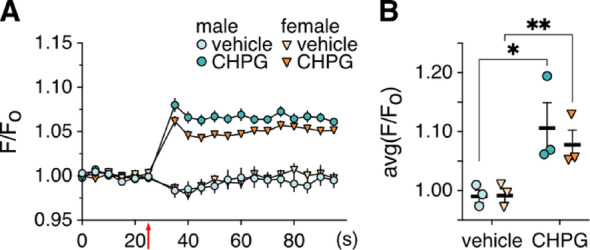 Figure 5
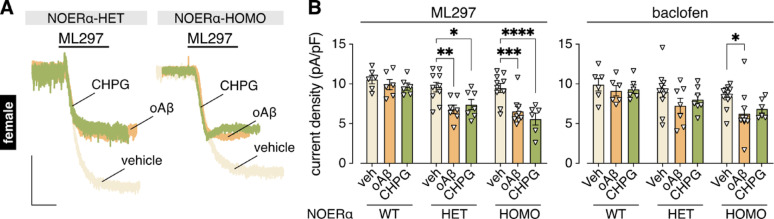 Figure 6
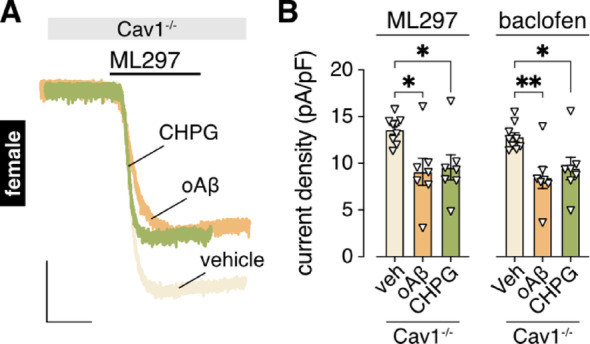 Figure 7
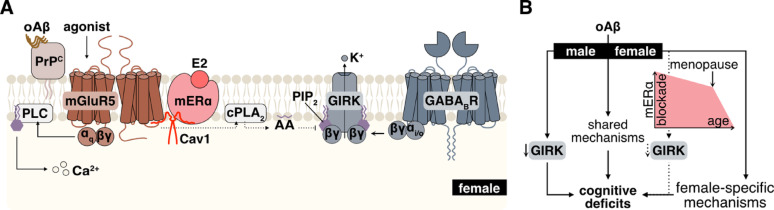 Figure 8
Peer Reviews
No public reviews on file for this paper yet. If you reviewed it on a platform where reviews are public (OpenReview, ICLR, NeurIPS, ICML), you can paste yours below so the community can read it here.
Videos
No videos yet. Explain this paper in a talk, walkthrough, or lecture? Add one.
Taxonomy
TopicsMenopause: Health Impacts and Treatments · Alzheimer's disease research and treatments · Neuroscience and Neuropharmacology Research