Rapid autofluorescence flow cytometric analysis of agonist-induced neutrophil and eosinophil polarization reveals novel insights into 5-oxo-ETE-mediated granulocyte activation
Anuruddika J. Fernando, Fiona Rossi, Destiny Docherty, Anna Popravko, Lucy Masters, Boydd Houston, Renu Gupta, Kevin Dhaliwal, Adriano G. Rossi

TL;DR
This paper introduces a new method using flow cytometry to study how neutrophils and eosinophils change shape in response to specific signals, without using external probes that might alter cell behavior.
Contribution
The study introduces a novel antibody-free flow cytometry approach using autofluorescence and forward scatter to rapidly assess granulocyte polarization and activation.
Findings
Stimulation with fMLF caused neutrophil polarization, marked by FSC shifts, reduced CD62L, increased CD11b, and ROS production.
Autofluorescence-based gating enabled identification of eosinophils in mixed granulocyte populations and revealed distinct activation patterns.
5-oxo-ETE activated both neutrophils and eosinophils, while eotaxin selectively activated eosinophils.
Abstract
Minimizing unintended granulocyte activation while measuring functional responsiveness is essential, as the use of external probes, antibodies, or fluorescent dyes can potentially alter cellular responsiveness. To address this, we employed an antibody-free flow cytometry approach that measures forward scatter (FSC) to detect variations in cell-size, morphology, and shape; some key indicators of neutrophil and eosinophil activation. Human peripheral blood neutrophils, containing contaminating eosinophils, were isolated using discontinuous Percoll gradients and pre-treated with receptor antagonists [e.g., cyclosporin-H (an FPR1 antagonist) and CP105696 (a BLT1 receptor antagonist)] prior to stimulation with agonists such as fMLF (an FPR1 agonist) and LTB4 (a BLT1 agonist). Furthermore, fMLF stimulation resulted in a loss of CD62L and an increase in CD11b expression along with an increase…
Genes, proteins, chemicals, diseases, species, mutations and cell lines named across the full text — each resolved to its canonical identifier and authoritative record.
Click any figure to enlarge with its caption.
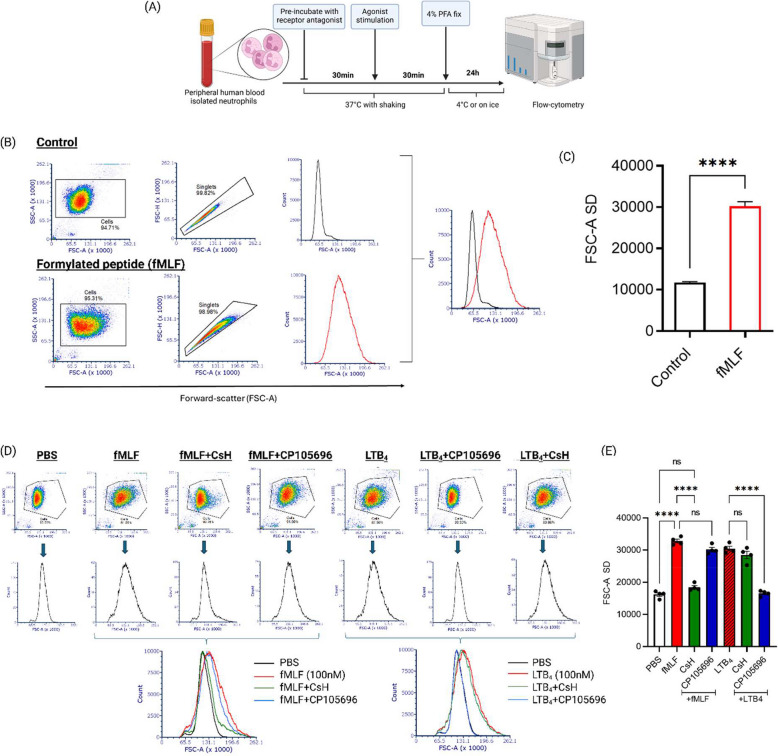 Figure 1
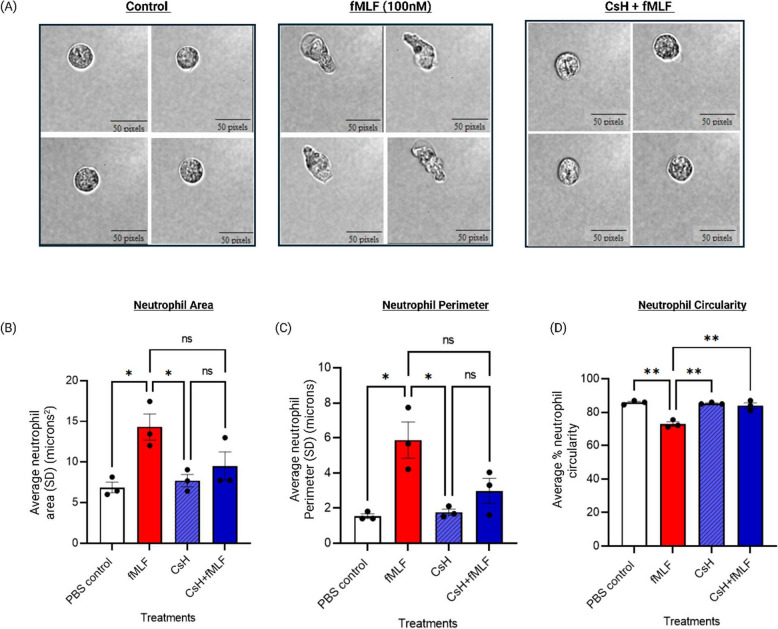 Figure 2
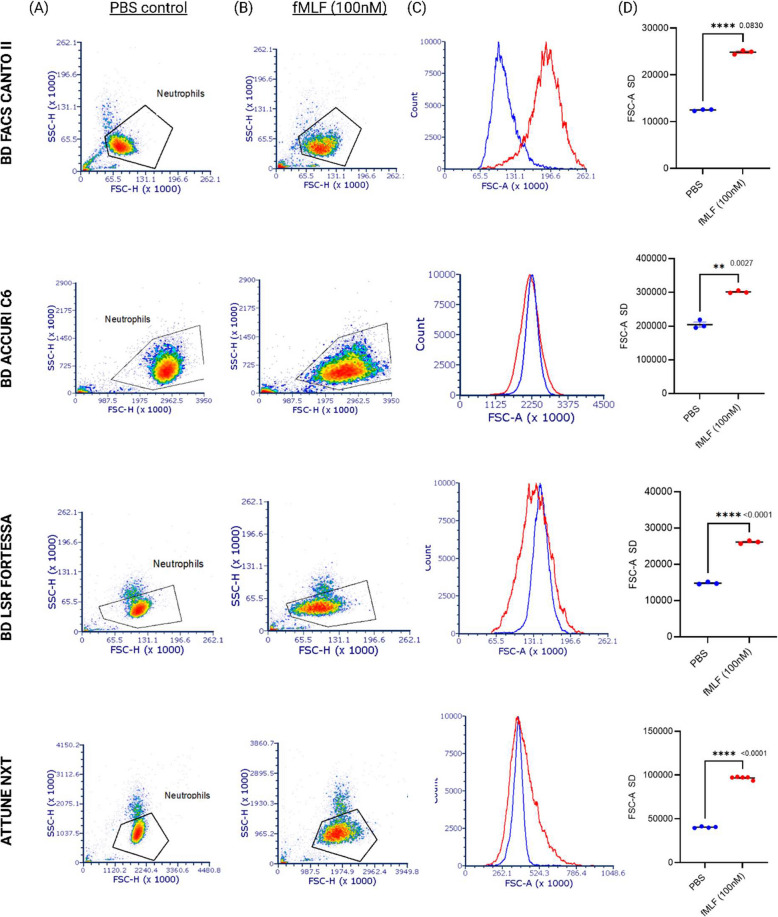 Figure 3
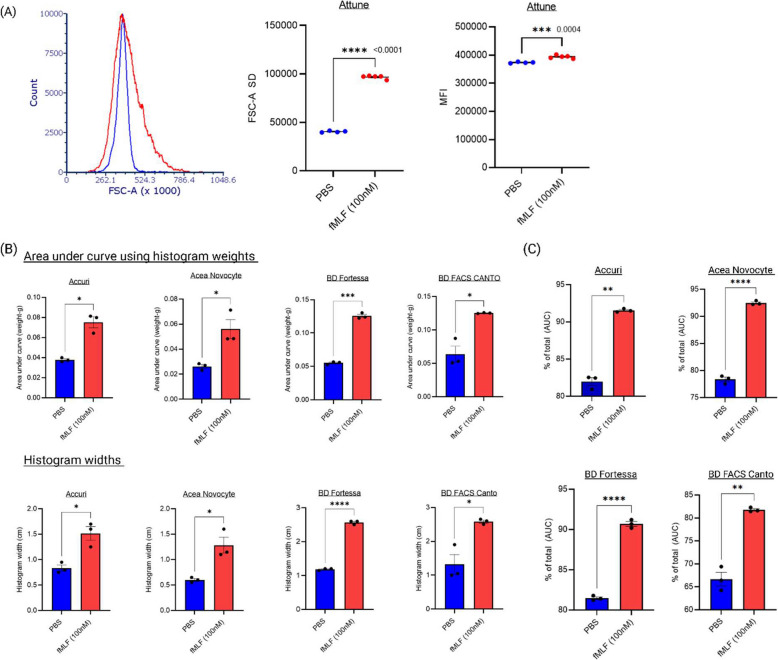 Figure 4
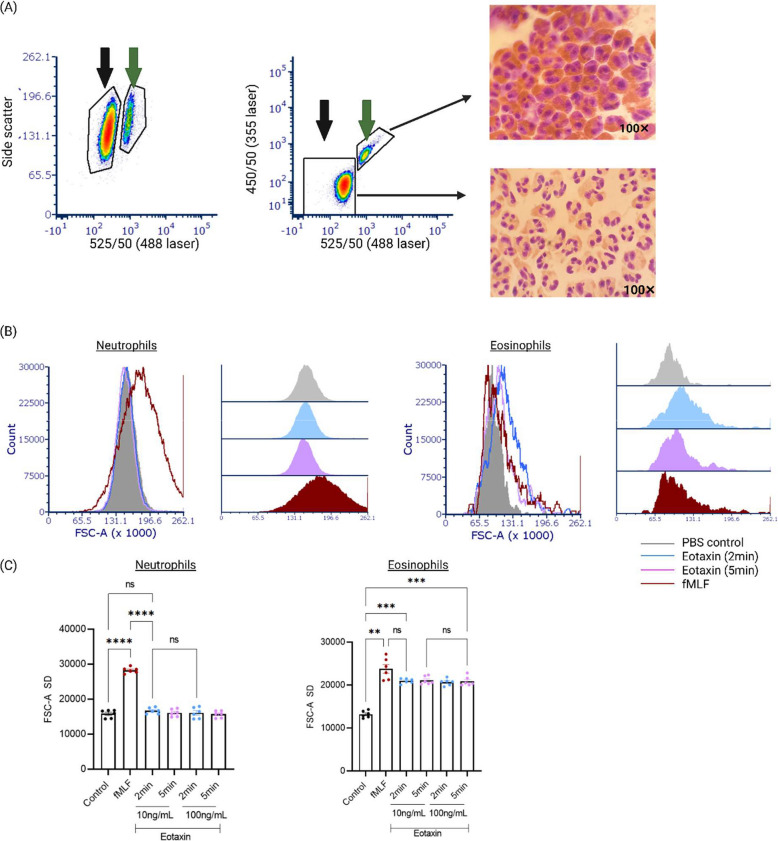 Figure 5
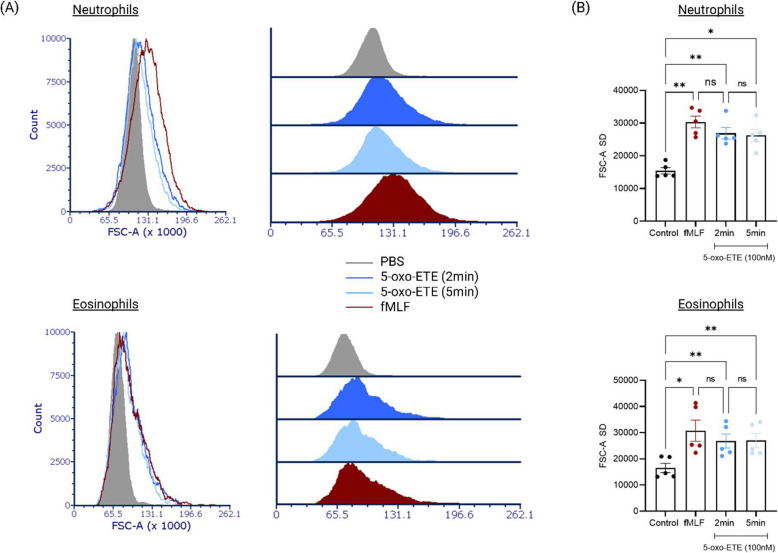 Figure 6
Peer Reviews
No public reviews on file for this paper yet. If you reviewed it on a platform where reviews are public (OpenReview, ICLR, NeurIPS, ICML), you can paste yours below so the community can read it here.
Videos
No videos yet. Explain this paper in a talk, walkthrough, or lecture? Add one.
Taxonomy
TopicsNeutrophil, Myeloperoxidase and Oxidative Mechanisms · Immune cells in cancer · Immune Response and Inflammation