Quantifying the scale dependence of primary productivity-species-richness relationships
Brian G. Tavernia

TL;DR
This study examines how the relationship between plant productivity and species richness changes with spatial scale and productivity measure across the U.S.
Contribution
The study novelly applies spatially varying coefficient models to precisely estimate distances over which productivity-species richness relationships change.
Findings
Productivity-species richness relationships (PSRR) are scale-dependent, with median distances ranging from 1,010 to 2,184 km depending on the productivity measure.
In the western U.S., seasonality negatively relates to species richness in some areas, while a small region shows positive associations with all three productivity measures.
Spatial patterns of PSRR form are influenced by prevailing productivity conditions, such as low annual productivity areas showing positive associations with species richness.
Abstract
Vegetation productivity is expected to correlate with species richness, but there is debate about whether the relationship form (non-existent, negative, positive, unimodal) of productivity-species-richness relationships (PSRR) depends on the spatial extent and productivity measure used. Previous assessments employed coarse distance categories to examine scale dependence and did not consider scale dependence for alternative productivity measures. I used spatially varying coefficient models to precisely estimate the distances over which PSRRs change and to map spatial patterns of form for breeding birds across the conterminous United States. I created separate models for three measures summarizing intra-annual estimates of gross primary productivity: sum, minimum, and seasonality (coefficient of variation). Models demonstrated that PSRRs were scale-dependent, and PSRR relationships…
Genes, proteins, chemicals, diseases, species, mutations and cell lines named across the full text — each resolved to its canonical identifier and authoritative record.
Click any figure to enlarge with its caption.
 Figure 1
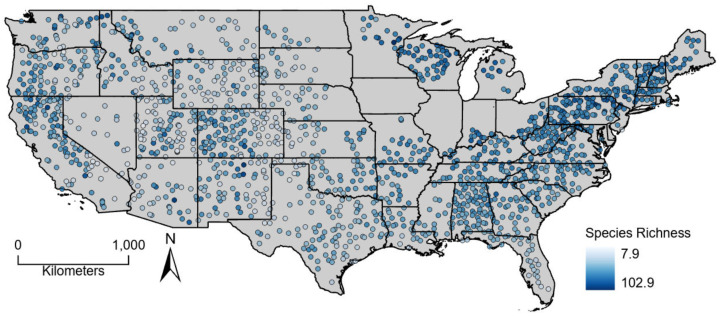 Figure 2
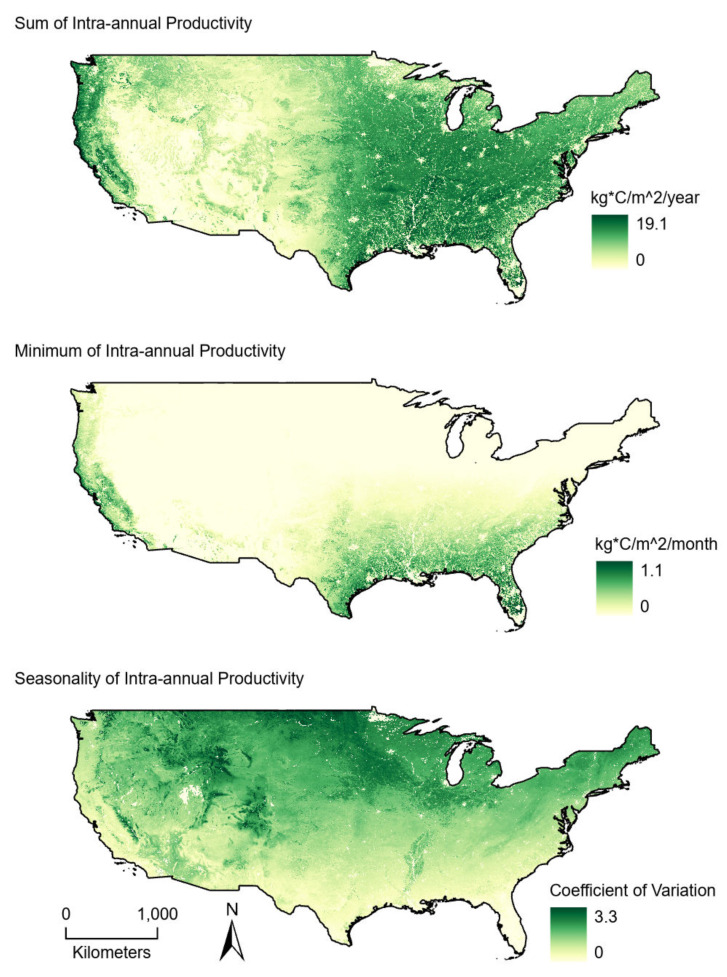 Figure 3
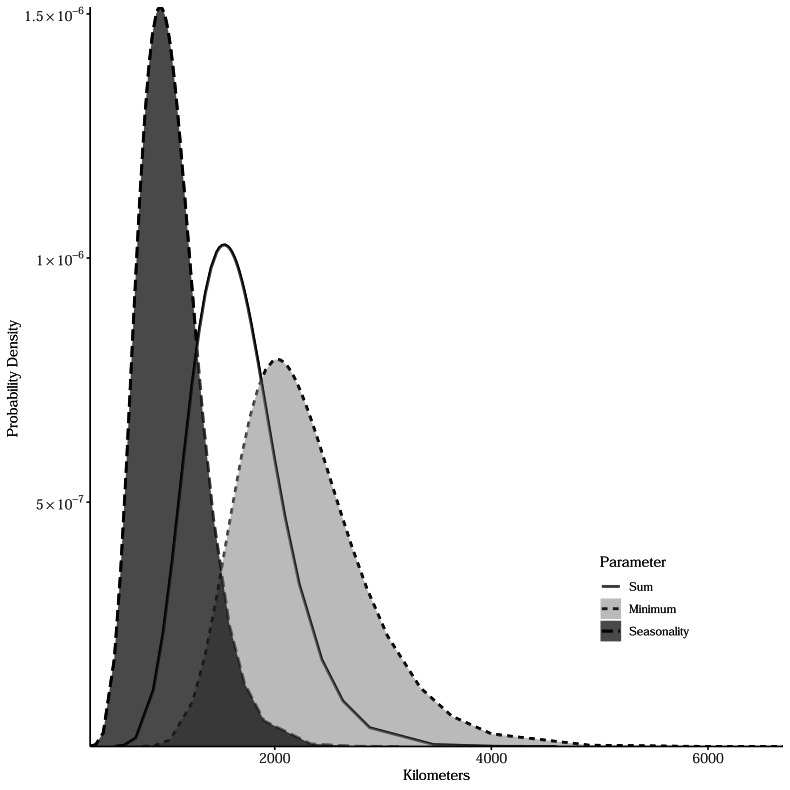 Figure 4
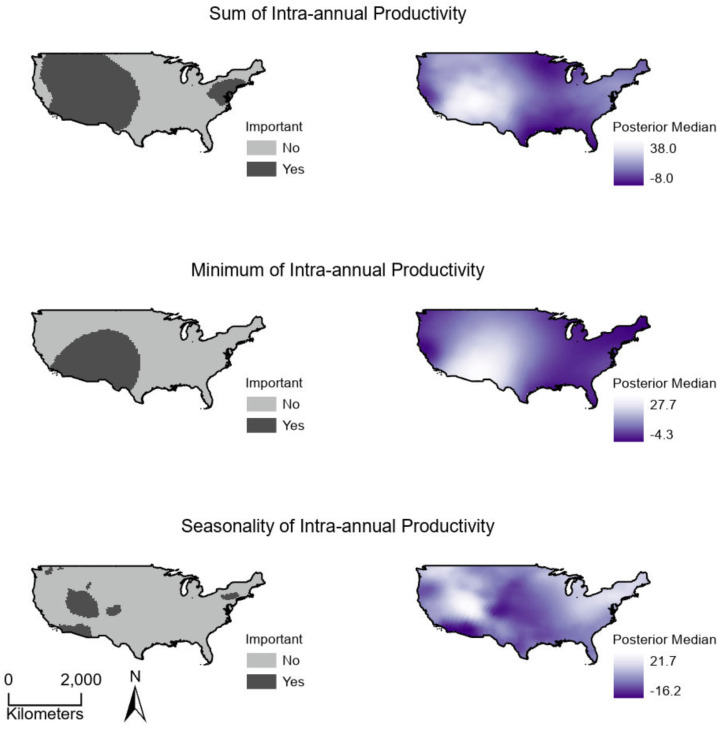 Figure 5
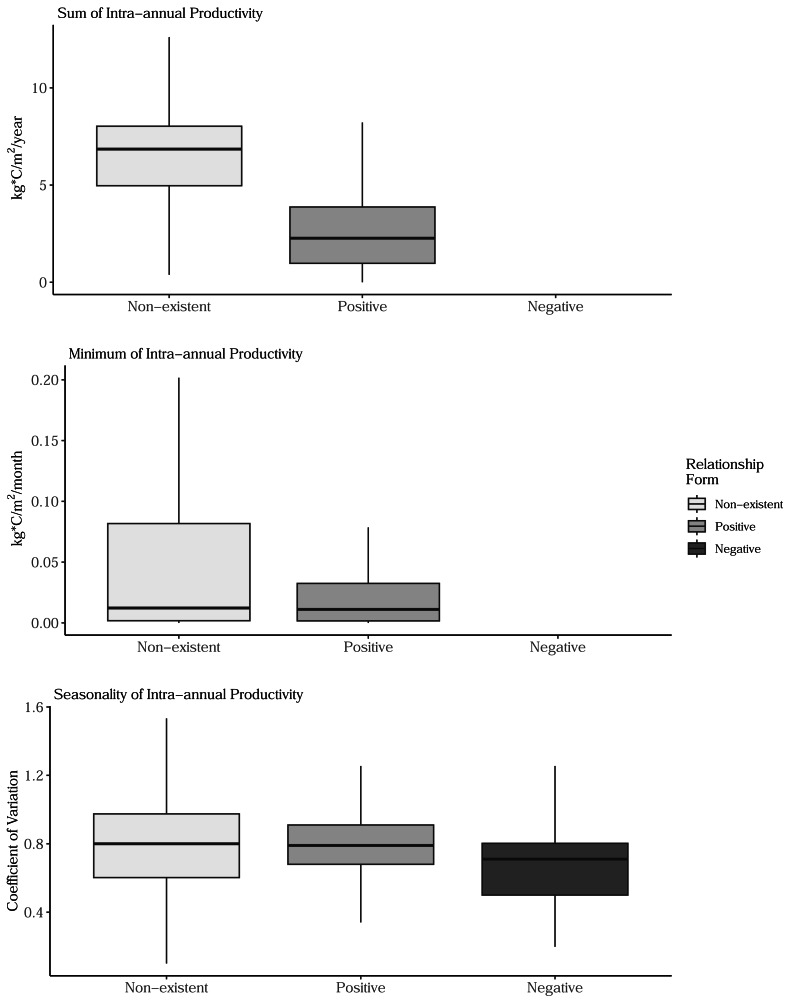 Figure 6
Peer Reviews
No public reviews on file for this paper yet. If you reviewed it on a platform where reviews are public (OpenReview, ICLR, NeurIPS, ICML), you can paste yours below so the community can read it here.
Videos
No videos yet. Explain this paper in a talk, walkthrough, or lecture? Add one.
Taxonomy
TopicsEcology and Vegetation Dynamics Studies · Species Distribution and Climate Change · Avian ecology and behavior