Incidence, persistence, and clearance of cervical human papillomavirus infection among gynecological outpatients in Kunming, Yunnan, China, 2019–2023: a retrospective cohort study
Yafei Huang, Xiangcong Wei, Yan Guo, Ting Su, Qiuting Duan, Xin Fan, Jinxiu Wan, Yufan Zhang, Guiqian Zhang, Yi Sun, Ya Xu

TL;DR
This study examines how HPV infections occur, persist, and clear in women in Yunnan, China, identifying key subtypes and age-related patterns.
Contribution
The study provides region-specific insights into HPV infection dynamics and identifies priority subtypes for cervical cancer prevention.
Findings
HPV-52 was the most common subtype, with persistent infections most frequent in younger and older age groups.
HPV clearance rates were highest in younger individuals and inversely correlated with age.
High-risk HPV types like HPV-58 and HPV-52 showed prolonged persistence, suggesting a higher cancer risk.
Abstract
Human papillomavirus (HPV), a leading sexually transmitted pathogen, is characterized by persistent infection, which represents a critical risk factor for cervical carcinogenesis. This retrospective cohort study investigated the epidemiology of HPV among 45,149 gynecological outpatients in Yunnan, China (2019–2023). The 12-month cumulative incidence of HPV infection was 36.84%, with the highest rates observed in the 30–49-year age group. HPV-52 was the predominant subtype, followed by HPV-51, -81, -58, and -16. Persistent infection was observed in 55.56% of cases, most frequently involving HPV-42, -52, -58, -81, and -56, with higher rates in individuals younger than 30 and older than 59 years. Overall clearance reached 74.43% and was inversely correlated with age. Rapid clearance was predominantly observed for HPV-26, -83, -11, -82, and -44, whereas high-risk HPV types (HPV-58, HPV-52,…
Genes, proteins, chemicals, diseases, species, mutations and cell lines named across the full text — each resolved to its canonical identifier and authoritative record.
Click any figure to enlarge with its caption.
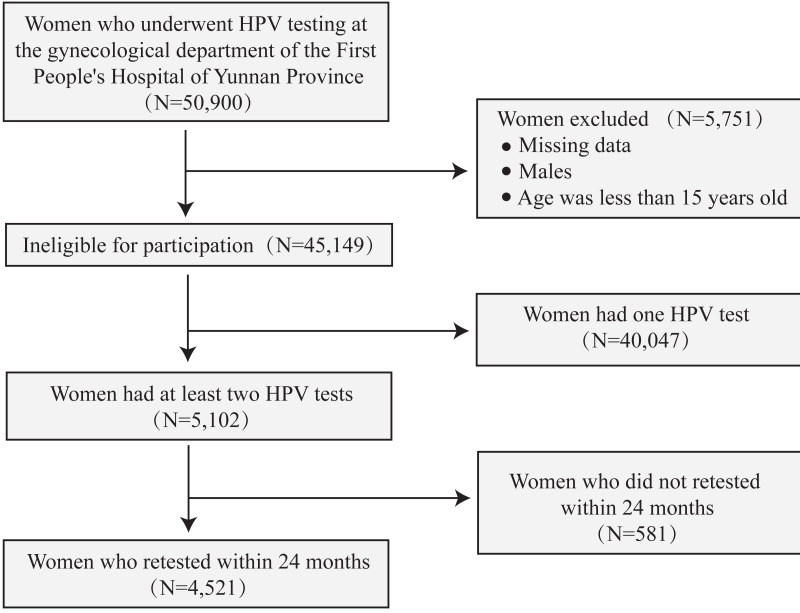 Figure 1
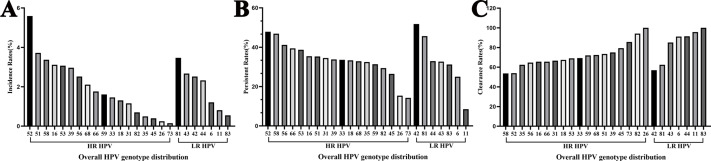 Figure 2
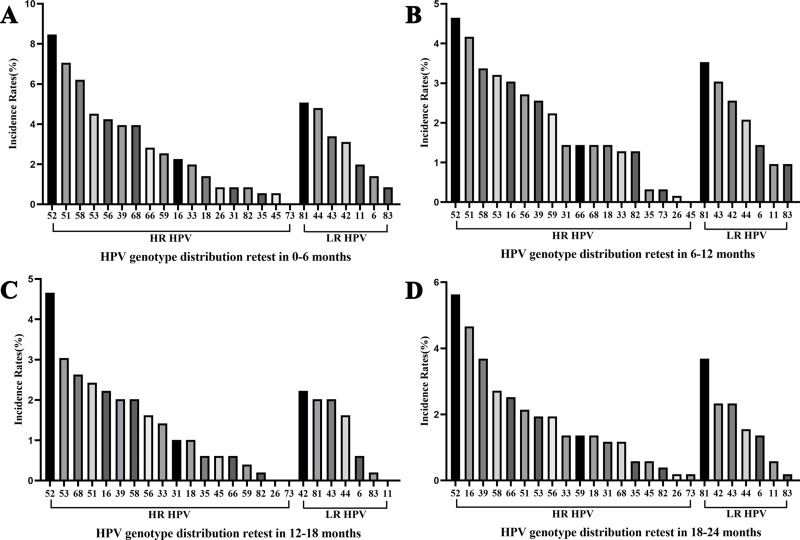 Figure 3
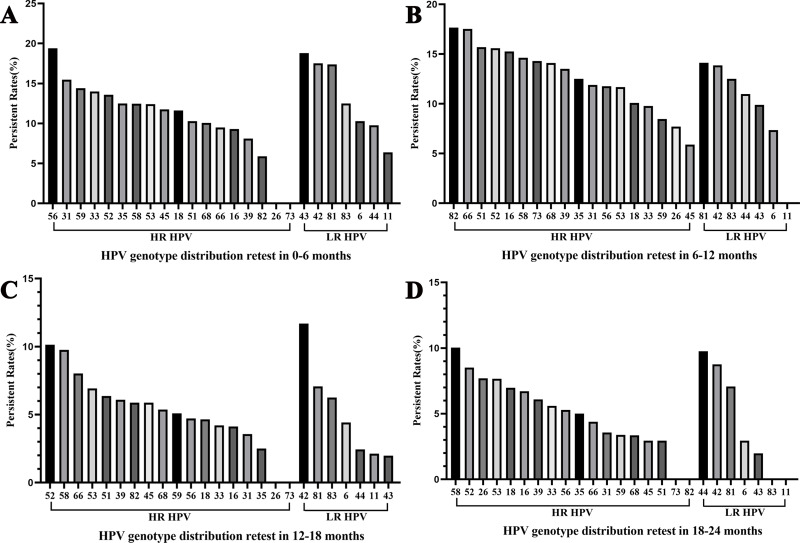 Figure 4
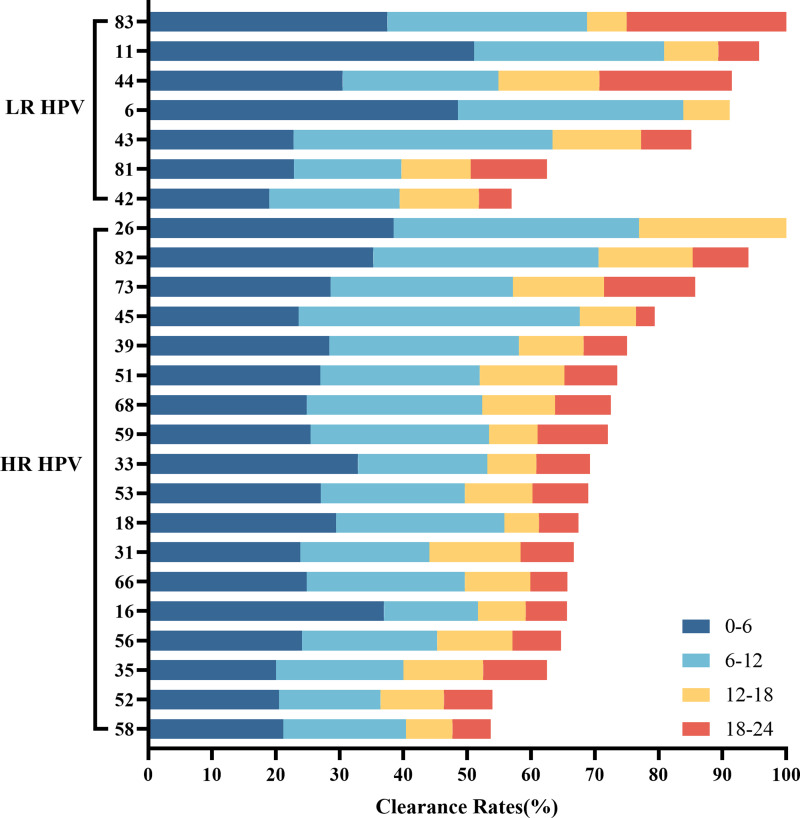 Figure 5
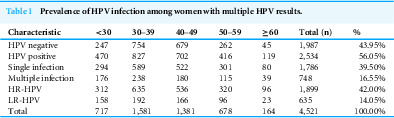 Figure 6
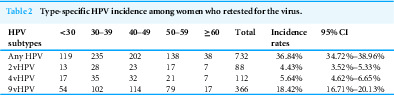 Figure 7
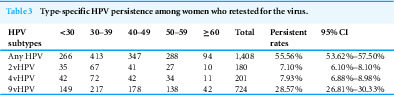 Figure 8
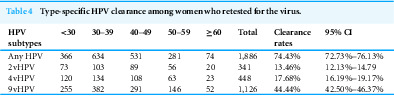 Figure 9
Peer Reviews
No public reviews on file for this paper yet. If you reviewed it on a platform where reviews are public (OpenReview, ICLR, NeurIPS, ICML), you can paste yours below so the community can read it here.
Videos
No videos yet. Explain this paper in a talk, walkthrough, or lecture? Add one.
Taxonomy
TopicsCervical Cancer and HPV Research · Reproductive tract infections research · Endometrial and Cervical Cancer Treatments