M13 phages engineered with chlamydia phage φCPG1 protein IN5 and arginine-glycine-aspartic acid inhibits Chlamydia trachomatis intracellular growth
Cong You, Mei Wang, Jiangyi Wang, Tingting Lian, Quanzhong Liu

TL;DR
Engineered M13 phages with specific proteins and peptides can reduce Chlamydia trachomatis infection by targeting virulence genes.
Contribution
A novel recombinant M13 phage with RGD and IN5 proteins is shown to inhibit Chlamydia trachomatis growth more effectively than previous versions.
Findings
M13-RGD8-IN53 phage significantly reduces Chlamydia trachomatis infection.
The phage downregulates several C. trachomatis virulence-related genes.
RGD enhances phage permeability into cells, improving treatment efficacy.
Abstract
•The recombinant M13-RGD8-IN53 could significantly reduce C. t infection.•The M13-RGD8-IN53 phage was better than the M13-IN53 phage in ameliorating C.t infection.•Treatment with the recombinant M13-RGD8-IN53 and M13-IN53 phages downregulated C. t genes related to virulence. The recombinant M13-RGD8-IN53 could significantly reduce C. t infection. The M13-RGD8-IN53 phage was better than the M13-IN53 phage in ameliorating C.t infection. Treatment with the recombinant M13-RGD8-IN53 and M13-IN53 phages downregulated C. t genes related to virulence. Chlamydia trachomatis (C. t) is the most common causative agent of sexually transmitted bacterial urogenital infections worldwide. C. t treatment failure is increasing because antibiotic resistance has developed in recent years. Therefore, the development of novel therapeutic strategies is necessary. Here, we constructed an M13 phage carrying…
Genes, proteins, chemicals, diseases, species, mutations and cell lines named across the full text — each resolved to its canonical identifier and authoritative record.
Click any figure to enlarge with its caption.
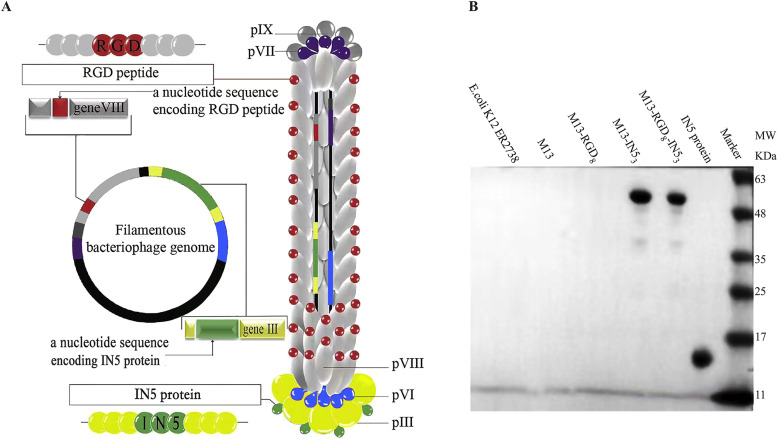 Figure 1
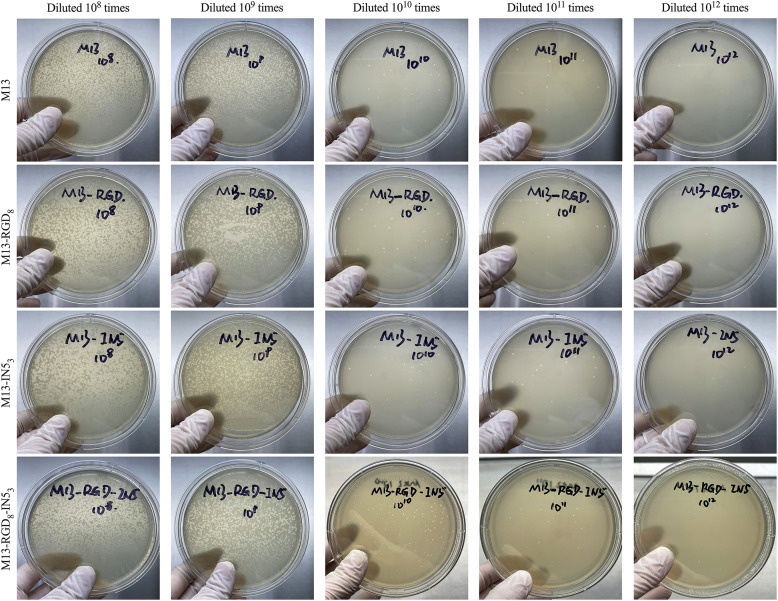 Figure 2
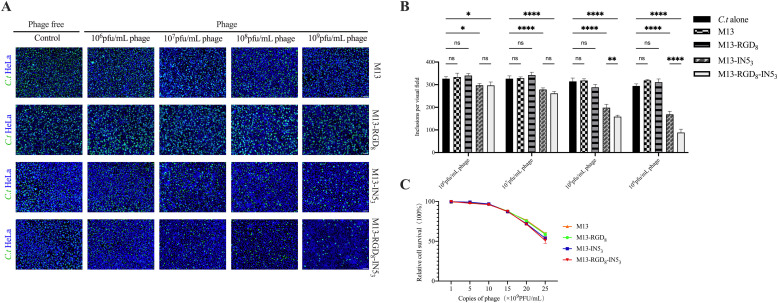 Figure 3
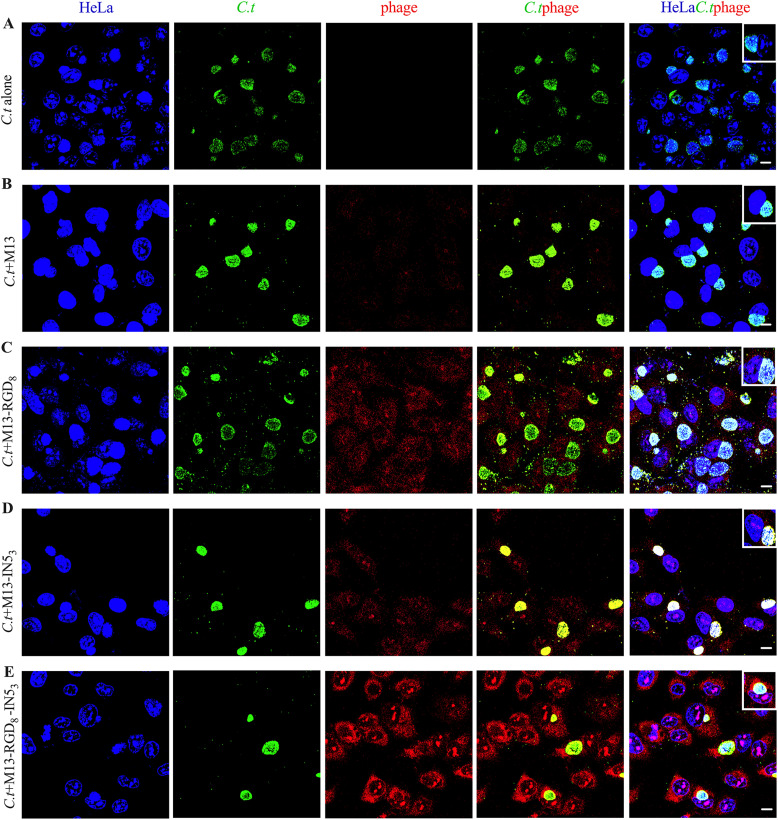 Figure 4
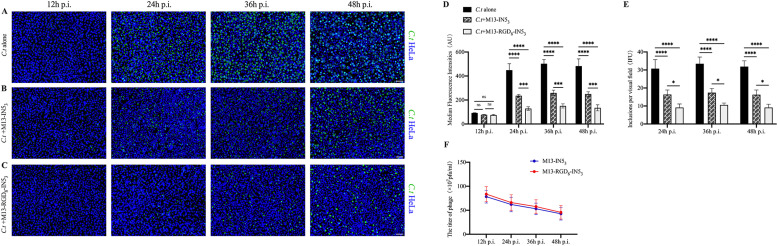 Figure 5
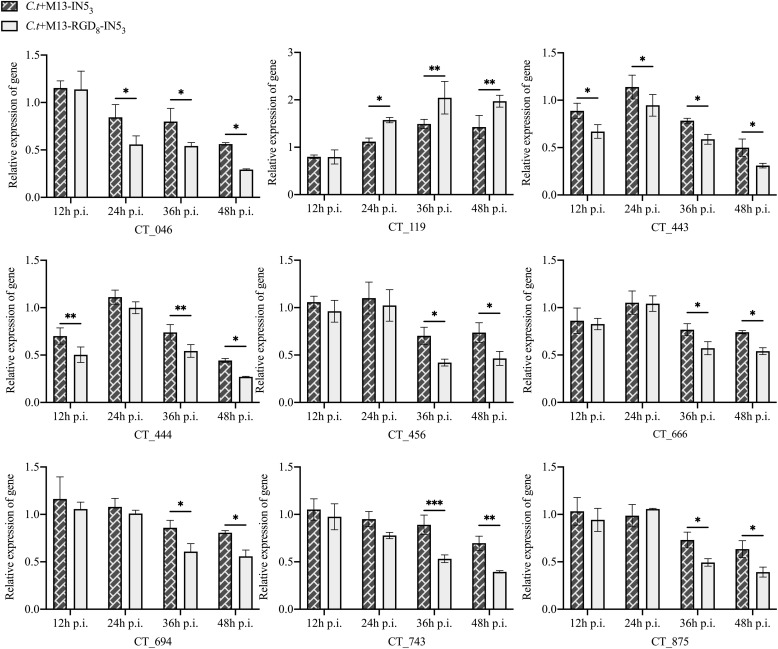 Figure 6
Peer Reviews
No public reviews on file for this paper yet. If you reviewed it on a platform where reviews are public (OpenReview, ICLR, NeurIPS, ICML), you can paste yours below so the community can read it here.
Videos
No videos yet. Explain this paper in a talk, walkthrough, or lecture? Add one.
Taxonomy
TopicsReproductive tract infections research · Bacteriophages and microbial interactions · Monoclonal and Polyclonal Antibodies Research