Congenital Holoprocencephaly, Hydrocephalus, and Dandy-Walker Malformation Due to Plasminogen Deficiency
Nikolaos Antonakopoulos, Panagiotis Perdikaris, Ioanna Styliara, Panagiota Tzela, Georgios Adonakis

TL;DR
A newborn with severe plasminogen deficiency developed rare brain malformations, including hydrocephalus and Dandy-Walker malformation, despite showing no immediate neurological issues at birth.
Contribution
This case report highlights a novel association between plasminogen deficiency and multiple congenital central nervous system malformations.
Findings
Severe plasminogen deficiency was identified as the underlying cause of congenital central nervous system malformations in a newborn.
MRI confirmed the presence of hydrocephalus, holoprocencephaly, and Dandy-Walker malformation in the neonate.
The neonate underwent a ventriculoperitoneal shunt and survived at least six months.
Abstract
Plasminogen deficiency is an ultra-rare congenital condition with only a few reported cases worldwide, causing the formation of pseudo-membranous, fibrin-rich growths on mucosa throughout the body. In this case report, we present the rare case of a newborn presenting with multiple congenital central nervous system malformations due to severe plasminogen deficiency, in an otherwise completely unattended pregnancy. The mother was admitted to the emergency department due to the onset of labor. Upon routine ultrasound examination, marked macrocephaly and hydroanencephaly were observed. The fetus was delivered by selective cesarean section as fetal head dystocia was highly suspected. Unexpectedly, the neonatal examination immediately post-partum did not reveal any neurological deficits. An MRI was conducted, which confirmed the existence of congenital hydrocephalus, as well as…
Genes, proteins, chemicals, diseases, species, mutations and cell lines named across the full text — each resolved to its canonical identifier and authoritative record.
Click any figure to enlarge with its caption.
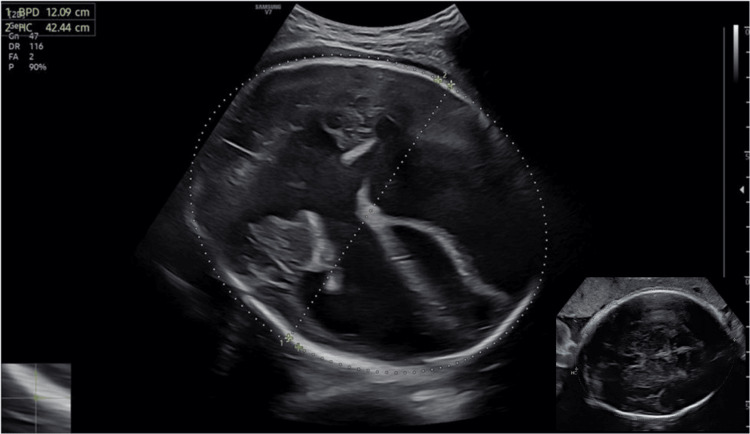 Figure 1
Peer Reviews
No public reviews on file for this paper yet. If you reviewed it on a platform where reviews are public (OpenReview, ICLR, NeurIPS, ICML), you can paste yours below so the community can read it here.
Videos
No videos yet. Explain this paper in a talk, walkthrough, or lecture? Add one.
Taxonomy
TopicsFetal and Pediatric Neurological Disorders · Cerebrospinal fluid and hydrocephalus · Neonatal and fetal brain pathology
Introduction
Plasminogen deficiency is an ultra-rare congenital disorder characterized by impaired fibrinolysis and the accumulation of fibrin-rich pseudomembranes on mucosal surfaces throughout the body. Fewer than a few hundred cases have been described worldwide, and the clinical spectrum is highly variable, ranging from ligneous conjunctivitis to life-threatening systemic involvement. Neurological manifestations of plasminogen deficiency are exceedingly uncommon, with only isolated reports linking the condition to central nervous system anomalies. Here, we present a rare case of a newborn with multiple congenital brain malformations - including hydrocephalus, holoprosencephaly, and Dandy-Walker malformation - in the setting of severe plasminogen deficiency. Despite its rarity, recognition of plasminogen deficiency is critical, as timely diagnosis and management can alter outcomes and improve quality of life.
Case presentation
A 19-year-old pregnant woman presented to the Emergency Department of the University General Hospital of Patras, complaining of uterine contractions. This was her third pregnancy, completely unattended, due to her low socioeconomic status. The physical examination and cardiotocogram (CTG) evaluation revealed that the woman was in labor. A subsequent ultrasound examination of the fetus revealed marked macrocephaly and hydranencephaly (HC of 424 mm). Brainstem structures were present, thus the suspicion of holoprosencephaly was raised (Figure 1). Fetal biometry corresponded to 39 weeks, based on all estimated fetal weight parameters rather than HC alone. By family history, it emerged that she and her partner were second-degree relatives. Due to the apparent cephalopelvic disproportion, a cesarean section was decided.
Marked fetal macrocephaly and hydranencephaly.The smaller image on the lower right quadrant shows the normal fetal brain sonographic imaging of the late third trimester.
The newborn immediately after delivery was admitted to the neonatal intensive care unit due to mild respiratory distress; otherwise, no major neurological deficits were present during a rough physical examination. The birth weight of 4510 g corresponded to the 97th centile. A more detailed examination of the newborn revealed mild distention of cranial sutures. Laboratory tests were normal. Screening for congenital infections (TORCH) and karyotype analysis were negative. A new brain MRI was performed, and the findings were primarily compatible with lobar holoprosencephaly with fusion of the lateral ventricles and significant dilatation of the ventricular system. In addition, a Dandy-Walker type dysplasia was identified with enlargement of the posterior cranial fossa, hypoplasia of the cerebellar vermis, and aplasia of the floor of the fourth ventricle.
The newborn was transferred to “Agia Sophia” Children’s Hospital for further evaluation and long-term management. During scrutinizing tests, a significantly low blood concentration of plasminogen was found, and thus the aforementioned defects in the central nervous system (CNS) development were ultimately attributed to congenital plasminogen deficiency. A ventriculoperitoneal catheter for drainage of the cerebrospinal fluid (CSF) was placed by a specialized pediatric neurosurgeon to treat the increased intracranial pressure. The infant remained alive at the time this manuscript was written.
Discussion
Ventriculomegaly is a common fetal CNS anomaly with an incidence of 0.3-2 cases per 1000 pregnancies [1]. It is defined as an increased width of the lateral ventricles of the brain beyond 10mm. It is divided into mild (width 10-12 mm), moderate (12-15 mm), and severe (>15 mm). The term hydrocephalus refers to the combination of severe ventriculomegaly and increased CSF pressure within the ventricular system [2]. The prognosis of isolated mild/moderate ventriculomegaly is favorable, with an incidence of developmental delay of approximately 8%, while in severe cases, the prognosis is worse, with only 23.5% survival beyond the age of two years, especially when CNS defects coexist [3]. Worldwide, the prevalence of congenital hydrocephalus varies from less than 1 in 10000 live births in Denmark to 7 per 1000 in Egypt, while 78% of patients show neurological deficits for the rest of their lives [4,5]. Nowadays, more than 90% of ventriculomegaly and hydrocephalus cases are detected prenatally via ultrasound during the second trimester of pregnancy [4,6]. When routine fetal anatomy screening raises a suspicion, advanced neurosonography and MRI of the brain are recommended, given that in 20% of cases, MRI identifies additional CNS abnormalities [2,7].
Plasminogen, as a precursor to plasmin, is mainly crucial for fibrinolysis, maintaining vascular patency, and hemostatic balance. Beyond that, it plays vital roles in wound healing, tissue repair, and resolution of inflammation, even in bone remodeling. It achieves these multifaceted functions by binding to cell surface receptors, facilitating cell migration, and influencing immune processes. Hypoplasminogenemia is transmitted as an autosomal recessive trait [8], which is consistent with the increased incidence in blood-related offspring [8-11]. Homozygous congenital plasminogen deficiency is an extremely rare genetic disorder, with an incidence of 1 in 1,000,000. It potentially affects all mucous membranes of the body, leading to the formation of pseudomembranes. In 81% of patients, it affects the conjunctivae, causing xylem conjunctivitis. In 12% of cases, there is concomitant development of obstructive hydrocephalus, associated with severe forms of the disease [10, 12]. Dandy-Walker dysplasia occurs in only 5% of these cases [10]. Historically, the first recorded case of severe hypoplasminogenemia with xylem conjunctivitis and obstructive hydrocephalus was in 1994 and involved an 18-month-old girl from Turkey, while since then the total number of reported cases worldwide does not exceed 20 [10, 12]. CNS involvement in plasminogen deficiency is unusual because the blood-brain barrier restricts plasminogen entry, the CNS has alternative fibrin-clearance pathways, and typical fibrin-rich pseudomembranes form on mucosal, not neural, surfaces.
Conclusions
In conclusion, mild ventriculomegaly is a non-rare finding on fetal anatomy screening with a favorable outcome, in comparison to fetal hydrocephalus. Furthermore, congenital plasminogen deficiency is an extremely rare cause of congenital hydrocephalus, but should be included in the differential diagnosis, especially in the absence of other more common causes and in offspring of blood relatives. Our case also highlights the need for proper and timely prenatal screening, as the management of such cases is challenging with a dubious prognosis.
The reference list from the paper itself. Each links out to its DOI / PubMed record.
- 1Fetal ventriculomegaly: Diagnosis, treatment, and future directions Childs Nerv Syst Pisapia JM Sinha S Zarnow DM Johnson MP Heuer GG 111311233320172851007210.1007/s 00381-017-3441-y · doi ↗ · pubmed ↗
- 2Fetal ventriculomegaly and hydrocephalus - What shouldn't be missed on imaging?Neurol India Sira LB Kozyrev DA Bashat DB Constantini S Roth J Shiran SI 030469202110.4103/0028-3886.33228635102980 · doi ↗ · pubmed ↗
- 3Not all ventriculomegaly is created equal: Diagnostic overview of fetal, neonatal and pediatric ventriculomegaly Childs Nerv Syst Patel SK Zamorano-Fernandez J Nagaraj U Bierbrauer KS Mangano FT 168116963620203170127710.1007/s 00381-019-04384-w · doi ↗ · pubmed ↗
- 4Congenital hydrocephalus and associated risk factors: An institution-based case-control study, Dessie Town, North East Ethiopia Pediatric Health Med Ther Abebe MS Seyoum G Emamu B Teshome D 1751821320223559259210.2147/PHMT.S 364447 PMC 9112341 · doi ↗ · pubmed ↗
- 5Pathophysiology of congenital and neonatal hydrocephalus Semin Fetal Neonatal Med Mc Allister JP 2nd 285294172012 http://dx.doi.org/10.1016/j.siny.2012.06.0042280060810.1016/j.siny.2012.06.004 · doi ↗ · pubmed ↗
- 6Diagnosis, treatment, and long-term outcomes of fetal hydrocephalus Semin Fetal Neonatal Med Yamasaki M Nonaka M Bamba Y Teramoto C Ban C Pooh RK 330335172012 http://dx.doi.org/10.1016/j.siny.2012.07.0042308948810.1016/j.siny.2012.07.004 · doi ↗ · pubmed ↗
- 7Diagnosis, outcome, and management of fetal abnormalities: Fetal hydrocephalus Childs Nerv Syst Oi S 5085161920031292054110.1007/s 00381-003-0790-5 · doi ↗ · pubmed ↗
- 8A puzzling case: Hypoplasminogenemia, ligneous conjunctivitis and hydrocephalus Pediatr Hematol Oncol Karadag-Oncel E Cengiz AB Orhan D Meral A 1231253220152500669110.3109/08880018.2014.924610 · doi ↗ · pubmed ↗