A Study From Saudi Arabia: What Do Patients Value When Choosing an Ophthalmic Surgeon?
Ibtisam Algouf, Khawlah Aldehailan, Renad AlSubaie, Mryam Al Najjar, Ghaida AlQarni, Bayan Abdullatif Alomair, Saif K Aldossari

TL;DR
This study explores what factors Saudi patients consider when choosing an ophthalmic surgeon, highlighting reputation, qualifications, and recommendations as key influences.
Contribution
The study provides insights into patient preferences for ophthalmic surgeons in Saudi Arabia, a topic with limited existing research.
Findings
Reputation, qualifications, and patient satisfaction were the most influential factors in surgeon selection.
Personal recommendations from friends, family, and physicians significantly impacted patient choices.
Geographic accessibility and cost were also important, while social media and gender preference had limited influence.
Abstract
Introduction: Patient involvement in healthcare decision-making is a growing trend, influenced by a variety of factors, including a surgeon’s reputation, experience, and digital presence. While much of the research has focused on general practitioners, there is limited literature on factors influencing patients’ choices of ophthalmic surgeons, particularly in Saudi Arabia. Objective: This study aims to identify and assess the key factors influencing the selection of ophthalmic surgeons in Saudi Arabia. Methodology: A cross-sectional, descriptive study was conducted using a validated online questionnaire. The sample consisted of 627 participants from Saudi Arabia, with a range of demographic characteristics. Descriptive and inferential statistical analyses were performed, including logistic regression to identify predictors of surgeon selection. Results: The study found that the most…
Genes, proteins, chemicals, diseases, species, mutations and cell lines named across the full text — each resolved to its canonical identifier and authoritative record.
Click any figure to enlarge with its caption.
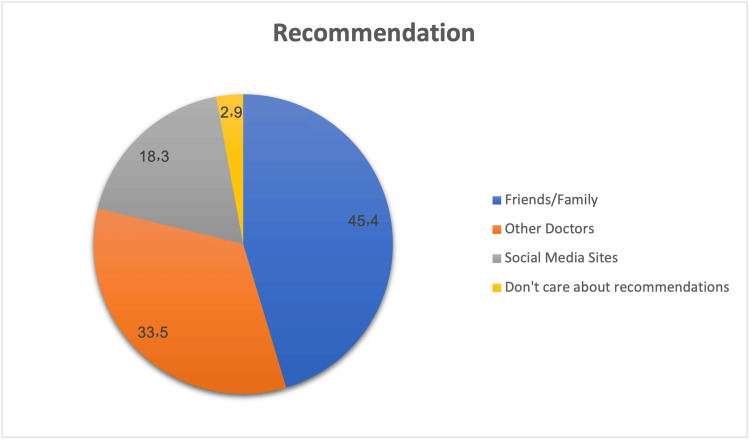 Figure 1
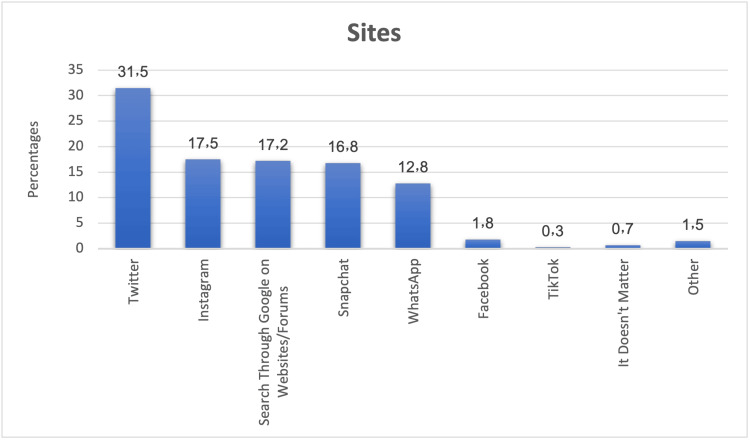 Figure 2
| Variable | Frequency (n = 627) | Percent |
| Gender | ||
| Female | 543 | 86.6 |
| Male | 84 | 13.4 |
| Age | ||
| 18-30 years | 294 | 46.9 |
| 31-40 years | 104 | 16.6 |
| 41-50 years | 145 | 23.1 |
| 51-60 years | 62 | 9.9 |
| >60 years | 22 | 3.5 |
| Employment status | ||
| Unemployed/retired | 165 | 26.3 |
| Employee | 249 | 39.7 |
| Students | 213 | 34.0 |
| Monthly income (Saudi Riyal, SAR) | ||
| <5000 SAR | 45 | 7.2 |
| 5000-10000 SAR | 158 | 25.2 |
| 10,001-20,000 SAR | 239 | 38.1 |
| >20,000 SAR | 185 | 29.5 |
| Variable | Frequency (n = 627) | Percent |
| Preferred gender of eye surgeon | ||
| No preference | 315 | 50.2 |
| Female | 98 | 15.6 |
| Male | 214 | 34.1 |
| Preferred nationality of eye surgeon | ||
| I don't care | 232 | 37.0 |
| I prefer non-Saudi | 14 | 2.2 |
| I prefer Saudi | 381 | 60.8 |
| Experience with eye-related surgery/procedure | ||
| No | 366 | 58.4 |
| No (but planned) | 88 | 14.0 |
| Yes | 173 | 27.6 |
| Factor | Not important | Neutral | Very important |
| Surgeon's reputation | 3 (0.5%) | 19 (3.0%) | 605 (96.5%) |
| Surgeon's scientific qualifications | 10 (1.6%) | 33 (5.3%) | 584 (93.1%) |
| Gender of the surgeon | 283 (45.1%) | 155 (24.7%) | 189 (30.1%) |
| Meeting the needs and satisfaction of patients | 9 (1.4%) | 26 (4.1%) | 592 (94.4%) |
| Social media appearance | 333 (53.1%) | 145 (23.1%) | 149 (23.8%) |
| Arranging appointments and waiting lists | 14 (2.2%) | 31 (4.9%) | 582 (92.8%) |
| Financial cost of the operation | 30 (4.8%) | 61 (9.7%) | 536 (85.5%) |
| Insurance acceptance | 75 (12.0%) | 124 (19.8%) | 428 (68.3%) |
| Factor | B | Sig. | Exp (B) | 95% CI (lower) | 95% CI (upper) |
| Doctor’s reputation | 0.654 | 0.011 | 1.923 | 1.160 | 3.189 |
| Surgeon's scientific qualifications | -0.252 | 0.102 | 0.778 | 0.575 | 1.051 |
| Gender of the surgeon | 0.023 | 0.742 | 1.023 | 0.892 | 1.174 |
| Meeting the needs of previous patients | -0.035 | 0.827 | 0.965 | 0.704 | 1.324 |
| Social media appearance | 0.080 | 0.320 | 1.083 | 0.925 | 1.268 |
| Financial cost of the operation | -0.203 | 0.065 | 0.816 | 0.658 | 1.012 |
| Arranging appointments and waiting lists | -0.056 | 0.698 | 0.945 | 0.712 | 1.256 |
| Insurance acceptance | -0.022 | 0.788 | 0.979 | 0.836 | 1.145 |
| Reputation of the hospital | 0.087 | 0.547 | 1.091 | 0.821 | 1.450 |
| Proximity to the hospital | -0.147 | 0.038 | 0.864 | 0.752 | 0.992 |
Peer Reviews
No public reviews on file for this paper yet. If you reviewed it on a platform where reviews are public (OpenReview, ICLR, NeurIPS, ICML), you can paste yours below so the community can read it here.
Videos
No videos yet. Explain this paper in a talk, walkthrough, or lecture? Add one.
Taxonomy
TopicsPatient Satisfaction in Healthcare · Global Healthcare and Medical Tourism · Dental Education, Practice, Research
Introduction
Ophthalmic procedures are among the most commonly performed surgeries in developed countries. In the United States alone, approximately 3.9 million ophthalmic surgeries were carried out over a three-year period, ranging from routine cataract operations to more complex retinal procedures [1]. These figures reflect the growing demand for skilled ophthalmic surgeons and high-quality surgical care.
Enhancing the quality of healthcare services requires effective communication and trust between patients and physicians [2]. Over time, there has been a noticeable shift toward patient-centered care, where patients are more actively involved in healthcare decisions, including the selection of their treating surgeon. This involvement may influence not only their emotional well-being but also their overall surgical outcomes [3].
A previous systematic review highlighted the complex and varied considerations patients take into account when selecting a surgeon or hospital for surgical treatment [4]. These factors include clinical aspects such as the surgeon’s experience and reputation, as well as non-clinical elements like insurance coverage and convenience of access [5].
In recent years, many ophthalmologists have adopted social media platforms for professional purposes. These platforms are used for patient education, self-promotion, and enhancing patient engagement, factors that may also shape a patient’s choice of surgeon [6].
While several studies have examined the factors influencing patients' selection of surgeons for elective procedures such as orthopedic and bariatric surgeries [3,7,8], there is limited research focusing specifically on ophthalmology. To our knowledge, no studies have explored the determinants affecting patients’ choices of ophthalmic surgeons either globally or within Saudi Arabia. The unique cultural and religious context in Saudi Arabia may influence patient preferences for surgeon gender and nationality, highlighting the need to study local determinants.
Saudi Arabia has experienced significant development in healthcare infrastructure and ophthalmic services. A recent study found that one in seven medical students in the country is considering ophthalmology as a future career path [9]. With the increasing number of physicians entering the field, it is important to understand the factors that guide patients in selecting their ophthalmic surgeon.
Therefore, the aim of this study is to identify and assess the key factors influencing patients' choice of ophthalmic surgeons in Saudi Arabia. The study addresses the following research questions: (1) What factors most influence patients in Saudi Arabia when selecting an ophthalmic surgeon? (2) How do surgeon gender, nationality, and social media presence affect patient preferences?
Materials and methods
Study design and setting
This study utilized a descriptive, cross-sectional observational design to explore factors influencing the selection of eye surgeons among adults in Saudi Arabia. Data were collected using a validated, self-administered online questionnaire adapted from a previously published instrument, with additional ophthalmology-specific items added to address factors relevant to surgeon selection [10].
Sample size and population
The required sample size was calculated using the Raosoft sample size calculator (Raosoft, Inc., Seattle, WA), based on a 95% confidence level, 5% margin of error, and an assumed 50% response distribution, resulting in a minimum sample of 385 participants [11]. The study targeted male and female residents of Saudi Arabia aged 18 years and above.
Data collection procedure
A structured questionnaire was developed using Google Forms (Google, Mountain View, CA) and distributed through popular online platforms, including WhatsApp and Twitter, to ensure a wide public reach. Participation was voluntary, and electronic informed consent was obtained prior to beginning the survey. No personally identifiable information was collected to maintain participant confidentiality. A convenience sampling approach was used, recruiting participants who accessed the questionnaire through online platforms.
Ethical considerations
Ethical approval was secured from the Research Ethics Committee at King Faisal University, Al Ahsa, Saudi Arabia (Reference No.: KFU-REC-2024-JUN-ETHICS1840). The study adhered to the ethical principles outlined in the Declaration of Helsinki.
Statistical analysis
A comprehensive statistical analysis was conducted on the dataset, encompassing both descriptive and inferential methodologies. Firstly, a descriptive analysis was conducted to summarize the participants' demographic characteristics, including age, gender, and other features. This provided an overview of the study population. Subsequently, inferential analyses such as binary logistic regression analysis were employed to determine the essential predictors that influence the decisions of patients undergoing surgery. ANOVA, independent t-test, and chi-square were used to check the score difference between variables. Statistical significance was established at a p-value of 0.05 or lower and a 95% confidence interval. All statistical analyses were executed using IBM's SPSS software, version 29.0.0 (IBM Corp., Armonk, NY).
Results
The study aimed to investigate the factors influencing the selection of an eye surgeon among 627 participants (Table 1). A predominant proportion of participants were female, comprising 86.6% (n = 543), while males constituted 13.4% (n = 84). In terms of age, nearly half of the participants (46.9%, n = 294) were between 18 and 30 years old. Geographically, the majority of participants (65.1%, n = 408) resided in the Eastern region of Saudi Arabia. Regarding employment status, 39.7% (n = 249) were employed, while 34.0% (n = 213) were students. The most common income range among participants was 10,001 to 20,000 Saudi riyals (SAR), with 38.1% (n = 239) falling into this category.
In terms of preferences and experiences regarding eye surgeons (Table 2), several key findings emerged. When asked about their preference for the gender of an eye surgeon, half of the participants (50.2%) expressed no preference. However, 34.1% preferred a male surgeon, and 15.6% preferred a female surgeon. Regarding nationality, a significant majority (60.8%) of participants preferred a Saudi surgeon, while 37.0% had no preference, and only 2.2% preferred a non-Saudi surgeon.
Regarding past experiences with eye-related surgeries or procedures, 58.4% of participants reported having never undergone such procedures, 27.6% had previous procedures, and 14.0% had no prior surgeries but planned to undergo one.
Figure 1 illustrates the sources of recommendations for choosing an eye surgeon. Friends and family were the most influential, with nearly half of the participants (45.4%) relying on them for advice. Doctors played a significant role, influencing 33.5% of participants, while social media had an unexpected but notable influence on 18.3% of participants. A small minority (2.9%) reported making their decision without any external recommendations.
Sources of recommendations for choosing an eye surgeon.Pie chart showing percentages (%) of respondents citing each primary recommendation source (friends/family, other doctors, social media, and do not care about recommendations).
Figure 2 depicts the influence of various social media platforms on the decision to choose an eye surgeon. Twitter emerged as the most influential platform, with 31.5% of participants considering it in their decision-making process. Instagram and Google searches followed, influencing 17.5% and 17.2% of participants, respectively. Snapchat had an impact on 16.8% of participants, while WhatsApp influenced 12.8%. Other platforms like Facebook, TikTok, and the perception that social media played no role had relatively minor influences.
Influence of social media on the choice of an eye surgeon.Bar chart showing the distribution of platforms (Twitter, Instagram, Google search, Snapchat, WhatsApp, Facebook, and TikTok) reported to influence respondents’ surgeons as percentages (%).
Table 3 outlines the factors considered by participants when selecting an eye surgeon. The most highly valued factors were the surgeon’s reputation (96.5%), educational qualifications (93.1%), and patient satisfaction (94.4%). Practical aspects, such as appointment scheduling and waiting times (92.8%) and the financial cost of the operation (85.5%), were also deemed highly important. Surprisingly, the surgeon’s gender was less significant, with only 30.1% of participants considering it very important. Social media presence was regarded as unimportant by more than half of the participants (53.1%).
Table 4 shows the key predictors for selecting an eye surgeon among participants. Doctor's reputation significantly increased the likelihood of selection (B = 0.654, p = 0.011, Exp(B) = 1.923), while surgeon qualifications, social media presence, and other factors were non-significant. Proximity to the hospital was significant (B = -0.147, p = 0.038, Exp(B) = 0.864), but financial cost approached significance (B = -0.203, p = 0.065).
Discussion
Globally, patient engagement has gained increasing attention due to its positive association with treatment adherence, follow-up compliance, and overall health outcomes, which contribute to reducing healthcare costs [12]. Technological advancements have facilitated this engagement, granting patients broader access to medical information through digital tools and online resources [13]. As a result, individuals are more empowered to participate in healthcare decisions, often researching procedures, treatment options, and provider credentials before committing to surgery [14].
Despite this progress, much of the existing literature has focused on patient preferences when selecting general practitioners rather than surgeons [15-17]. This gap is notable, as the criteria for choosing a surgeon may differ substantially due to the technical nature and risk profile of surgical care [3,7,8]. Among patients undergoing elective surgery, the selection of a treating surgeon is often seen as a critical decision, influenced by factors such as reputation, experience, and digital presence. Reputation, shaped by clinical outcomes, peer recognition, and qualifications, remains a key element, as does a surgeon’s experience with specific procedures. Recently, a surgeon’s social media activity, patient testimonials, and online visibility have become influential in shaping their perceived credibility and approachability [18].
In ophthalmology, despite the global volume of procedures performed annually, limited research has addressed the factors influencing patients’ decisions when choosing an ophthalmic surgeon. For example, between 2012 and 2014, an average of 1.3 million ambulatory ophthalmic surgeries were performed annually across 29 US states [1]. This study addresses this gap by examining how demographic characteristics, personal preferences, and both traditional and digital influences shape the selection of ophthalmic surgeons in Saudi Arabia.
Our findings revealed that gender plays a significant role in surgeon selection. While approximately half of the participants expressed no specific gender preference, males were more likely to prefer male surgeons, whereas females showed a greater inclination toward female surgeons for long-term care (p < 0.001). This aligns with studies by Abghari et al. and Imtiaz et al., which found that those with a preference often gravitated toward providers of the same gender [7,19]. Additionally, females in our study assigned more importance to practical elements like appointment scheduling and waiting times (p = 0.003), reflecting a tendency for females to prioritize convenience-based factors, while males emphasized qualifications and experience [18].
Nationality preference also emerged as a significant factor, with 60.8% of participants favoring Saudi surgeons. This may reflect cultural familiarity, linguistic ease, and trust in the local healthcare system. Personal recommendations were the most common source of surgeon selection (45.4%), followed by physicians (33.5%) and social media (18.3%). This contrasts with findings from Alosaimi et al., where recommendations from former patients were prioritized over those from friends or family [3], while a 2023 study in Qassim found recommendations less significant [10].
Digital influence was also notable, with Twitter being the most impactful platform (31.5%), followed by Instagram (17.5%). Previous studies have reported Snapchat’s influence, particularly for cosmetic procedures [20,21]. Alosaimi et al. found that two-thirds of patients valued social media reviews, and AlBalawi et al. reported that 73.1% of participants considered a surgeon’s social media presence essential [3,22]. In contrast, Coulter et al. suggested that media and advertisements had limited influence on patient decisions [23]. Age significantly affected social media importance, with younger participants (18-29 years) assigning less weight to it than older groups (p < 0.001).
When rating the importance of factors, 96.5% of participants deemed a surgeon’s reputation very important, followed by educational competencies, patient satisfaction, and healthcare facility reputation. These findings align with those of Alosaimi et al. and Aydin et al., who emphasized the importance of physician attitude and experience [3-5]. Logistic regression analysis confirmed the significance of reputation (p = 0.011) and proximity to the hospital (p = 0.038) in surgeon selection. Practical considerations like ease of appointment scheduling (92.8%), financial cost (85.5%), and insurance coverage (68.3%) were also highly influential. This is consistent with the findings of Fujita et al., who demonstrated that geographic accessibility improves healthcare utilization [24]. For ophthalmologists, these results highlight the practical importance of actively enhancing their reputation through patient-centered care, clear communication, empathetic interactions, and maintaining strong professional qualifications, as these factors directly influence patient choice and trust.
Economic status was a strong determinant of patient preferences. Lower-income groups were more likely to prioritize cost, insurance coverage, and even social media presence. Participants aged 41-50 years expressed the strongest concern about surgery’s financial burden (p < 0.001), consistent with the findings of Arpey et al., who noted the impact of socioeconomic status on healthcare access and outcomes [25].
Several study limitations, such as the gender imbalance in the sample and potential biases, should be considered when interpreting the results. Specifically, the majority of respondents were female and from the Eastern region, which may limit generalizability to the wider Saudi population. Future research can explore additional variables and further elucidate the dynamics influencing patients' decisions.
Conclusions
This study provides valuable insights into the multifaceted factors influencing patients' choice of ophthalmic surgeons in Saudi Arabia. Key determinants included doctor reputation, accessibility, personal recommendations, and cost, as well as evolving elements such as gender preference and social media presence. The diversity in gender, age, and socioeconomic background among participants highlights the complexity of healthcare decision-making. Understanding these dynamics is essential for improving patient-centered care and guiding ophthalmic surgeons in fostering stronger relationships with their patients in an increasingly digital healthcare environment.
In light of these findings, it is recommended that healthcare institutions and professional associations implement policies ensuring transparent access to surgeons' qualifications, training, and practice history. Standardized platforms or databases could empower patients to make more informed decisions, ultimately enhancing trust and satisfaction within the healthcare system. Moreover, future studies could use longitudinal or experimental designs to establish causality between various factors and patients' ultimate choice of surgeon. These approaches would help clarify how different influences, such as reputation, accessibility, or recommendations, impact decision-making over time.
The reference list from the paper itself. Each links out to its DOI / PubMed record.
- 1Epidemiology of primary ophthalmic procedures performed in the United States Can J Ophthalmol Usmani B Iftikhar M Latif A Shah SM 7277345420193183610710.1016/j.jcjo.2019.03.006 · doi ↗ · pubmed ↗
- 2Factors influencing patients' preferences for their treating physician Saudi Med J Alraddadi KS Al-Adwani F Taher ZA Al-Mansour M Khan M 8668734120203278942810.15537/smj.2020.8.25192 PMC 7502968 · doi ↗ · pubmed ↗
- 3Analyzing factors influencing patient selection of a surgeon for elective surgery in Saudi Arabia: a questionnaire-based survey Cureus Alosaimi MA Alhamyani AS Aljuaid AM Aljuaid AA Althobaiti LT Alosaimi FA Abdelrahman TM 014202210.7759/cureus.32124 PMC 980673636601220 · doi ↗ · pubmed ↗
- 4A systematic review of the factors that patients use to choose their surgeon World J Surg Yahanda AT Lafaro KJ Spolverato G Pawlik TM 45554020162636288010.1007/s 00268-015-3246-7 · doi ↗ · pubmed ↗
- 5Factors considered by patients in provider selection for elective specialty surgery: a questionnaire-based survey Int J Surg Aydin MA Gokcen HB 43486920193131923210.1016/j.ijsu.2019.07.007 · doi ↗ · pubmed ↗
- 6The use of social media among Saudi ophthalmologists: a descriptive cross-sectional study Middle East Afr J Ophthalmol Al Abbasi O Al Taisan A Alqahtani BS Alburayk K Alenezi SH Al Owaifeer AM 159163282021 https://doi.org/10.4103/meajo.meajo_125_213512579710.4103/meajo.meajo_125_21PMC 8763099 · doi ↗ · pubmed ↗
- 7Patient perceptions and preferences when choosing an orthopaedic surgeon Iowa Orthop J Abghari MS Takemoto R Sadiq A Karia R Phillips D Egol KA 204208342014 https://pmc.ncbi.nlm.nih.gov/articles/PMC 4127729/25328483 PMC 4127729 · pubmed ↗
- 8Factors affecting the selection of the bariatric surgeon-a survey study Int J Clin Case Rep Rev Akyol H Erok B 92021