Ectopia lentis
Leonardo Borges, Nicole Bulgarão Maricondi de Almeida, Newton Kara-Júnior

Abstract
Genes, proteins, chemicals, diseases, species, mutations and cell lines named across the full text — each resolved to its canonical identifier and authoritative record.
Click any figure to enlarge with its caption.
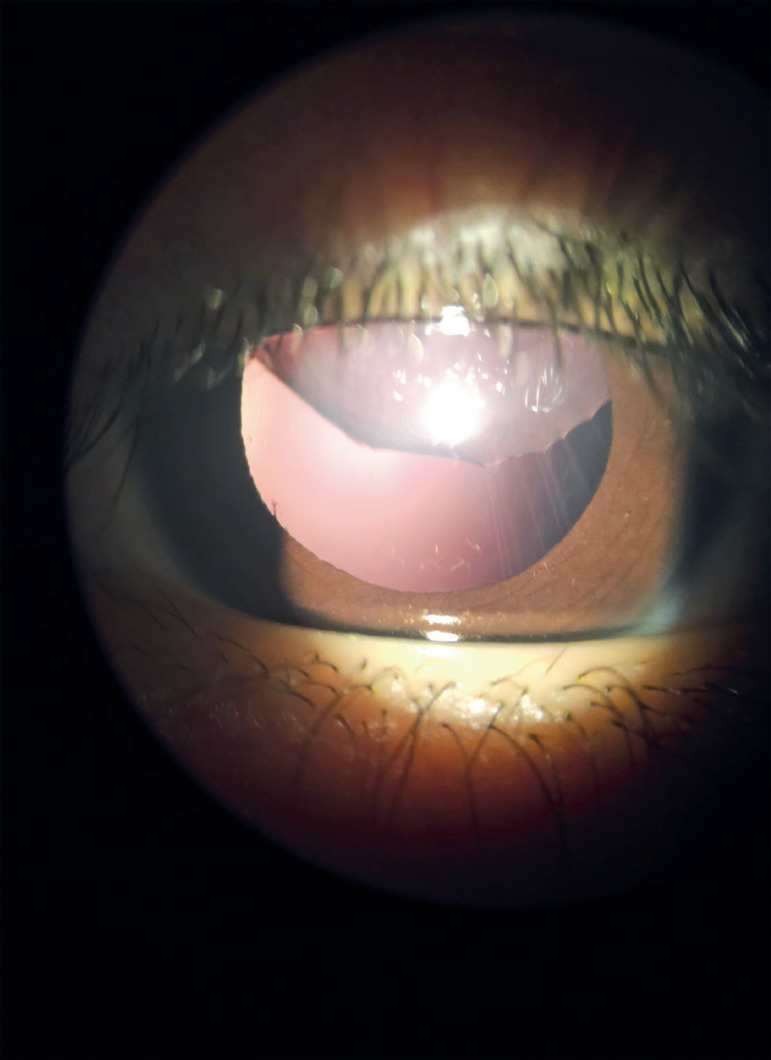 Figure 1
Peer Reviews
No public reviews on file for this paper yet. If you reviewed it on a platform where reviews are public (OpenReview, ICLR, NeurIPS, ICML), you can paste yours below so the community can read it here.
Videos
No videos yet. Explain this paper in a talk, walkthrough, or lecture? Add one.
Taxonomy
TopicsGeography and Environmental Studies
Ectopia lentis refers to any condition in which the lens is displaced from its normal position. A subluxated lens is a partial displacement in which some zonules remain intact. A luxated or dislocated lens is the complete separation of all zonular attachments^(1)^. Ectopia lentis is a secondary consequence of other conditions (e.g., trauma, large eye, tumors, cataracts, pseudoexfoliation syndrome) or it may be genetic in origin, with or without systemic components^(1)^. Causes with systemic associations include Marfan syndrome, homocystinuria, Weill-Marchesani syndrome, Ehlers-Danlos syn-drome, sulfite oxidase deficiency syndrome, and hyperlysinemia. Those without systemic associations include familial ectopia lentis, ectopia lentis et pupillae, and aniridia^(2)^. Signs and symptoms include refractive error, monocular diplopia, decreased best-corrected visual acuity, iridodonesis, cataracts, and displacement of the lens into the anterior chamber or vitreous. All these symptoms can progress in severity^(1)^. Diagnosis requires a thorough evaluation, with wide dilatation of the pupil^(2)^. Surgery is usually central to treatment.
The reference list from the paper itself. Each links out to its DOI / PubMed record.