Hemoadsorption: a new tool in neurotoxic poisoning
J. Hernandez-Vaquero, A. Repilado-Alvarez, J. C. de la Flor, T. Mata Forte

TL;DR
Hemoadsorption may be a promising treatment for neurotoxic poisoning, offering a new approach where traditional methods are ineffective.
Contribution
The paper introduces hemoadsorption as a potential therapeutic option for neurotoxic chemical warfare agent poisoning.
Findings
Conventional renal replacement therapies are not recommended for neurotoxic agent poisoning.
Hemoadsorption combined with CRRT shows promise in treating organophosphate pesticide poisonings.
Differences in neurotoxic agents affect treatment effectiveness and therapeutic window.
Abstract
Although the use of neurotoxic agents as weapons of war (CWAs) or in terrorist attacks is relatively uncommon, it has been documented on several occasions in recent history, including the Syrian civil war, the Tokyo subway attack, and the Salisbury incident. The toxidrome associated with these agents is well described; however, treatment remains largely supportive, as effective antidotes are not currently available. Conventional renal replacement therapies (RRT), such as hemodialysis or continuous modalities, are not recommended for managing neurotoxic agent poisoning due to their toxicodynamic properties. In contrast, hemoadsorption (HA), especially when combined with CRRT, has shown promise in organophosphate (OP) pesticide poisonings. Given the chemical similarities between neurotoxic CWAs and OP, HA may represent a rational therapeutic option in selected cases. Notably, substantial…
Genes, proteins, chemicals, diseases, species, mutations and cell lines named across the full text — each resolved to its canonical identifier and authoritative record.
Click any figure to enlarge with its caption.
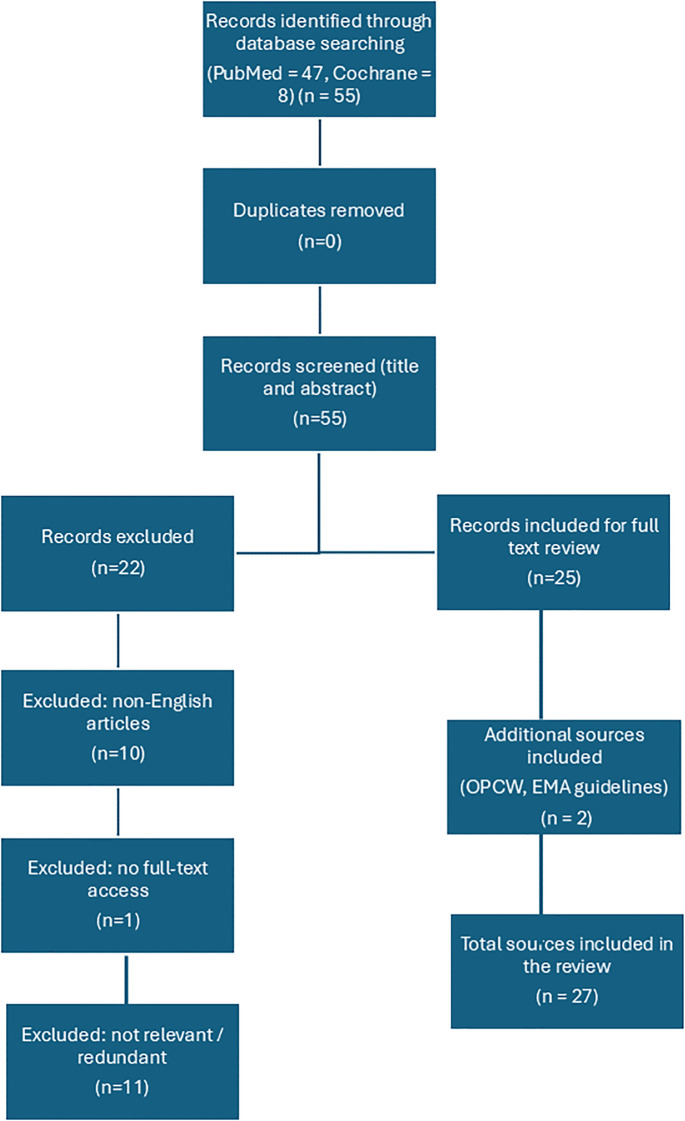 Figure 1
| Author(s) | Year | Study type | Intervention/focus | Main findings | Relevance to review |
|---|---|---|---|---|---|
| Cheng et al. | 2025 | Clinical trial | HA in OP intox. | Better in HA group | High |
| Yao et al. | 2025 | Review | PlasmaE & HA in OP intox. | Better in HA+PE group | Medium |
| Zhang et al. ( | 2022 | Meta-analysis | HA in OP intox. | Better in HA group | High |
| Sukumar et al. | 2019 | Review | HA in paraquat intox. | Better in HA group | Low |
| Guo et al. | 2018 | Clinical trial | HA in OP intox. | Useful technique | Low |
| Li et al. ( | 2017 | Clinical trial | HA in OP intox. | Better in HA group | High |
| Ozaki et al. | 2017 | Case report | HA in OP intox. | Useful technique | Low |
| Dong et al. | 2017 | Clinical trial | HA in OP intox. | Better in HA group | High |
| Liang & Zhang | 2015 | Clinical trial | HA & PCH in OP intox | Better in HA group | low |
| Bo | 2014 | Clinical trial | HA frequency in OP intox. | Repeated HA better than single HA | High |
| Liu & Ding | 2015 | Clinical trial | RRT &OP intox. | Better on-line therapy | medium |
| Nikolaev & Samsonov | 2014 | Review | HA in OP intox. | Useful technique | Low |
| Hu et al. | 2014 | Clinical trial | RRT & HA in OP intox. | HA & SLED better | High |
| Knežević et al. | 2012 | Case report | HD & OP intox. | Better in HA group | Low |
| Kang et al. | 2009 | Retrospective study | Prognostic risk factors in OP intox. | Not relevant for this review | Low |
| Schrickel et al. | 2009 | Case Report | HA in OP intox. | Logistic strategies | Low |
| Peter et al. | 2007 | Review | HA in OP intox. | Useful technique | Low |
| Roberts et al. | 2007 | Letter to editor | HA in OP intox. | Changes in concentration during HA | Low |
| Altintop et al. | 2005 | Clinical trial | HA in OP intox. | Better in HA group | High |
| Peng et al. | 2004 | Clinical trial | HA & DDVP | Better in HA group | High |
| Sakata et al. | 1999 | Case report | OP intox. & metabolites | Metabolites can vary from animals to humans | High |
| Martinez-Chuecos et al. | 1992 | Clinical trial | HA in OP intox. | No differences between groups | High |
| Köppel et al. | 1991 | Case Report | HA in Bromophos intox. | Toxic Clearance | High |
| Kojima et al. | 1990 | Case Report | HA in Formothion intox. | Toxic Clearance | High |
| Burgess & Audette | 1990 |
| Charcoal absorption for malation | Clearance | High |
| Group | Compound | MW (Da) | LogP (lipophilicity) | Dominant Absorption Route | AChE Aging Rate | Volume of Distribution | Theoretical HA Compatibility | Brief Justification |
|---|---|---|---|---|---|---|---|---|
| G | Sarin | ~140 | 0.3 (low-moderate) | Inhalation (high volatility) | Rapid (minutes) | Low |
| Short half-life in blood; early central effect. |
| G | Soman | ~180 | 1.78 (high) | Inhalation or dermal | Very rapid (minutes) | Moderate |
| Rapid AChE aging, limited therapeutic window. |
| G | Tabun | ~162 | ~1.2 (estimated) | Similar to soman | Rapid | Moderate |
| Slightly more stable than soman, but still limited efficacy. |
| V | VX | ~267 | >2 (high) | Transdermal (low volatility) | Slow (up to 37 h) | High |
| Lipophilic, tissue accumulation; possible HA window. |
| A | Novichok | ~270–290 | Moderate-high (2–3) | Inhalation and transdermal | Variable, slow in some cases | High |
| Similar to VX, higher toxicity; theoretical HA possible. |
Peer Reviews
No public reviews on file for this paper yet. If you reviewed it on a platform where reviews are public (OpenReview, ICLR, NeurIPS, ICML), you can paste yours below so the community can read it here.
Videos
No videos yet. Explain this paper in a talk, walkthrough, or lecture? Add one.
Taxonomy
TopicsPoisoning and overdose treatments · Pesticide Exposure and Toxicity · Drug-Induced Hepatotoxicity and Protection
Introduction
Although chemical substances have been known as weapons of war since ancient times, they were not used in a structured manner until World War I. The use of chlorine gas in the Second Battle of Ypres and mustard gas (yperite) in the Third Battle highlighted the urgent need for protective respiratory equipment and isolation suits for soldiers exposed to chemical warfare agents (CWAs). Neurotoxic agents (NAs), developed after World War II, marked a qualitative leap in chemical warfare due to their high lethality (1, 2).
Unfortunately, the use of CWAs during the Iran-Iraq war in the 1980s, more recently in the Syrian civil war, the sarin attack on the Tokyo subway, and the attempted assassination of Sergei Skripal, among others, have underscored the necessity for both military and civil defense units to implement protocols and readiness strategies for chemical attacks (3).
While logistical recommendations for protection and decontamination against CWAs are well established (2), the medical management remains insufficiently understood, particularly concerning the “in vivo” activity and efficacy of certain treatments for CWAs intoxication. In most cases, supportive care is the only option due to the absence of effective antidotes (4).
Conventional renal replacement therapies (RRT) such as hemodialysis may be appropriate for some poisonings but are not generally recommended for NA or other CWAs intoxications (5). Some conditions related to CWAs intoxications, such as liver failure, implication of protein-bound and non–water-soluble compounds, among others, may justify hemoadsorption (HA) as a possible therapy (6). HA is an emerging extracorporeal therapy used in cases of organophosphate (OP) pesticide poisoning (7), and may represent a supportive therapeutic strategy for patients affected by CWAs.
This article analyzes the pathophysiology and main chemical properties of neurotoxic agents that may justify the potential indications for hemoadsorptive therapy in these intoxications.
Methods
Due to the scarcity of published literature, a systematic review was not conducted. Instead, a narrative review approach was adopted to synthesize relevant evidence and theoretical frameworks on the use of HA in OP and NA poisoning.
A bibliographic search was conducted in PubMed and the Cochrane Library on March 1, 2025, with no date or country restrictions. However, only full-text articles published in English were included. The following combination of MeSH terms and keywords was used in PubMed:
“Organophosphate Poisoning” OR “Organophosphates” OR “Organophosphate Toxicity” OR “Organophosphate Intoxication” OR “Pesticide Poisoning” AND “Hemoadsorption” OR “Hemoperfusion” OR “Extracorporeal Adsorption” OR “Blood Purification” OR “Extracorporeal Detoxification”
This search yielded 47 results in PubMed. After title and abstract screening, 22 articles were excluded for the following reasons:
10 were written in languages other than English1 was not accessible in full text11 were irrelevant to the specific focus of this review or presented redundant content
A total of 25 PubMed articles were included in the final analysis.
In parallel, a search was performed in the Cochrane Library using the following query: “organophosphate” OR “organophosphorus” OR “pesticide poisoning” AND “hemoadsorption” OR “hemoperfusion” OR “blood purification” OR “extracorporeal detoxification”. This search identified 7 relevant clinical trials and 1 protocol entitled “Extracorporeal blood purification for organophosphorus pesticide poisoning.” No completed Cochrane systematic review was found at the time of writing. These additional records were reviewed and considered where applicable to the clinical scope of the article.
The selection process is summarized in a PRISMA-style flow diagram (Figure 1) and a summary table. (Table 1).
PRISM-style flow diagram of the literature selection process.
Results
After removing duplicates and excluding articles unrelated to the topic, a group of nephrologists and specialists in chemical warfare reviewed and identified 25 relevant records. In addition, treatment guidelines published by the Organization for the Prohibition of Chemical Weapons (OPCW) and the European Medicines Agency (10) were included due to their practical relevance.
Discussion
Pathophysiology of NAs poisoning
NAs are compounds chemically similar to civilian-use pesticides but modified to increase lethality (10). Their toxicity relies on covalent binding to acetylcholinesterase (AChE), inhibiting its function and causing a cholinergic crisis. However, clinical outcomes vary depending on the structural groups attached to the central phosphorus atom (4, 11).
Three groups of NA agents are described: Group G (sarin, soman, tabun), Group V (VX and related), and Group A (Novichok and related) (10). While “in vitro” toxicity can be estimated, the actual toxicological impact of an NA compound also depends on factors such as route of exposure, chemical stability, lipid affinity and thus tissue distribution (4). These parameters, while theoretical in nature, have critical implications for toxicity, symptom duration, and post-exposure management. For instance, inhalational exposure to volatile agents like sarin differs greatly from the transdermal exposure typically seen with less volatile agents like VX from a pharmacodynamic standpoint, which has significant clinical implications (12).
These toxicodynamic differences in agent behavior—along with lipid affinity, chemical stability, and both volume and kinetics of distribution—are key determinants of their clinical effects. Animal studies have shown that inhaled sarin leads to rapid distribution and elimination, whereas percutaneous VX exposure results in a gradual increase in blood concentration with a plateau of at least five hours (13).
Post-inhibition behavior of NAs also affects treatment efficacy, as rapid “aging” of AChE limits the effectiveness of oxime-based reactivators (14). These toxicodynamic differences influence not only clinical severity but also duration of antidotal and supportive therapy, as well as the potential therapeutic window (4).
Conventional treatment of OP and NA poisoning
Standard treatment for OP poisoning includes supportive care and administration of atropine, oximes, and benzodiazepines. Atropine and benzodiazepines offer only symptomatic relief. Atropine blocks muscarinic parasympathetic symptoms and often requires high initial doses followed by continuous infusion until toxic effects are reversed (10). Despite its availability, large-scale events could exhaust existing medical supplies.
Oximes are intended to reactivate AChE, but their efficacy, especially pralidoxime and obidoxime, against certain NAs like Novichok is questioned in the literature (15). Both OPs and NAs can cross the blood-brain barrier, leading to persistent seizures through cholinergic receptor overstimulation, GABA suppression, and glutamatergic hyperactivation, potentially resulting in long-term neurological damage. Benzodiazepines, particularly fast-acting agents such as midazolam, may offer neuroprotection in this context (16).
HA and toxin removal
HA is an extracorporeal technique that enables the removal of harmful circulating molecules through weak chemical interactions, such as hydrophobic, ionic, and Van der Waals forces, with an adsorbent material. It is an alternative to dialysis in situations where this treatment is not effective (for example, intoxication with protein-bound toxins or drugs or poisoning with non–water-soluble toxins).
Current HA cartridges use cross-linked divinylbenzene polymers, structured into beads and often coated with polysulfone to enhance biocompatibility. These structures provide adsorption surfaces exceeding 1000 m²/g, with cartridges containing 200–300g of sorbent (6).
Patient blood is exposed to the sorbent in a dialysis-like circuit, which can be used adjunctively with standard RRT. While clinical experience is limited, HA is increasingly used in sepsis and cardiac surgery to reduce circulating cytokines and endotoxins. It has also shown utility in removing excess levels of certain drugs such as apixaban, carbamazepine, or myoglobin. However, the lack of randomized clinical trials limits broader adoption (17).
OP poisoning is considered an indication for HA. A 2022 meta-analysis by Zhang et al. that included a total of 11 randomized controlled trials with 811 patients, compared outcomes in patients treated with standard RRT alone versus combined RRT and HA. Results favored HA in reducing mortality, hospital stay duration, mechanical ventilation needs, atropine dosage, and AChE recovery time (8).
Theoretically, lipophilic toxins with medium-to-high molecular weight and significant protein binding may be suitable for HA removal, particularly when resin-based sorbents are used. In contrast, toxins with high volume of distribution and slow intercompartmental kinetics are less amenable to RRT and HA (18).
While the octanol-water partition coefficient (LogP) helps estimate lipophilicity, it does not reliably predict HA efficacy alone. Molecular weight (MW) seems less influential, although HA performs better than traditional RRT in clearing medium- to high-MW molecules (19).
HA is only capable of removing the NA from the vascular space. However, when combined with oximes and RRT, it can reduce the acute cholinergic phase and significantly contribute to the restoration of fluid, electrolyte, and acid-base homeostasis associated with the toxidrome (8).
For NA poisoning, the therapeutic relevance of HA may depend on agent-specific toxicodynamics, particularly regarding AChE aging rates and the duration the NT remains in the bloodstream. As previously mentioned, the expected kinetics in poisoning with agents such as VX suggest a stable neurotoxin concentration in blood for several hours (13), thereby making its removal through extracorporeal purification techniques a feasible intervention. Moreover, the mechanism of action of NA involves the phosphorylation of the serine hydroxyl group in the active site of AChE by the organophosphate compound. Initially, this phosphorylated enzyme can be reactivated by nucleophilic agents such as oximes.
However, over time, a secondary chemical process known as “aging” may occur. Aging refers to the dealkylation of one of the side chains on the phosphorus atom of the OP moiety covalently bound to AChE. This reaction results in the formation of a more stable phosphate-enzyme complex, refractory to reactivation by oximes or other nucleophiles.
The rate at which aging occurs varies significantly depending on the chemical structure of the OP compound. For instance, soman causes enzyme aging within minutes, whereas VX may take up to 37 hours (14).
This kinetic variability may have important implications for the use of extracorporeal therapies such as HA. HA aims to remove circulating toxic agents from the bloodstream before they exert irreversibly damage. If aging occurs rapidly, a significant proportion of AChE may become irreversibly inhibited before the OP is cleared from the circulation, limiting the clinical utility of HA.
In cases where aging is delayed, HA could theoretically reduce the plasma concentration of the parent OP compound, thereby decreasing the amount available to inhibit AChE and potentially preserving enzymatic activity (20).
Beyond these considerations, some agents, especially Group V compounds, require hepatic metabolism via cytochrome P450 enzymes to generate toxic metabolites, unlike sarin, which acts directly (21), so part of the toxin or its circulating metabolites can be removed from the circulation with HA, decreasing the absorbed dose and reducing its systemic effects.
Evaluation of NT agents and HA compatibility
Group G agents
Sarin, soman and tabun exhibits moderate lipophilicity, allowing rapid diffusion across membranes and the blood-brain barrier.
Sarin is a low-molecular weight (MW) (140 Da), moderately lipophilic molecule (LogP 0.3), diffusible across membranes, but water-soluble, implying low protein binding. Its high volatility favors inhalational absorption, leading to brief blood presence and rapid CNS action, with limited feasibility for extracorporeal clearance. It is rapidly hydrolyzed by plasma and hepatic esterases into non-toxic metabolites excreted renally (22).
Soman, slightly heavier and more lipophilic (LogP 1.78), also shows rapid AChE aging, making HA unlikely to offer clinically meaningful removal (23, 24).
Therefore, since NAs belonging to this group are not expected to remain in the bloodstream long enough to allow the implementation of extracorporeal purification therapy in the affected patient, and given the rapid aging process of AChE, the role of HA is likely to be very limited.
Group V agents
VX and related molecules have also low MW (~268 Da), high lipophilicity (LogP >2), and large volume of distribution. After binding to AChE, the “aging” process is slower than in Group G compounds and may take up to 37 hours, allowing a therapeutic window. There is also accumulation of the NA in the body’s adipose tissue, which may explain the presence of stable blood concentrations of the agent over several hours (13). These characteristics suggest that patients poisoned with VX or related may benefit from HA as an adjunct to standard treatment (14, 25, 26).
Group A
Novichok agents, banned by OPCW after the 2018 Salisbury attack (15), share pharmacodynamic characteristics with Group V but are 5 to 8 times more toxic. They may be absorbed via inhalation and transdermally. Oxime therapies have shown limited efficacy (3, 26). Novichok agents have a low-medium MW and moderate-to-high lipophilicity but may exhibit delayed kinetics over several hours when absorption occurs through the skin. Despite the limited understanding of the toxidrome associated with substances in this group, their chemical characteristics and laboratory-observed kinetics indicate that removal via HA could be a viable therapeutic option (27) (see Table 2).
Intermediate syndrome and NAs
IS is a delayed-onset neurological syndrome involving respiratory paralysis and cranial nerve dysfunction (III, IV, X), observed in a subset of OP poisonings (28). It is currently assumed that CWAs do not cause this syndrome (10), which may be related more to the limited number of analyzed cases involving NTs and their high associated lethality than to chemical differences. However, some studies show that HA combined with conventional treatment reduces IS incidence in OP poisoning (9). Given the limited clinical experience in the management of CWA poisonings, it remains unclear whether patients receiving intensive care for NT intoxication are at increased risk of developing IS. It is plausible that, due to improved survival associated with intensive supportive therapy, these patients may live long enough to manifest delayed complications such as IS. Nevertheless, drawing on clinical experience with OP poisoning (9), it is reasonable to hypothesize that the use of HA in combination with RRT may reduce the incidence of IS in NT intoxications. Therefore, early consideration of HA as an adjunctive therapy may be warranted in the clinical management of these patients.
Limitations
Only publicly available data sources were included, as production, possession, and use of these agents are internationally banned (15). Some relevant studies may remain classified or unpublished.
No randomized trials or large case series exist regarding CWA effects on humans. Some physicochemical data were derived from computational models, and clinical data from limited case reports. While HA is commonly used in clinical settings, most trials focus on sepsis or cardiac surgery, limiting evidence for intoxication scenarios.
Conclusions
Although intoxication with NAs is rare, it has been documented on multiple occasions in recent history. Owing to its high lethality, effective medical response remains a significant challenge. Conventional therapy with atropine, oximes and benzodiazepines offers symptomatic relief but limited efficacy. Given its demonstrated utility in OP poisoning, HA using polymer resin cartridges, may enhance the elimination of NAs and NA–antidote complexes, potentially reducing the incidence of IS incidence among survivors of the acute cholinergic phase. Currently, RRT and HA is a technique available in nearly all hospital centers in our setting. Moreover, with the use of home hemodialysis monitors, it is now possible to perform renal purification therapies or SLED-like therapies even in out-of-hospital environments (see Box 1). Therefore, any technique that can safely improve the prognosis, reduce the need for intensive care, and decrease antidote requirements in patients affected by NA exposure is considered valuable. Nevertheless, the efficacy of HA in cases of CWAs exposure remains unproven, and further in vitro studies are necessary to validate its therapeutic potential.
Box 1Clinical recommendation box• Hemoadsorption (HA) has shown clinical benefit in organophosphate (OP) poisoning by reducing antidote requirements and ICU length of stay.• Since nerve agents (NAs) are OP compounds, their removal through extracorporeal HA is theoretically plausible.• The efficacy of HA depends on the physicochemical properties of the agent. Compounds with high lipophilicity and slow acetylcholinesterase (AChE) aging kinetics (e.g., VX, Novichok) are more suitable for removal.• HA should be initiated as early as possible, ideally in combination with renal replacement therapy (RRT), and always alongside standard antidotal treatment.• Consider HA particularly in suspected exposures to NAs from groups A and V (e.g., Novichok, VX).• The use of HA may also be feasible in field hospitals or out-of-hospital settings using home hemodialysis devices, provided appropriate training and equipment are available.
The reference list from the paper itself. Each links out to its DOI / PubMed record.
- 1Aroniadou-Anderjaska V Apland JP Figueiredo TH De Araujo Furtado M Braga MF. Acetylcholinesterase inhibitors (nerve agents) as weapons of mass destruction: History, mechanisms of action, and medical countermeasures. Neuropharmacology. (2020) 181:108298. doi: 10.1016/j.neuropharm.2020.108298, PMID: 32898558 · doi ↗ · pubmed ↗
- 2Organisation for the Prohibition of Chemical Weapons (OPCW). Practical guide for medical management of chemical warfare casualties . Available online at: https://www.opcw.org/resources/assistance-and-protection/practical-guide-medical-management-chemical-warfare-casualties (Accessed May 8, 2025).
- 3Nepovimova E Kuca K. Chemical warfare agent NOVICHOK - mini-review of available data. Food Chem Toxicol. (2018) 121:343–50. doi: 10.1016/j.fct.2018.09.015, PMID: 30213549 · doi ↗ · pubmed ↗
- 4Worek F Thiermann H Wille T. Organophosphorus compounds and oximes: a critical review. Arch Toxicol. (2020) 94:2275–92. doi: 10.1007/s 00204-020-02797-0, PMID: 32506210 PMC 7367912 · doi ↗ · pubmed ↗
- 5Ghannoum M Nolin TD Lavergne V Hoffman RSEXTRIP workgroup. Blood purification in toxicology: nephrology’s ugly duckling. Adv Chronic Kidney Dis. (2011) 18:160–6. doi: 10.1053/j.ackd.2011.01.008, PMID: 21531321 · doi ↗ · pubmed ↗
- 6Bellomo R Mehta RL Forni LG Zarbock A Ostermann M Ronco C. Hemoadsorption. Clin J Am Soc Nephrol. (2024) 19:803–6. doi: 10.2215/CJN.0000000000000433, PMID: 38214917 PMC 11168820 · doi ↗ · pubmed ↗
- 7Omar S Sooka PN Khoza S Van Rooyen MC Mashamba L Madi S. Hemoperfusion for clinically suspected organophosphate and carbamate poisoning in critically ill patients: A randomized trial. Blood Purif. (2023) 52:157–65. doi: 10.1159/000525936, PMID: 36473449 · doi ↗ · pubmed ↗
- 8Zhang M Zhang W Zhao S Tian X Fu G Wang B. Hemoperfusion in combination with hemofiltration for acute severe organophosphorus pesticide poisoning: A systematic review and meta-analysis. J Res Med Sci. (2022) 27:33. doi: 10.4103/jrms.JRMS_822_20, PMID: 35548179 PMC 9081518 · doi ↗ · pubmed ↗