Endoscopic transpapillary gallbladder drainage for localized acute cholecystitis confined by segmental adenomyomatosis using a novel rotatable sphincterotome
Yoshihiro Goda, Kuniyasu Irie, Yuto Matsuoka, Tomomi Hamaguchi, Hideyuki Anan, Yoshimasa Suzuki, Shin Maeda

Abstract
Genes, proteins, chemicals, diseases, species, mutations and cell lines named across the full text — each resolved to its canonical identifier and authoritative record.
Click any figure to enlarge with its caption.
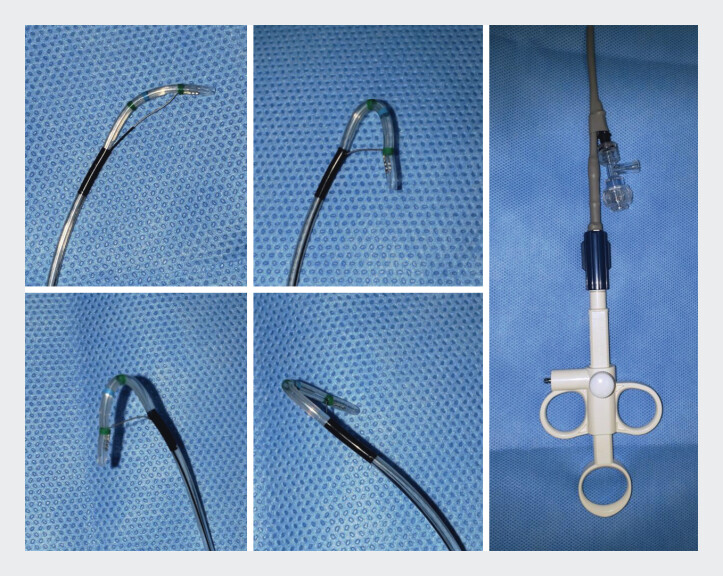 Fig. 1
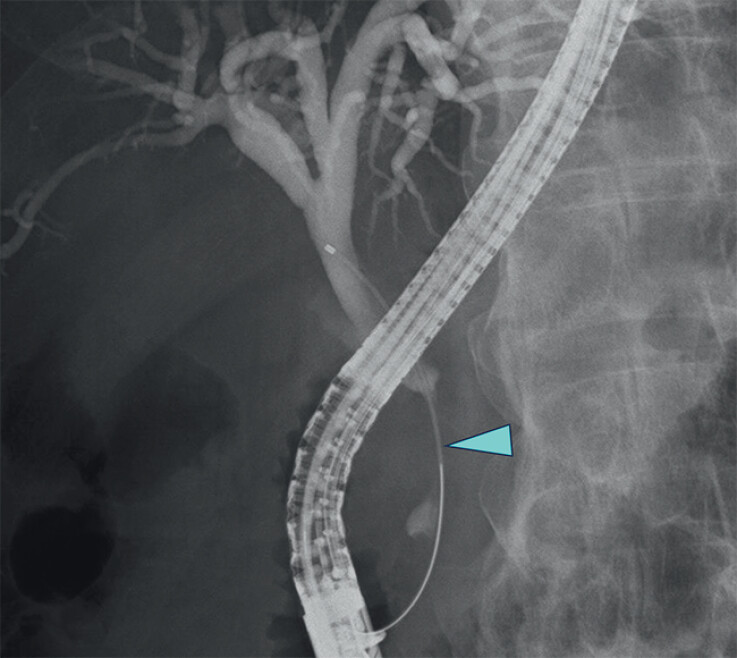 Fig. 2
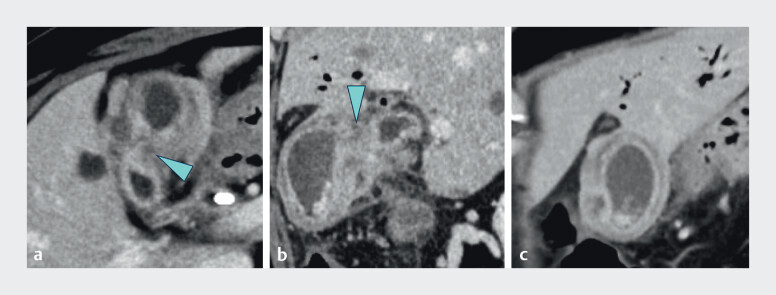 Fig. 3
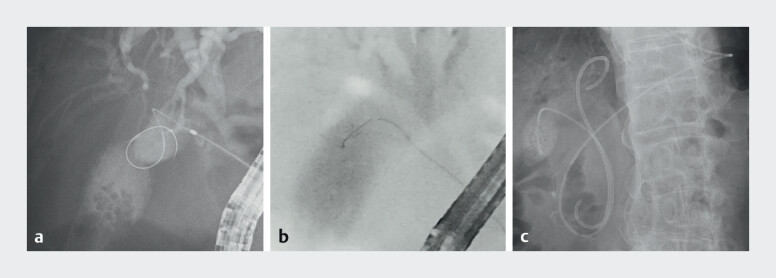 Fig. 4
Peer Reviews
No public reviews on file for this paper yet. If you reviewed it on a platform where reviews are public (OpenReview, ICLR, NeurIPS, ICML), you can paste yours below so the community can read it here.
Videos
No videos yet. Explain this paper in a talk, walkthrough, or lecture? Add one.
Taxonomy
TopicsGallbladder and Bile Duct Disorders · Cholangiocarcinoma and Gallbladder Cancer Studies · Pancreatic and Hepatic Oncology Research
Endoscopic transpapillary gallbladder drainage (ETGBD) for localized acute cholecystitis in the fundal region confined by a segmental adenomyomatosis (ADM)-related stricture is technically challenging due to the difficulty of guidewire passage through the stricture. When the catheter tip is not directed toward the stricture, guidewire passage becomes more difficult. A novel rotatable and flexible sphincterotome (Engetsu; Kaneka Medix, Osaka, Japan; Fig. 1 ) allows the fine adjustment of the tip orientation 1 2 3 , thereby facilitating selective guidewire insertion 4 . Here, we present a case in which the Engetsu catheter enabled successful guidewire passage through a segmental ADM-related stricture, resulting in successful ETGBD ( Video 1 ).
A novel sphincterotome, Engetsu (Kaneka Medix, Osaka, Japan), with smooth rotatability allowing the fine adjustment of the catheter tip orientation.
A novel rotatable sphincterotome was useful for performing ETGBD in a case of localized acute cholecystitis in the fundal region confined by segmental adenomyomatosis.Video 1
A 65-year-old man with a distal biliary obstruction ( Fig. 2 ) caused by neuroendocrine carcinoma developed localized acute cholecystitis. Computed tomography revealed a ventrally located ADM-related stricture in the gallbladder body, with inflammation localized to the fundus ( Fig. 3 ). Percutaneous transhepatic gallbladder drainage was contraindicated due to the absence of hepatic contact, and endoscopic ultrasound-guided gallbladder drainage was considered difficult because of insufficient gallbladder distension ( Fig. 3 c ). Therefore, ETGBD was selected. Cholangiography from the gallbladder neck revealed a stricture in the body caused by ADM. Using a conventional catheter, the device could not be directed toward the stricture, resulting in failed guidewire passage ( Fig. 4 a ). The catheter was then exchanged for the Engetsu catheter. Based on computed tomography findings ( Fig. 3 a, b ), the tip was oriented ventrally by bending and rotating the handle, enabling alignment with the stricture. The guidewire was successfully advanced through the ADM-related stricture ( Fig. 4 b ), and a 6 Fr endoscopic nasobiliary drainage tube was placed in the gallbladder fundus ( Fig. 4 c ). The inflammation resolved without any adverse events, and the patient was discharged following replacement with a plastic stent.
Cholangiography showing a distal biliary obstruction caused by neuroendocrine carcinoma (arrowhead).
Computed tomography showing a ventrally located stricture in the gallbladder body due to adenomyomatosis (arrowhead) and localized cholecystitis confined to the fundus: a axial image, b sagital image and c coronal image.
a Using a conventional catheter, the device could not be directed toward the stricture, resulting in failed guidewire passage. b Adjustment of the Engetsu catheter orientation enabled successful guidewire advancement through the segmental stricture. c A 6 Fr endoscopic nasobiliary drainage tube was successfully placed.
To the best of our knowledge, this is the first report of ETGBD for localized acute cholecystitis confined by a segmental ADM-related stricture in which the flexible bending and rotational capabilities of the Engetsu catheter enabled successful drainage.
Endoscopy_UCTN_Code_TTT_1AR_2AK
The reference list from the paper itself. Each links out to its DOI / PubMed record.
- 1Ishikawa T Kumano R Kawashima H Endoscopic transpapillary gallbladder drainage using a novel sphincterotome Dig Endosc 20253729729910.1111/den.1494339438418 PMC 11884956 · doi ↗ · pubmed ↗
- 2Tanisaka Y Ryozawa S Mizuide M Successful endoscopic sphincterotomy using a novel rotatable sphincterotome in a patient with Roux-en-Y gastrectomy Endoscopy 202456 E 1038 E 103939592099 10.1055/a-2463-3966 PMC 11597894 · doi ↗ · pubmed ↗
- 3Toyonaga H Takayama T Shimatani M Utilizing a novel highly rotatable and dual-action sphincterotome for precise cannulation and endoscopic sphincterotomy in surgically altered anatomy Dig Endosc 20253744044210.1111/den.1497039633254 · doi ↗ · pubmed ↗
- 4Kozakai F Kanno Y Ito K Effective use of the novel rotatable sphincterotome for reintervention of endoscopic ultrasound-guided antegrade stenting Dig Endosc 20253779579710.1111/den.1502040103442 · doi ↗ · pubmed ↗