Underwater ultra-slim endoscopy for radiation-free intestinal stenting: overcoming difficult strictures
Zhiwei Yang, Weiwei Liu, Sique Yu, Chunting Liu

Abstract
Genes, proteins, chemicals, diseases, species, mutations and cell lines named across the full text — each resolved to its canonical identifier and authoritative record.
Click any figure to enlarge with its caption.
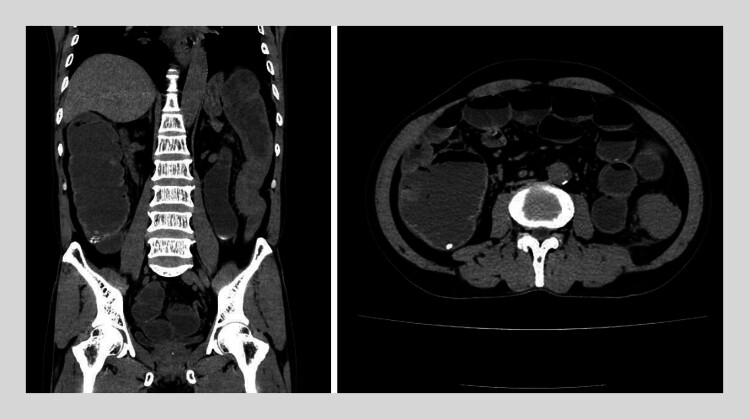 Fig. 1
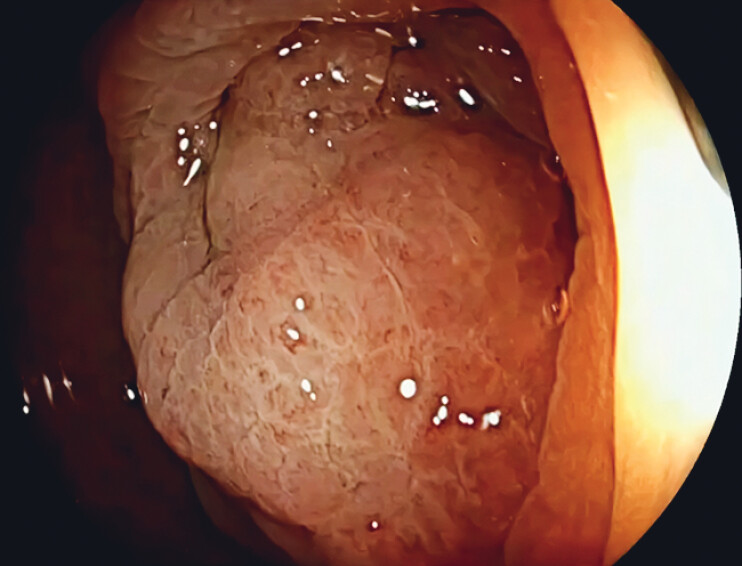 Fig. 2
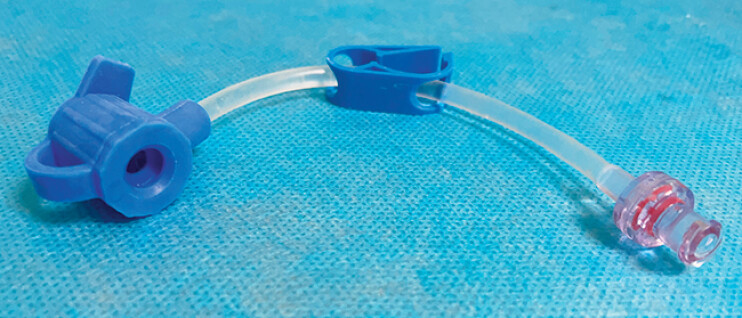 Fig. 3
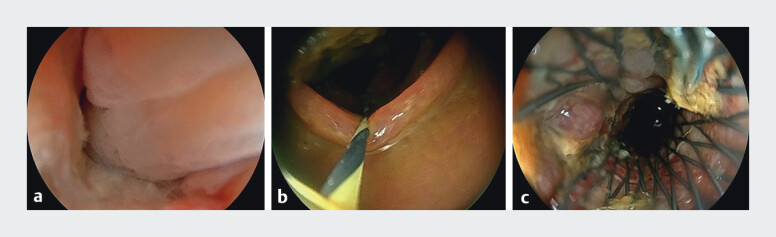 Fig. 4
Peer Reviews
No public reviews on file for this paper yet. If you reviewed it on a platform where reviews are public (OpenReview, ICLR, NeurIPS, ICML), you can paste yours below so the community can read it here.
Videos
No videos yet. Explain this paper in a talk, walkthrough, or lecture? Add one.
Taxonomy
TopicsEsophageal and GI Pathology · Gallbladder and Bile Duct Disorders · Gastrointestinal Bleeding Diagnosis and Treatment
We previously developed a radiation-free self-expandable metal stent (SEMS) placement technique using an ultra-slim endoscope for malignant colonic obstruction 1 . However, in severe cases, it can be challenging to move the guidewire through the stenosis. Therefore, we developed an underwater ultra-slim endoscope technique utilizing reciprocal guidance between the guidewire and endoscope.
This report describes a 66-year-old male who presented with abdominal pain, distension, nausea, and vomiting. Computed tomography demonstrated an obstructive mass in the descending colon requiring SEMS placement ( Fig. 1 ). After gastrointestinal decompression and cleansing enema, colonoscopy showed severe stenosis with poor visualization ( Fig. 2 ). After thorough irrigation, we performed an endoscopy using the ultra-slim endoscope equipped with a water-infusion cap (Anrei Medical, AMH-AH-03, Fig. 3 ).
Computed tomography (CT) image of descending colon cancer. The CT image demonstrated wall thickening of the descending colon and dilation of the proximal colon and small intestine.
Endoscopic image of descending colon cancer. Marked luminal stenosis was present, with poor visualization of the entrance to the narrowed segment.
Endoscopic cap with water infusion function. After attachment, the ultra-slim endoscope was equipped with water infusion capability, allowing for underwater endoscopic procedures.
Our novel endoscopic technique offered multiple advantages in the management of this case. The ultra-slim, flexible endoscope facilitated access to the stricture and enabled precise guidewire manipulation. The underwater environment, combined with water jet irrigation, enhanced visualization by providing magnification and displacing the mucosa. The water infusion also reduced the gas-related risks and improved the visualization of the obstruction, which appeared as a “smoke-like” dispersion of fecal fluid ( Fig. 4 a ). The guidewire was successfully maneuvered through the stenosis and positioned within the dilated colon ( Fig. 4 b ), enabling successful deployment of the SEMS ( Fig. 4 c ).
Endoscopic images of SEMS placement under water immersion. a The magnification and flushing effects of water provided a clear view of the entrance to the stenotic segment, facilitating guidewire insertion. b After the ultra-slim endoscope passed through the stenosis, a zebra guidewire was inserted into the dilated colon. c The image demonstrated successful SEMS deployment.
Overall, the underwater ultra-slim endoscope technique reduces the risk of complications and improves the identification of strictures. Compared to the double-scope colonoscope and other fluoroscopy techniques, it offers a simpler, more cost-effective, and radiation-free method for SEMS placement in patients with severe colonic obstruction 2 ( Video 1 ).
Underwater ultra-slim endoscopy for radiation-free self-expandable metal stent (SEMS) placement in a patient with severe malignant colonic obstruction.Video 1
Endoscopy_UCTN_Code_TTT_1AQ_2AF
The reference list from the paper itself. Each links out to its DOI / PubMed record.
- 1Yang Z Wang Z Yu SA novel radiation-free method for intestinal stent implantation: A case report Asian J Surgin press 10.1016/j.asjsur.2025.05.077 · doi ↗
- 2Hu J Zheng J Yang CA radiation-free novel approach for intestinal stent placement: the “scope-in-scope” technique Endoscopy 20245601 E 313E 31410.1055/a-2291-931538593996 PMC 11003807 · doi ↗ · pubmed ↗