Model systems informing mechanisms and drug discovery: a systematic review of POLG-related disease models
Jonathan Meyrick, Renae J Stefanetti, Linda Errington, Robert McFarland, Gráinne S. Gorman, Nichola Z. Lax, Johannes K Ehinger, Emil Westerlund, Renae Stefanetti, Simon Johnson, Renae Stefanetti

TL;DR
This paper reviews existing models for POLG-related mitochondrial disease to understand their effectiveness in studying the condition and developing therapies.
Contribution
A systematic review of model systems for POLG-related disease, evaluating their ability to recapitulate disease mechanisms and therapeutic responses.
Findings
66% of studies recapitulated mitochondrial DNA depletion, and 42% recapitulated POLG-related disease.
Only 33% of studies used tissue-specific models, and 13% tested potential therapeutics.
The quality of evidence is limited and inconsistent, with a need for better models to translate therapies.
Abstract
Introduction Pathogenic variants in the gene encoding the catalytic subunit of DNA polymerase gamma ( POLG), comprise an important single-gene cause of inherited mitochondrial disorders. Clinical manifestations are now recognised as an array of overlapping clinical features rather than discrete syndromes as originally conceptualised. Animal and cellular models have been used to address numerous scientific questions, from basic science to the development and assessment of novel therapies. Here, we sought to perform a systematic review of the existing models used in mitochondrial research and their effectiveness in recapitulating POLG-related disease. Methods Four databases were searched from inception to May 31, 2022: MEDLINE, Scopus, Web of Science, and Cochrane Review. Original articles available in English, reporting the use of a model system designed to recapitulate POLG-related…
Genes, proteins, chemicals, diseases, species, mutations and cell lines named across the full text — each resolved to its canonical identifier and authoritative record.
Click any figure to enlarge with its caption.
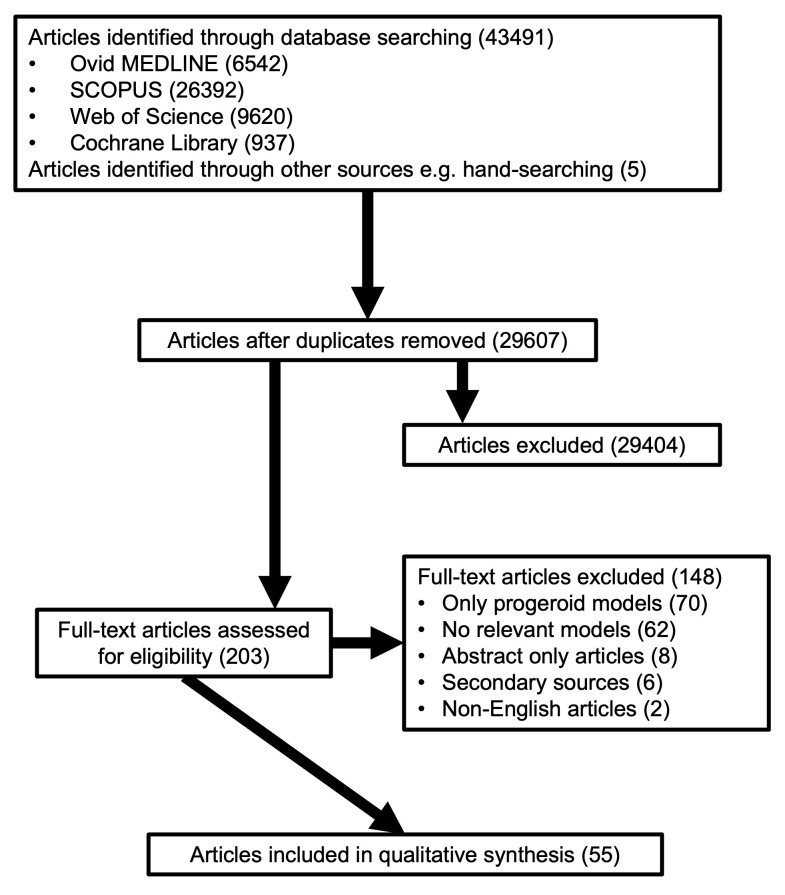 Figure 1
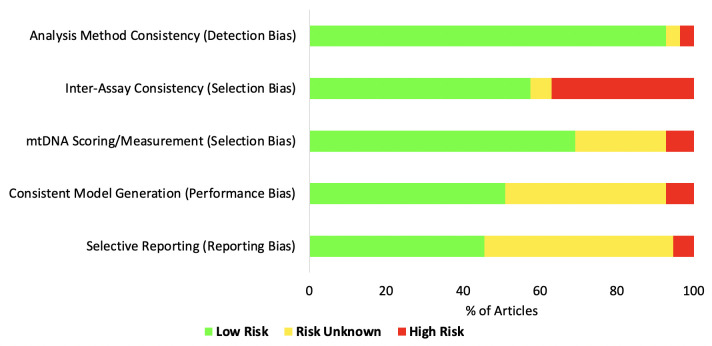 Figure 2
|
|
|
|
|
|
|
|
|
| |
|---|---|---|---|---|---|---|---|---|---|
|
|
|
|
|
|
|
|
|
|
|
|
| Nil | N=3 | N=3 | Nil | N=1 | Nil | Nil | Nil | N=3 |
|
|
|
|
|
|
|
|
|
|
|
|
|
|
|
|
|
|
|
|
|
|
|
| N/A | N/A | N/A | N/A | Nil | Nil | N=1 | Nil | N=1 |
|
| N/A | N/A | N/A | N/A | Nil | Nil | N=1 | Nil | N=1 |
|
| N/A | N/A | N/A | N/A | Nil | Nil | N=1 | Nil | N=1 |
|
| N/A | N/A | Nil | Nil | N=1 | Nil | Nil | N=4; n=10 | N=5; n=11 |
|
|
|
|
|
|
|
|
|
|
|
| Skeletal muscle | Nil | N=6 | N/A | N/A | Nil | Nil | N=1 | N=1 | N=8 |
| Neurons | N=3 | N=3 | N/A | N/A | Nil | Nil | Nil | N=1 | N=4 |
| Cardiac | N=1 | N=1 | N/A | N/A | Nil | Nil | N=3 | Nil | N=4 |
| Hepatic | N=2 | N=7 | N/A | N/A | Nil | Nil | N=1 | Nil | N=8 |
| Central nervous system | N=1 | N=2 | N/A | N/A | Nil | N=1 | N=1 | N=1 | N =4 |
|
|
|
|
|
|
|
|
|
|
|
|
| N=5; n=2 | N=14; n=17 | N=1; n=1 | Nil | Nil | Nil | N=1; n=1 | Nil | N=16; n=19 |
|
| N=4; n=2 | N=11; n=12 | N/A | N/A | Nil | Nil | Nil | Nil | N=11; n=12 |
|
|
|
|
|
|
|
|
|
|
|
|
| N/A | N/A | N=9; n=19 | N/A | N/A | N/A | N/A | N/A | N=9; n=19 |
|
| N/A | N/A | N=8; n=33 | N/A | N/A | N/A | N/A | N/A | N=8; n=33 |
|
| N/A | N/A | N=9; n=31 | N/A | N/A | N/A | N/A | N/A | N=9; n=31 |
|
|
|
|
|
|
|
|
|
|
|
|
| N/A | N/A | N=11; n=76 | N/A | N/A | N/A | N/A | N/A | N=11; n=76 |
|
|
|
|
|
|
|
|
|
|
|
|
| N=2, n=2 | N=10, n=25 | N=3; n=7 | Nil | Nil | Nil | N=4; n=7 | N=3; n=5 | N=20; n=43 |
|
| N=2; n=3 | N=9; n=24 | N=2; n=7 | Nil | Nil | Nil | N=1; n=1 | N=2; n=4 | N=14; n=36 |
|
| N=1; n=1 | N=10; n=45 | N=1; n=2 | Nil | N=2; n=3 | N=1; n=1 | N=1; n=1 | N=1; n=1 | N=16; n=53 |
|
| Nil | N=2; n=5 | N=1; n=2 | N=1; n=1 | N=1; n=1 | Nil | Nil | Nil | N=5, n=9 |
|
|
|
|
|
|
|
|
|
|
|
|
| Nil | N=1, n=1, x=1 | N=1, n=11,
| Nil | N=1, n=1,
| N=1, n=2,
| Nil | Nil | N=2, n=15, x=15 |
|
| N=1, n=2, x=0 | N=1, n=2, x=0 | Nil | Nil | Nil | Nil | Nil | Nil | N=1, n=2, x=0 |
|
| N=1, n=2, x=0 | N=1, n=2, x=0 | Nil | Nil | Nil | Nil | Nil | Nil | N=1, n=2, x=0 |
|
| Nil | Nil | Nil | Nil | Nil | Nil | N=1, n=1,
| Nil | N=1, n=1, x=0 |
|
| Nil | Nil | Nil | Nil | Nil | Nil | Nil | N=1, n=1, x=0 | N=1, n=1, x=0 |
|
| Nil | N=1, n=5, x=5 | Nil | Nil | Nil | Nil | Nil | Nil | N=1, n=5, x=5 |
| Domains of Model
|
|
|
|
|
|
|
|
|
|---|---|---|---|---|---|---|---|---|
| Effective in recapitulating
| Yes | Yes | Yes | No | Unclear | No | Yes | Yes |
| Effective in recapitulating
| Yes | Yes | Unclear | Yes | Yes | Yes | Unclear | Unclear |
| Effective in recapitulating
| Yes | Yes | No | No | No | Yes | Yes | Yes |
| Effective in recapitulating
| Unclear | No | Yes | No | Unclear | No | Yes | Unclear |
| Effective investigating potential
| Unclear | Yes | Yes | N/A | Yes | Yes | Unclear | Unclear |
|
| ||||||||
| At risk of bias for selective
| Low | Unclear | Unclear | Unclear | Unclear | Unclear | Low | Unclear |
| At risk of bias for consistent
| Unclear | Low | Unclear | Low | Unclear | Unclear | Low | Unclear |
| At risk of bias for mtDNA
| Low | Low | Unclear | Low | Unclear | Unclear | Low | Unclear |
| At risk of bias for inter-assay
| Low | Low | Unclear | Low | Unclear | Unclear | Low | Unclear |
| At risk of bias for analysis
| Low | Low | Low | Low | Low | Low | Low | Low |
- —Wellcome grant: Wellcome Centre for Mitochondrial Research
- —The POLG Foundation
Peer Reviews
No public reviews on file for this paper yet. If you reviewed it on a platform where reviews are public (OpenReview, ICLR, NeurIPS, ICML), you can paste yours below so the community can read it here.
Videos
No videos yet. Explain this paper in a talk, walkthrough, or lecture? Add one.
Taxonomy
TopicsMitochondrial Function and Pathology · Metabolism and Genetic Disorders · Genomics and Rare Diseases
Abbreviations
AHS, Alpers–Huttenlocher Syndrome; CLO, clofilium tosylate; EHNA, Erythro-9-(2-hydroxy-3-nonyl) adenine; iPSC, induced-pluripotent stem cell; PEO, Progressive External Ophthalmoplegia; PRISMA, Preferred Reporting Items for Systematic Reviews and Meta-Analyses; qPCR, quantitative polymerase chain reaction.
Introduction
The nuclear POLG gene encodes for the catalytic subunit of the mitochondrial DNA polymerase gamma (pol γ), the enzyme that replicates mitochondrial DNA (mtDNA) ^ 1 ^. POLG variants are reported to be the most common cause of inherited mitochondrial disorders; characterized by mtDNA deletions or depletion (or both) in symptomatic tissues ^ 2 ^. The clinical spectrum of *POLG-*related disease has historically been categorised into six major syndromes ^ 3 ^. However, it is now recognised that phenotypically, POLG-related disorders and their clinical manifestations, clearly form a continuum, necessitating a new, simplified approach to its classification ^ 4 ^.
While there have been significant advancements in our understanding of mitochondrial disease genetics and diagnosis in recent years, there are currently no disease-modifying therapies available for POLG-related diseases ^ 3 ^. Preclinical models are emerging as promising candidates, however a comprehensive evaluation of the effectiveness of these models, in the context of POLG-related mitochondrial disease, has yet to be robustly performed.
In order to understand the molecular mechanisms underlying POLG-related disease and inform future therapeutic targets, researchers have created disease models, despite a paucity of supporting evidence. To close this knowledge gap, we sought to systematically investigate the effectiveness of cell and animal models to recapitulate features of POLG-related disease, from a molecular, genetic, and phenotypic perspective.
Methods
Protocol registration
This systematic review was conducted in accordance with Preferred Reporting Items for Systematic Reviews and Meta-Analyses (PRISMA) guidelines (PRISMA checklist available in Supplementary Material, Table 1 [Extended data ^ 5 ^]). The protocol was prospectively registered in the PROSPERO International Prospective Register of Systematic Reviews (registration ID: CRD42021234883).
Search strategy
We searched Medline, SCOPUS, Web of Science, and the Cochrane Library for articles published from inception to 31 May, 2022, with subsequent language restrictions applied (see Supplementary Material, Table 2 [ Extended data ^ 5 ^]). We performed backward citation searching, and hand searching to manually screen the reference lists of included articles and related reviews. The search was overseen by a senior medical librarian (L.E.), and peer reviewed by the investigational team whilst piloting the search strategy, and prior to final execution. Records were imported using EndNote 20x bibliographic management software for de-duplicating, screening and managing the eligibility process. The search strategy applied, was translated as closely as possible across databases with no search filters applied for comprehensiveness.
Eligibility criteria
The following inclusion criteria were applied: (i) use of animal or cellular model system(s) designed to recapitulate putative POLG-related disease, from a molecular, genetic, and/or phenotypic perspective ^ 6 ^; use of standardised measures to assess model recapitulation; and (iii) published journal articles, notes or short communications available in the English language. No restriction was placed on publication date or study design, to increase comprehensiveness. Articles relating to the POLG D257A ‘mutator’ mouse model were excluded, as it was deemed a progeroid model that does not truly recapitulate mitochondrial disease (see full eligibility criteria in Supplementary Material, Table 3 [ Extended data ^ 5 ^]) ^ 7 ^.
Study selection
Three authors (J.J.M., N.Z.L., and R.J.S.) independently screened all records by titles and abstracts for eligibility and five authors (J.J.M., N.Z.L., R.J.S., G.S.G. and R.M.) assessed the full texts of potentially eligible articles to determine qualification for final inclusion. Conflicts on inclusion of articles were resolved by consensus through discussion. Reason for exclusion of full text records is provided (Supplementary Material, Table 4 [ Extended data ^ 5 ^]).
Data extraction
Data extraction from included articles was performed independently by J.M. and N.Z.L and accuracy checked by all other investigators. Data extracted included methodology of models generated and molecular mechanisms (quantification of mtDNA maintenance defect; quantitative measures of mtDNA deletion levels and copy number, histological or biochemical data); phenotypic/clinical recapitulation data; sex and age-related data; and conclusion surrounding model efficacy (see Supplementary Material, Table 5 [ Extended data ^ 5 ^]). The degree of each model’s effectiveness was determined by the molecular indications, such as mtDNA levels, and exhibited phenotypes, such as myopathy.
Risk of bias / summary of evidence
Risk of bias was assessed independently by two investigators (J.J.M. and R.J.S.) using an adapted version of the Cochrane Risk of Bias Tool ^ 8 ^. Articles were individually rated as having a low, high, or unclear risk of bias according to meeting pre-defined criteria, including the reporting quality and standardisation of methods (see Supplementary Material, Tables 6A-6B [ Extended data ^ 5 ^]). The overall quality of appraisal and summary of evidence across each model was then synthesized based on the majority of evidence for each model ( Table 2).
Statistical analysis
The methodological quality of the included studies was limited, with variability of extracted data precluding a meta-analysis. Compatible results across model systems were pooled for interpretation.
Data availability
All data underlying this review (including raw data extracted, articles reviewed and bias assessment for individual articles) have been made available in a publicly accessible data repository ( Figshare [ Underlying data ^ 5 ^]).
Results
Overview
The screening and selection of articles are described in Figure 1 (also see Supplementary Material, Figure 1 [ Extended data ^ 5 ^]). Of the 29,607 articles, 55 articles met the selection criteria. To ensure the fidelity of data analysed, duplicate model data (N=1/55 articles) were removed from the analysis.
PRISMA Flow Diagram.The PRISMA flowchart depicts the article selection process, with a total of 55 articles included for final review.
Seven different model systems were used across all included articles (N=55). This included categorisation by model type: human-derived (N=24/55 [44%], with 9% (N=5/55) of these using induced-pluripotent stem cell (iPSC)-derived); Saccharomyces cerevisiae (S. cerevisiae) yeast (N=19/55 [35%]); Drosophila melanogaster flies (N=6/55 [11%]); Mus musculus mouse (N=5/55 [9%]; Caenorhabditis elegans nematodes (N=2/55 [4%]); Danio rerio zebrafish (N=2/55 [4%]); and Schizosaccharomyces pombe (S. pombe) yeast (N=1/55 [2%]).
The effectiveness of the reviewed models, as determined by the levels of mtDNA depletion or exhibited phenotype, was highly variable ( Table 1). Of all included articles (N=38/55), 69% reported model systems that were able to demonstrate a significant depletion of mtDNA, indicative of aberrant pol γ or its homologs, and impaired mtDNA replication; clearly affecting mitochondrial function. Additionally, 42% (N=23/55) of included articles demonstrated an ability to recapitulate a phenotypic form of impaired mitochondrial function, albeit limited, such as a very particular form of hepatic fibrosis in cases of Alpers-Huttenlocher syndrome (AHS) ^ 3 ^.
**Table 2.: Summary of Evidence across models
a .**
While fibroblasts were used in 18 of the 24 human cellular-based articles (75%), more recent studies have utilised iPSC-derived cell types ^ 13– 17 ^, representing a shift towards iPSC-derived models, using retroviral reprogrammed fibroblasts. These articles successfully produced mutant cell types such as dopaminergic neurons and hepatocytes, with significant mtDNA depletion found across iPSC-derived cells. Additionally, Chen et al. demonstrated the ability of nicotinamide riboside and metformin to ameliorate mitochondrial dysfunction related to POLG variants, chiefly through the SIRT1 (mitophagy) pathway ^ 13 ^.
Molecular recapitulation
Of the included articles using S. cerevisiae, 27% (N=15/55) were able to generate ‘petite’ yeast colonies as a result of mtDNA depletion due to impaired polymerase activity ^ 18 ^. This direct morphological phenotype was confirmed with the orthogonal use of qPCR mtDNA measurement in 20% (N=3/15) of the 15 articles. Additionally, 24% (N=13/55) of articles indirectly assessed mtDNA depletion through mitoribosome defects and resistance to erythromycin.
The success of S. cerevisiae yeast models reflects the model’s simplicity and its use in large-scale studies. For example, Stumpf et al. (2010) ^ 19 ^ was able to assess the effects of 32 different MIP1 variants on petite colony formation, and 18 mutants for mtDNA copy number. In this study, across all heteroallelic mutants, there was a mean mtDNA copy number fold-change of 15.8, when compared to wild-type strains, while monoallelic mutants possessed a mean fold-change of 10.2. Additionally, 44% of the mutants analysed were able to produce 100% petite colonies, indicating high levels of mtDNA depletion.
mtDNA levels in zebrafish were quantified via qPCR. It was ultimately determined that heterozygous zebrafish mutants showed no significant depletion of mtDNA, while homozygous mutants exhibited mtDNA depletion from an early stage.
Drosophila were seldom used, with most articles utilising alterations in tamas expression (that is, the mitochondrial DNA polymerase catalytic subunit gene in Drosophila). Martinez-Azorin et al. (2008, 2013) ^ 20, 21 ^ showed that Drosophila overexpressing tamas due to the GAL4 system, resulted in varied mtDNA depletion ranging from 40-70%, assessed by mtDNA : nuclear DNA (nDNA) ratio.
mtDNA copy number in Nematoda was assessed, with control worms’ mtDNA levels increased during their life cycle, while mutant worms did not demonstrate similar findings. Pitayu et al. (2016) ^ 22 ^ successfully demonstrated a potential treatment effect in Nematoda using clofilium tosylate (CLO), with increased mtDNA content levels in mutant worms by approximately two-fold. However, the effect of CLO did not rescue the mtDNA depletion in mutant worms to the wild-type level.
Standardisation of methods was high across human cellular-based articles, with mtDNA quantification via qPCR used in 88% (N=21/24). This was used to establish mtDNA:nDNA ratio, with 57% (N=12/21) of human cellular-based articles demonstrating a mtDNA depletion of >75%.
Genetic significance
Levels of homology with human POLG varied among non-human models. While murine models possessed POLG exon homology of up to 95%, S. cerevisiae yeast models possessed only 43% sequence homology ^ 23 ^. The Drosophila homolog of pol γ, tamas, also possesses conserved motifs ^ 24 ^.
Models such as zebrafish were created through Transcription Activator-Like Effector Nuclease (TALEN) vectors, resulting in entire coding sequences removed. Nematoda models (ok1548) similarly had the removal of whole exons, pol γ exons 8–10, encoding part of the polymerase domain. Additionally, Bratic et al. (2010) ^ 25 ^ also used a model (tm2685) which has the first two exons of the exonuclease domain removed.
The use of patient-derived models provides a clear clinical relevance, given that diagnoses and mutational analysis can be conducted to demonstrate phenotype-genotype relationships. Of these articles, 76% reported pathogenic variants analysed in cellular models, while 60% occurred in clinical POLG-related disease, including prevalent POLG variants such as p.Ala467Thr and p.Trp748Ser, identified in AHS, Ataxia Neuropathy Spectrum and PEO.
Phenotypic recapitulation
Mouse models were the most successful for phenotype recapitulation, with 60% of the articles that described murine models able to induce a phenotype. Cardiac phenotypes as a result of the transgenic POLG p.Tyr955Cys variant were especially noteworthy, with a consistent phenotype produced by mutants selectively expressed in the heart via a cardiac specific α-myosin heavy chain promoter. These variants were able to induce cardiomyopathy and cardiac fibrosis, as determined by Lewis et al. (2007) ^ 26 ^ and Koczor et al. (2013) ^ 27 ^, respectively.
Only two publications utilised zebrafish models ^ 28, 29 ^, successfully generating zebrafish with miscoded sequences resulting in premature stop-codons within the zebrafish POLG. Rahn et al. (2015) ^ 29 ^ demonstrated that in a knockout of pol γ, zebrafish were able to survive beyond the juvenile stage, albeit with severe mtDNA depletion.
Drosophila studies were particularly interesting as tamas overexpression was targeted to the nervous system and skeletal muscle cells and resulted in increased levels of pupal lethality in flies. Additionally, Rodrigues et al. (2018) ^ 30 ^ and Siibak et al. (2017) ^ 6 ^ both investigated single amino acid variants of tamas; Q1009A, and Y873H and Y873C, respectively. In all of these mutant flies, lethality was exhibited, with homo- or heterozygous Q1009A flies unable to live beyond the L3 larval stage. Meanwhile, variants to Y873, the Drosophila homolog of human POLG Y955, led to reduced affinity of the polymerase for mtDNA. In homozygous Y873H and Y873C mutants, mtDNA was depleted by up to 85%, resulting in a lack of pupal viability.
In Nematoda, the frequency of larval arrest reflected mtDNA levels. It was found that in mutant worms, mtDNA levels did not increase throughout their life cycle, generally causing cell cycle arrest at the L2 and L3 larval stages due to insufficient mtDNA levels. Clofilium tosylate (CLO) was also able to rescue L3 larval stage arrest by ~75%. While this level was not rescued to wild-type control levels, it improved compared to untreated mutant worms.
Risk of bias assessment
The assessment of risk of bias using an adapted version of the Cochrane Risk of Bias Tool ( Table 2; Figure 2), demonstrated variability across all domains, including iPSC lines ^ 31 ^.
*Risk of Bias analysis summary.‘Risk of Bias’ for all articles included was assessed via an adapted Cochrane Risk of Bias tool
8 . Each article was individually appraised, with the level of risk across each domain summarised (green: low risk; yellow, unclear; red: high). Domains were selected based on the use of standardised methods and their consistency, as well as the degree of reporting within each article. The x-axis represents the total proportion of included articles, while the y-axis represents each of the domains. Individual article appraisal is available (Supplementary Material, Table 6A-B
5 )*
Discussion
This systematic review provides a comprehensive summary of the evidence for the effectiveness of cell and animal models to recapitulate molecular, genetic, and/or phenotypic features of POLG-related disease. We found that no models are optimally established to recapitulate the full spectrum of POLG-related disease. While each of the models reviewed possess advantages and disadvantages, we are unable to definitively advocate for the use of any single model. In the absence of further studies, a multi-model approach may be necessary for meaningful preclinical studies of POLG-related disease. Furthermore, we have noted that the design and utilisation of POLG models appears to follow general research trends with, for example, iPSC-derived models becoming popular in recent years.
S. cerevisiae models provide a potential for high-throughput variant screening ^ 19 ^, due to the simplicity by which dysfunction in mtDNA replication can be analysed. Although largely a well-regarded model, S. cerevisiae is limited in its relevance to POLG-related disease, through its inability to assess tissue-specific phenotypes.
Murine models have allowed research into tissue-specific POLG-related disease through targeted transgenic genes. The ability of murine models to depict mtDNA depletion and cardiomyopathy and fibrosis due to the POLG Y955C variant is a clear indicator of the model’s effectiveness as well as limitations ^ 26 ^, as cardiomyopathy is not a cardinal feature of POLG-related disease. Murine models of POLG-related disease are a recent addition to the field; there are only a small number of articles utilising such a model, as well as a lack of variability in genotypic investigation. Tissue-targeted approaches are particularly relevant as it has been established that the neural and hepatic tissues are selectively vulnerable in POLG-related disease patients ^ 3 ^.
While articles utilising Nematoda models were limited due to the removal of whole POLG exons (unlike variants identified in human disease), studies demonstrated that Nematoda models are potentially capable of recapitulating mtDNA depletion resembling POLG-related disease ^ 22, 25 ^. However, evidence of this is hampered by the lack of model frequency within the literature. Notably, the demonstration that CLO can rescue mtDNA depletion is a significant milestone amongst all of the reviewed articles as it is one of few potential treatments shown to exhibit some rescue of depleted mtDNA levels. In order to assess the ability of Nematoda to more accurately model POLG-related disease, future research should utilise clinically relevant single nucleotide variants and assess the response to CLO.
Similar to Nematoda, the sole zebrafish model employed was also limited by removal of entire coding sequences; a quite different situation to the single nucleotide variants commonly identified in patient with POLG-related disease ^ 31 ^. As the study did not involve the use of zebrafish with variants homologous to those seen in POLG-related disease, its clinical relevance is limited, and similarly to Nematoda, requires further investigation using zebrafish engineered with single amino acid missense variants. This problem is further compounded by the inability of heterozygous variants to induce mtDNA depletion, as seen in human disease-causing POLG variants. Although Fachinello et al. ^ 28 ^ investigated the effects of CLO in rescuing mtDNA depletion in mutant POLG models, the effects observed, did not correlate with those of CLO in Nematoda ^ 22 ^. This may be explained by the nature of the removal of whole exons.
Possibly the most advanced models reviewed, and largely viewed as a gold-standard in current research ^ 32 ^, were those derived from reprogramming patient fibroblasts into iPSCs using retroviruses, before differentiation into hepatocyte-like cells, neural stem cells, neurons and astrocytes. Although the increasing use of this model may reflect recent trends in research, these studies provide a basis for development of organoid models of POLG-related disease. Organoid models are large 3D culture systems, derived from stem cells that act as ‘proto-organs’ in modelling, generated through specified culture induction ^ 33 ^. Although the use of iPSC-generated hepatocytes and neurons are now well established, the generation of hepatic or neural organoid models will add exciting, novel capabilities to the field’s quest for effective therapeutics ^ 33 ^.
This review was limited by several factors, including the many varying terms used in the search strategies, relating to POLG-related disease, making the synthesis of fully comprehensive strategies challenging. Although sex has been shown to influence POLG disease expression ^ 34 ^, there were insufficient data reported across model systems to further elucidate its impact. However, through clinical insight and a less restrictive eligibility criteria, we are confident that this review includes all relevant articles as predetermined in its aims. Additionally, the use of a systematic review methodology in a non-clinical trial-based setting meant that adaptation of assessment tools was required.
Despite these limitations, this review has successfully utilised a prespecified protocol, along with reduced eligibility restrictions to allow for greater inclusion and standardisation of assessment of risk of bias. This has culminated in a comprehensive and objective summary that could prove useful in guiding future research and clinical practice. While decisive conclusions from the included articles are limited, the use of iPSC-derived human cells, and tissue-specific investigations could corroborate more recent research into mitochondrial dysfunction mechanisms ^ 24 ^.
Conclusions
An Investigator oftentimes choose their personal favourite model and work with it rather than taking a systematic approach to testing in multiple models. The combined benefits of the models identified in this review may support the future development of an algorithm for use in preclinical research into POLG-related disease. Although each model system possessed inherent limitations, the studies reported here set a foundation for future research to improve recapitulation of disease phenotypic expression and therefore increase the translational potential of promising experimental interventions. Few models interrogated the use of treatments, with only a small number of studies attempting to elucidate disease mechanisms and how they can modulate mitochondrial function.
The reference list from the paper itself. Each links out to its DOI / PubMed record.
- 1Kaguni LS : DNA polymerase γ, the mitochondrial replicase. Annu Rev Biochem. 2004;73:293–320. 10.1146/annurev.biochem.72.121801.161455 15189144 · doi ↗ · pubmed ↗
- 2Nicholas Russo S Shah EG Copeland WC : A new pathogenic POLG variant. Mol Genet Metab Rep. 2022;32:100890. 10.1016/j.ymgmr.2022.100890 35860755 PMC 9289853 · doi ↗ · pubmed ↗
- 3Rahman S Copeland WC : POLG-related disorders and their neurological manifestations. Nat Rev Neurol. 2019;15(1):40–52. 10.1038/s 41582-018-0101-0 30451971 PMC 8796686 · doi ↗ · pubmed ↗
- 4Hikmat O Naess K Engvall M : Simplifying the clinical classification of polymerase gamma (POLG) disease based on age of onset; studies using a cohort of 155 cases. J Inherit Metab Dis. 2020;43(4):726–36. 10.1002/jimd.12211 32391929 · doi ↗ · pubmed ↗
- 5Meyrick JJ Stefanetti R Errington L : Informing drug discovery: a systematic review of POLG-related disease models. Newcastle University. Dataset.2022. 10.25405/data.ncl.21588042.v 2 · doi ↗
- 6Siibak T Clemente P Bratic A : A multi-systemic mitochondrial disorder due to a dominant p.Y 955H disease variant in DNA polymerase gamma. Hum Mol Genet. 2017;26(13):2515–25. 10.1093/hmg/ddx 146 28430993 PMC 5886115 · doi ↗ · pubmed ↗
- 7Geurts J Nasi S Distel P : Prematurely aging mitochondrial DNA mutator mice display subchondral osteopenia and chondrocyte hypertrophy without further osteoarthritis features. Sci Rep. 2020;10(1):1296. 10.1038/s 41598-020-58385-w 31992827 PMC 6987232 · doi ↗ · pubmed ↗
- 8Higgins JP Altman DG Gøtzsche PC : The Cochrane Collaboration's tool for assessing risk of bias in randomised trials. BMJ. 2011;343:d 5928. 10.1136/bmj.d 5928 22008217 PMC 3196245 · doi ↗ · pubmed ↗