Clinical phenotypes of psychosis and reoffending risk among justice-involved adolescents: a population-based cohort study
Emaediong I. Akpanekpo, Tony Butler

TL;DR
This study finds that psychosis in justice-involved adolescents increases reoffending risk, with different types of psychosis linked to varying levels of risk.
Contribution
The study differentiates clinical phenotypes of psychosis and quantifies their specific associations with reoffending risk in justice-involved adolescents.
Findings
Schizophrenia-related psychosis increases general and violent reoffending risk compared to controls.
Substance-induced psychosis is strongly linked to both general and violent reoffending.
Non-affective psychoses elevate reoffending risk with distinct magnitudes depending on psychosis type.
Abstract
High reoffending rates among justice-involved adolescents necessitate identifying modifiable risk factors. Given the elevated prevalence of psychosis in this group compared to the general adolescent population, determining its contribution requires differentiation by clinical phenotypes and quantification of associated risk. This study aimed to determine the association between clinical phenotypes of psychosis and reoffending among justice-involved adolescents. We conducted a retrospective cohort study using linked administrative health and justice data (2001-2021) from New South Wales, Australia. Justice-involved adolescents (10–17 years) with a diagnosed psychotic disorder identified from hospital/emergency records (n=236) were matched (approx. 1:3) on age, sex, and index offense year to controls without psychosis (n=679). Time to first general and violent reoffending conviction…
Genes, proteins, chemicals, diseases, species, mutations and cell lines named across the full text — each resolved to its canonical identifier and authoritative record.
Click any figure to enlarge with its caption.
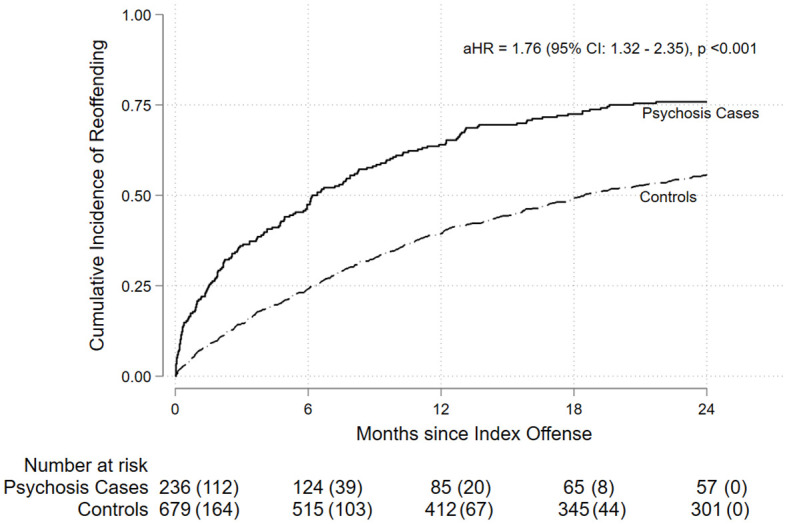 Figure 1
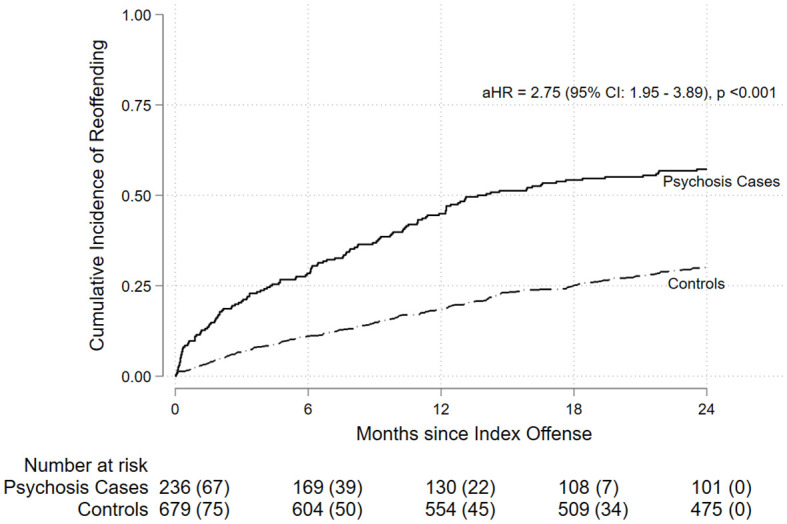 Figure 2
Peer Reviews
No public reviews on file for this paper yet. If you reviewed it on a platform where reviews are public (OpenReview, ICLR, NeurIPS, ICML), you can paste yours below so the community can read it here.
Videos
No videos yet. Explain this paper in a talk, walkthrough, or lecture? Add one.
Taxonomy
TopicsChild and Adolescent Psychosocial and Emotional Development · Schizophrenia research and treatment · Mental Health Treatment and Access