Durvalumab following definitive chemoradiotherapy among patients with stage III NSCLC in the Thai population: a real-world, multicenter observational study
Piyada Sitthideatphaiboon, Thanyanan Reungwetwattana, Sureerat Jaruhathai, Archara Supavavej, Piyarat Limpawittayakul, Kunlatida Maneenil, Krittiya Korphaisarn, Thatthan Suksombooncharoen, Luangyot Thongthieang, Chirawadee Sathitruangsak, Chawalit Chayangsu

TL;DR
This study evaluates the effectiveness and safety of durvalumab after chemoradiotherapy in Thai patients with advanced lung cancer, showing promising results.
Contribution
The study provides real-world evidence of durvalumab's efficacy and safety in an Asian population with locally advanced non-small cell lung cancer.
Findings
Durvalumab showed a 41.3% objective response rate and 86.7% disease control rate in patients with locally advanced NSCLC.
Two-year progression-free survival was 63.1%, and 81.6% of patients did not experience second disease progression.
Immune-related adverse events occurred in 25.6% of patients, with pneumonitis being the most common.
Abstract
In locally advanced non-small cell lung cancer (LA-NSCLC), durvalumab as consolidation therapy following definitive chemoradiotherapy (CRT) was established as the standard of care. Given the heterogeneity of patients with LA-NSCLC, the present study evaluated the efficacy and safety of durvalumab in a real-world, multicenter observational study. Patients with LA-NSCLC, whose disease had not progressed following CRT and receiving ≥1 dose of durvalumab as part of the expanded access program (EAP) in Thailand and outside EAP, were included. In addition to descriptive statistics, survival probability was determined using the Kaplan–Meier method. A total of 82 patients from 12 centers in Thailand were enrolled. The median age was 63 years, 74% were men, 72% had non-squamous NSCLC, and 20% of patients had an epidermal growth factor receptor (EGFR) mutation. Only 13.4% of patients were…
Genes, proteins, chemicals, diseases, species, mutations and cell lines named across the full text — each resolved to its canonical identifier and authoritative record.
Click any figure to enlarge with its caption.
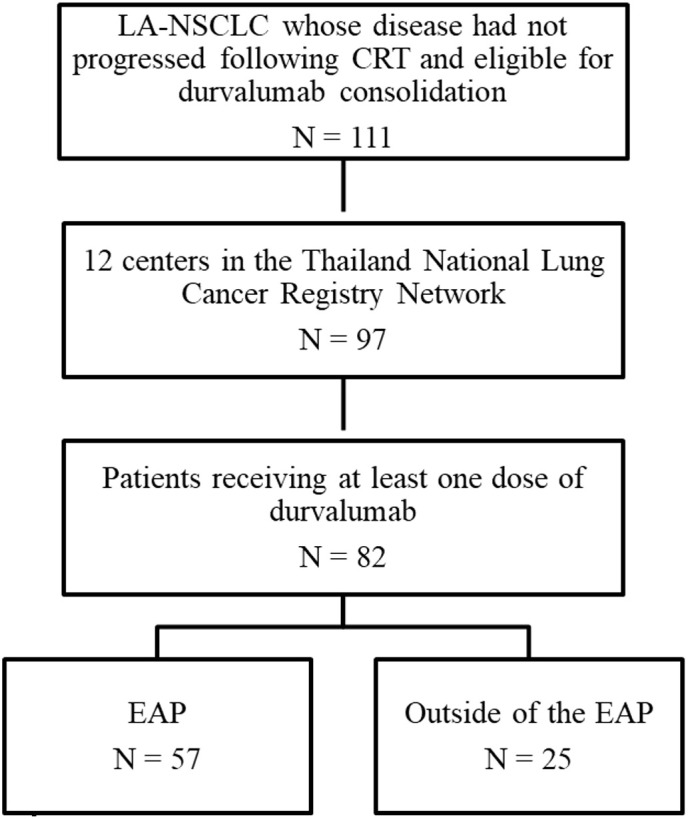 Figure 1
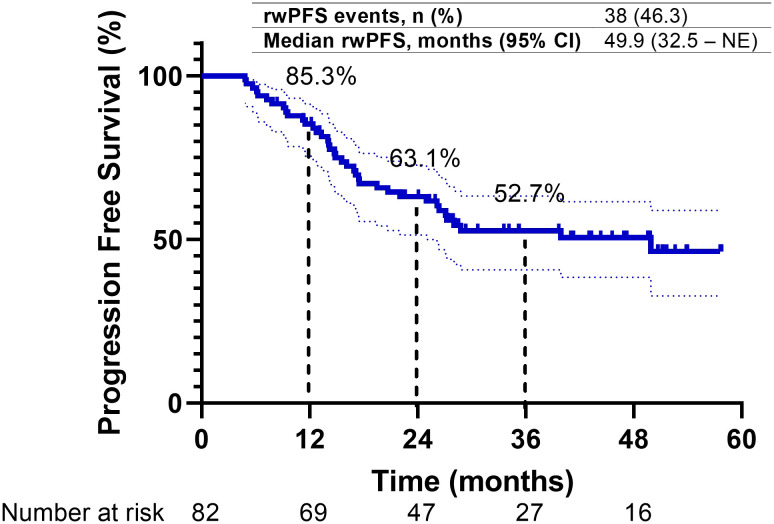 Figure 2
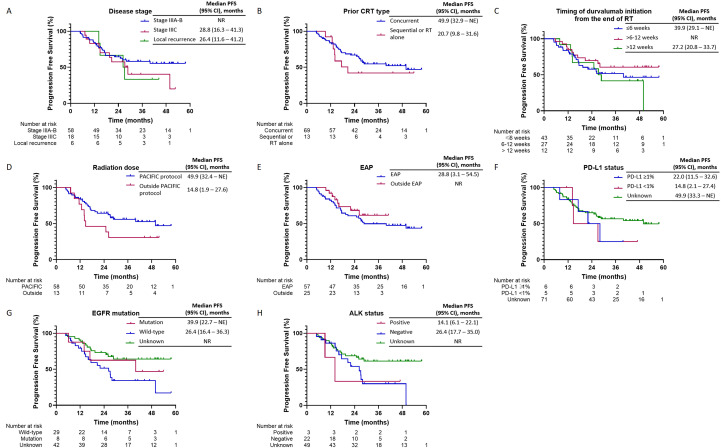 Figure 3
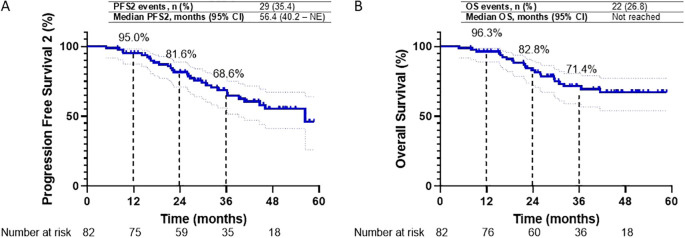 Figure 4
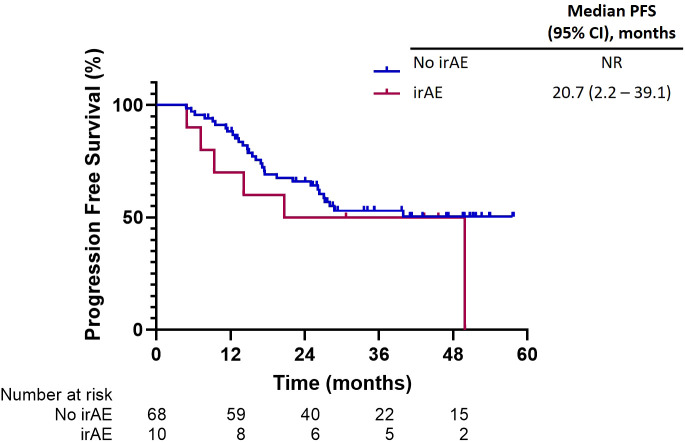 Figure 5
Peer Reviews
No public reviews on file for this paper yet. If you reviewed it on a platform where reviews are public (OpenReview, ICLR, NeurIPS, ICML), you can paste yours below so the community can read it here.
Videos
No videos yet. Explain this paper in a talk, walkthrough, or lecture? Add one.
Taxonomy
TopicsLung Cancer Treatments and Mutations · Gastric Cancer Management and Outcomes · Hepatocellular Carcinoma Treatment and Prognosis