Beyond cell-cell contact: therapeutic potential of Eph signaling in central nervous system tumors
Fernanda Cristina Poscai Ribeiro, Moisés Willian Aparecido Gonçalves, Aleff Mascarenhas Silva, Tayná Figueiredo Maciel, Reydson Alcides de Lima-Souza, João Figueira Scarini, Gary Chris Fillmore, Erika Said Abu Egal

TL;DR
This paper explores how Eph signaling, a system involved in cell communication, can be targeted to treat central nervous system tumors like glioblastoma and medulloblastoma.
Contribution
The paper identifies Eph/ephrin signaling as a dualistic biomarker and therapeutic target in CNS tumors, proposing combinatorial strategies for treatment.
Findings
EphA2 and EphA3 overexpression correlates with higher glioma grade and invasiveness.
Ephrin-A1 and ephrin-A5 suppress tumor growth by inhibiting proliferation and migration.
Targeting Eph/ephrin with cytotoxins, inhibitors, and immunomodulators shows anti-tumor efficacy in preclinical models.
Abstract
Eph receptor tyrosine kinases and their membrane-bound ephrin ligands constitute a unique bidirectional signaling system that orchestrates cell adhesion, migration, proliferation, and vascular patterning, processes frequently co-opted in malignancy. We conducted an integrative review of preclinical models and clinical cohorts to delineate Eph/ephrin expression landscapes and evaluate functional outcomes in central nervous system neoplasms. In gliomas, particularly glioblastoma multiforme, overexpression of EphA2 and EphA3 correlates with higher tumor grade and increased invasiveness. Conversely, ephrin-A1 and ephrin-A5 exhibit tumor-suppressive properties by promoting receptor internalization and degradation, thereby inhibiting glioma cell proliferation and migration. In medulloblastoma, elevated expression of EphB1 and EphA4 is associated with enhanced angiogenesis and migratory…
Genes, proteins, chemicals, diseases, species, mutations and cell lines named across the full text — each resolved to its canonical identifier and authoritative record.
Click any figure to enlarge with its caption.
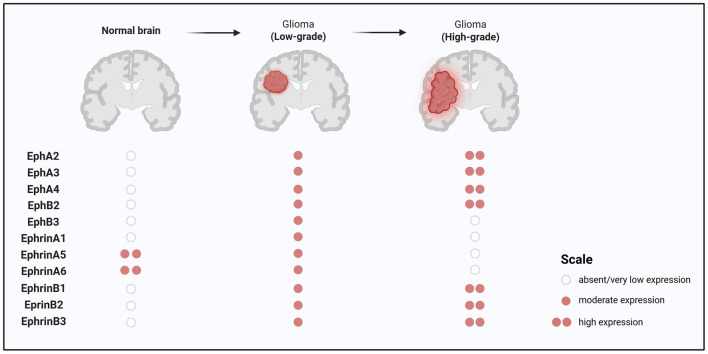 Figure 1
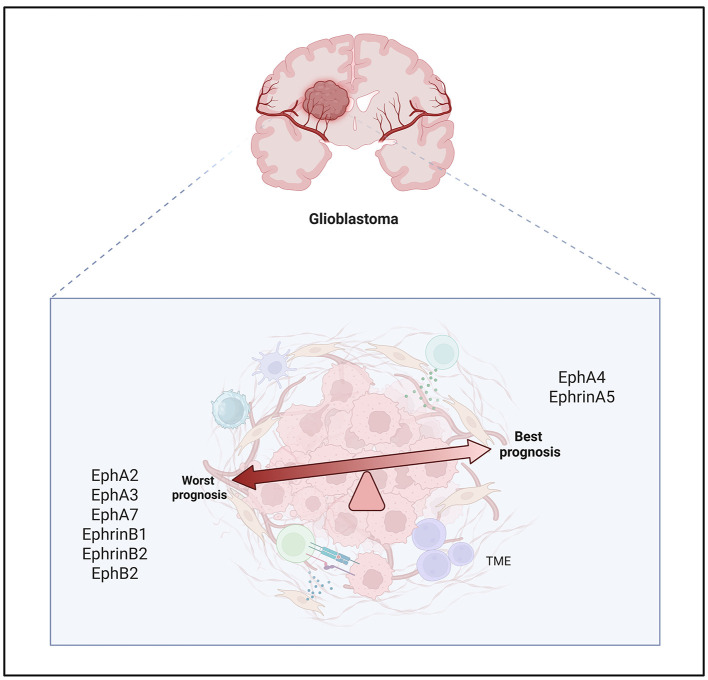 Figure 2
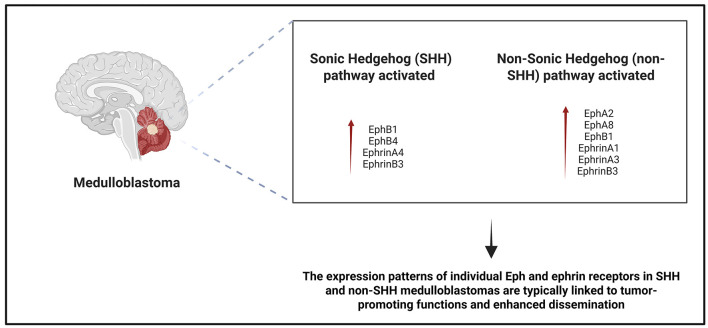 Figure 3
Peer Reviews
No public reviews on file for this paper yet. If you reviewed it on a platform where reviews are public (OpenReview, ICLR, NeurIPS, ICML), you can paste yours below so the community can read it here.
Videos
No videos yet. Explain this paper in a talk, walkthrough, or lecture? Add one.
Taxonomy
TopicsAxon Guidance and Neuronal Signaling · Neurofibromatosis and Schwannoma Cases · Hippo pathway signaling and YAP/TAZ