Blood-based tumor mutational burden as a biomarker in unresectable non-small cell lung cancer treated with chemoradiotherapy and durvalumab
Henrik Horndalsveen, Vilde Drageset Haakensen, Tesfaye Madebo, Bjørn Henning Grønberg, Tarje Onsøien Halvorsen, Jussi Koivunen, Kersti Oselin, Saulius Cicenas, Nina Helbekkmo, Marianne Aanerud, Jarkko Ahvonen, Maria Silvoniemi, Maria Moksnes Bjaanæs, Saima Farooqi, Daniel Nebdal

TL;DR
This study shows that blood-based tumor mutational burden (bTMB) and PD-L1 levels can help predict treatment outcomes in advanced lung cancer patients receiving chemoradiotherapy and durvalumab.
Contribution
The study introduces bTMB as a potential biomarker for predicting progression-free survival in unresectable NSCLC patients treated with chemoradiotherapy and durvalumab.
Findings
High bTMB was linked to longer progression-free survival in patients with unresectable NSCLC.
PD-L1 expression ≥ 1% was significantly associated with improved progression-free survival.
STK11, KEAP1, or NFE2L2 mutations in ctDNA were linked to shorter progression-free survival.
Abstract
Chemoradiotherapy followed by durvalumab is a potentially curative treatment for unresectable, locally advanced non-small cell lung cancer (NSCLC), but clinical outcomes remain highly variable. Identifying robust biomarkers is essential to refine treatment selection and enable risk-adapted strategies. In this multicenter, prospective cohort study, 86 patients with unresectable stage III NSCLC were treated with chemoradiotherapy followed by durvalumab. Baseline plasma samples underwent genomic profiling and blood tumor mutational burden (bTMB) assessment using targeted next-generation sequencing. Associations between bTMB, circulating tumor DNA (ctDNA) alterations, PD-L1 expression, and progression-free survival (PFS) were evaluated using a one-sided significance threshold of p < 0.10. Median PFS was 18.9 months (95% CI: 14.7–not reached), and median bTMB was 6.6 mutations/megabase. In…
Genes, proteins, chemicals, diseases, species, mutations and cell lines named across the full text — each resolved to its canonical identifier and authoritative record.
Click any figure to enlarge with its caption.
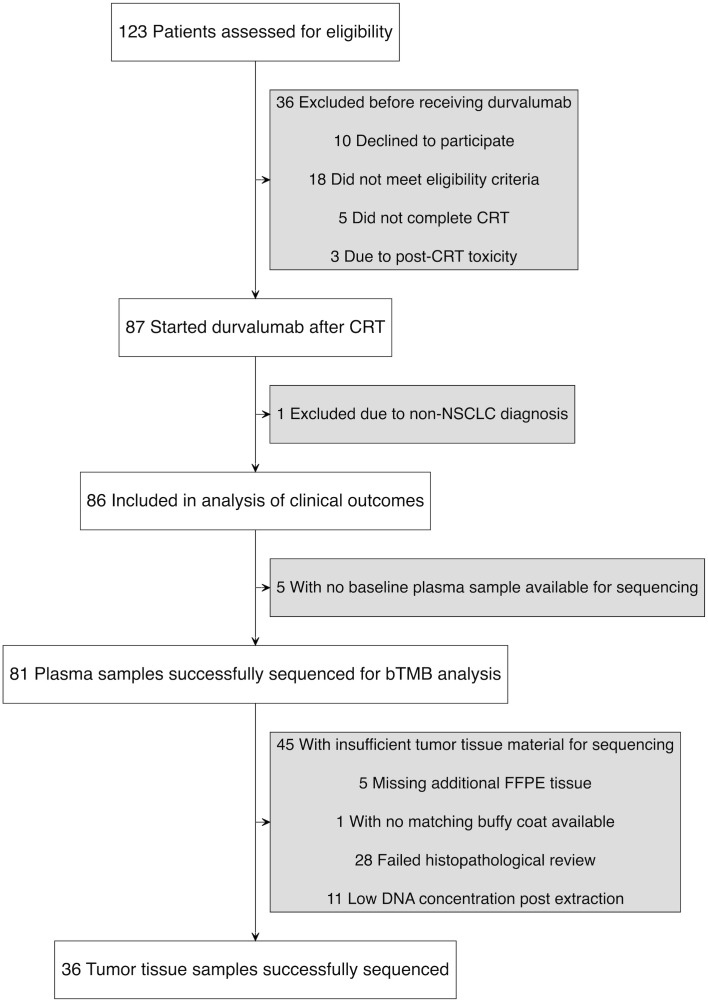 Figure 1
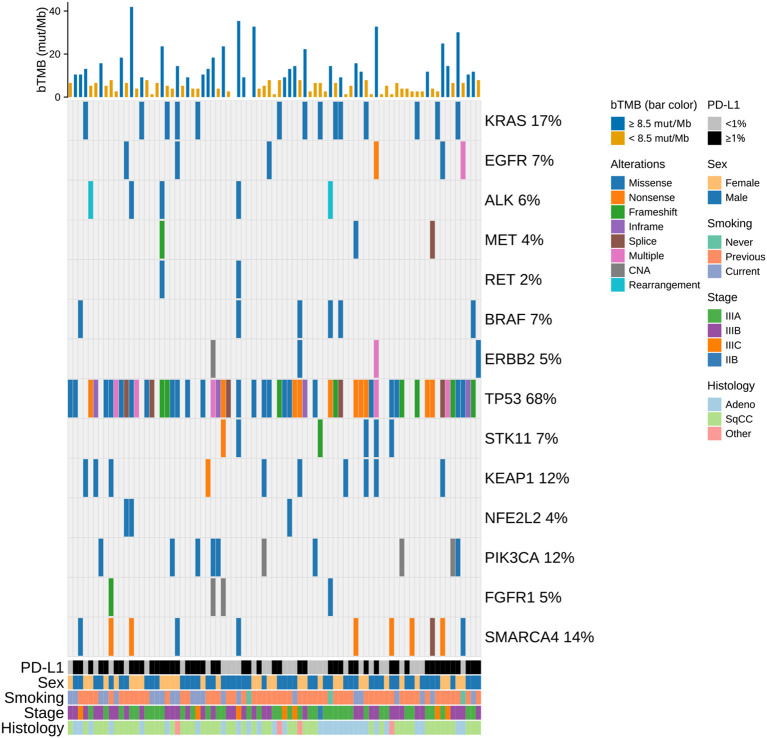 Figure 2
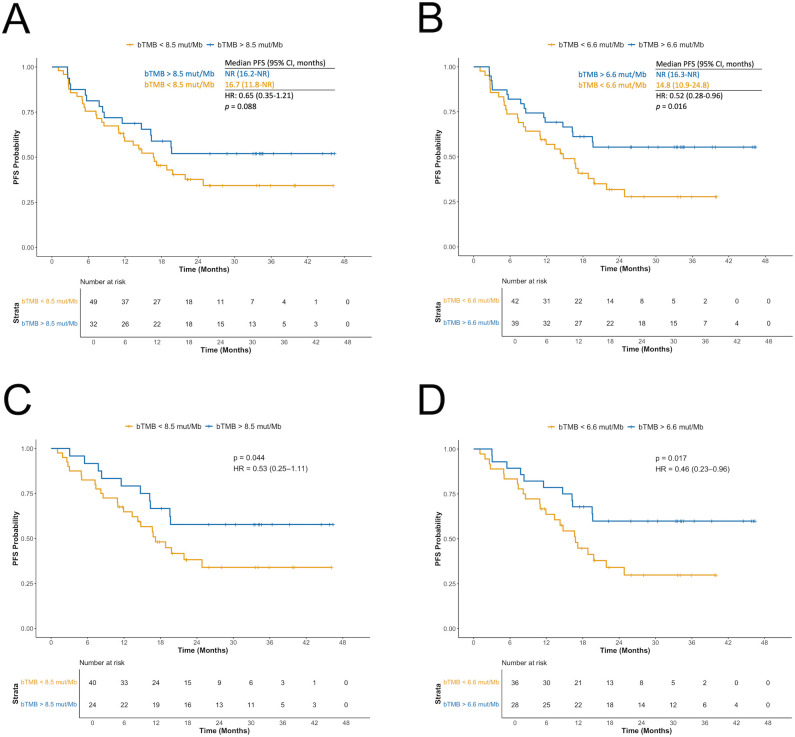 Figure 3
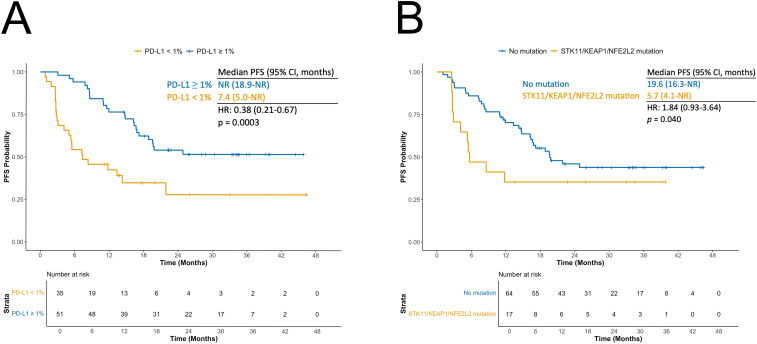 Figure 4
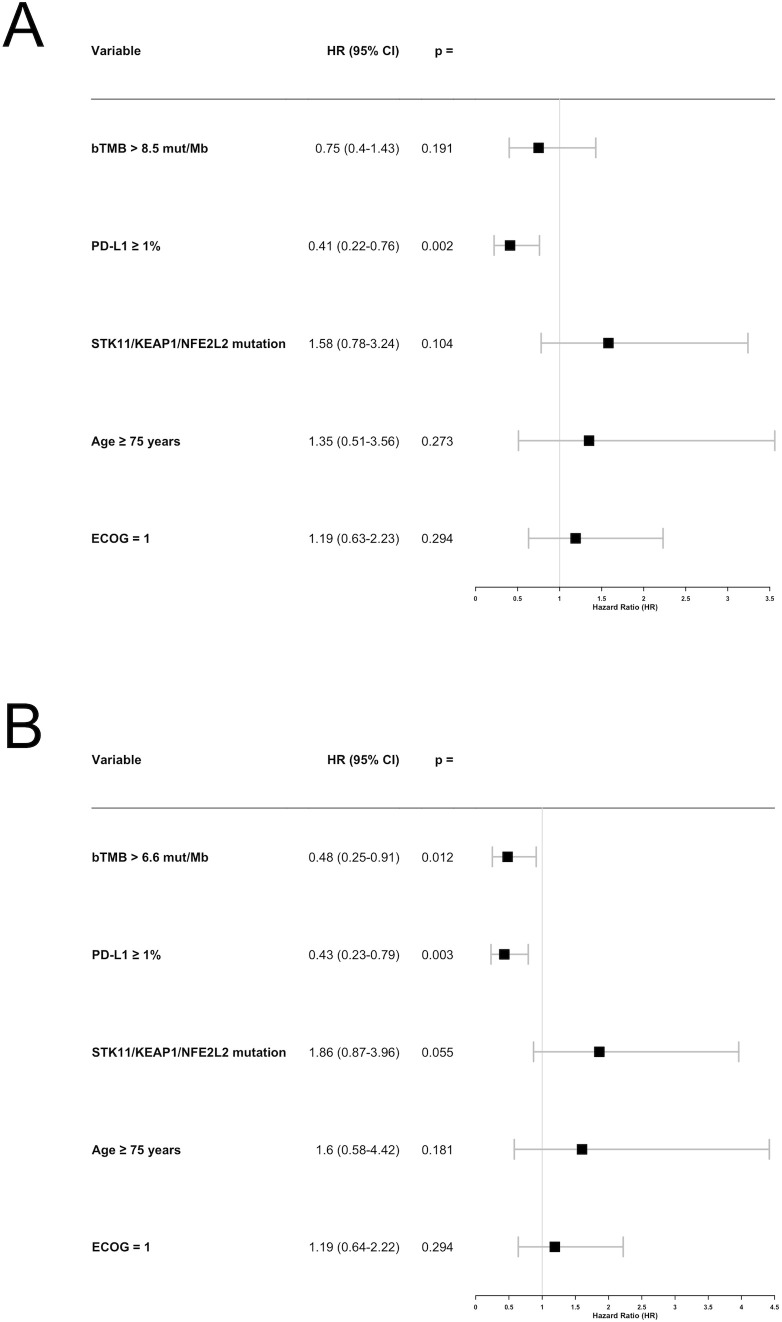 Figure 5
Peer Reviews
No public reviews on file for this paper yet. If you reviewed it on a platform where reviews are public (OpenReview, ICLR, NeurIPS, ICML), you can paste yours below so the community can read it here.
Videos
No videos yet. Explain this paper in a talk, walkthrough, or lecture? Add one.
Taxonomy
TopicsLung Cancer Treatments and Mutations · Cancer Immunotherapy and Biomarkers · Cancer Genomics and Diagnostics