Endolysin significantly improves symptoms with atopic dermatitis: bridging the gap from research to clinical practice
Ling Kui, Jinqun Huang, Guoyun Wang, Jiamin Zhao, Shuangshuang Wang, Xiaoxing Qin, Leifeng Liu, Jianfei Hu, Lianjia Chen, Xingchun Wang, Qing Li, Yuqian Zhao, Yuanyue Tang, Kexu Xiong, Shuxia Zhan, Honghua Ding, JunLing Wang, Hua Cai, Qing Zhang, Xiaoyan Zi, Qiong Deng, Lian Gao

TL;DR
A new topical endolysin gel significantly improves symptoms of atopic dermatitis with a favorable safety profile.
Contribution
Demonstrates endolysin gel's efficacy in treating AD by targeting S. aureus and reducing inflammation.
Findings
Endolysin gel significantly reduced skin lesion scores, S. aureus load, and inflammatory markers in a dermatitis model.
Clinical study showed improved AD symptoms with no tolerability issues in 20 adult participants.
Endolysin gel improved both acute and chronic AD lesions over an extended follow-up period.
Abstract
Atopic Dermatitis (AD), a chronic inflammatory skin disease characterized by pruritus, dryness, redness, edema, scratching, and lichenification, ranks as the leading cause of non-fatal skin disease burden globally. Current therapeutic strategies for AD primarily act by inhibiting inflammatory pathways, yet largely fail to address Staphylococcus aureus (S. aureus) control unless exudative lesions are present. However, concerns over treatment-related adverse effects, long-term safety profiles, and emerging drug resistance underscore the remaining substantial unmet clinical needs in this field. To evaluate the safety and efficacy of endolysin gel in treating AD. An infection-driven dermatitis model with AD-like features was established. Following treatment with Staphyrase® or in other control groups, skin disease severity scores, S. aureus CFU, and key inflammatory cytokines were…
Genes, proteins, chemicals, diseases, species, mutations and cell lines named across the full text — each resolved to its canonical identifier and authoritative record.
Click any figure to enlarge with its caption.
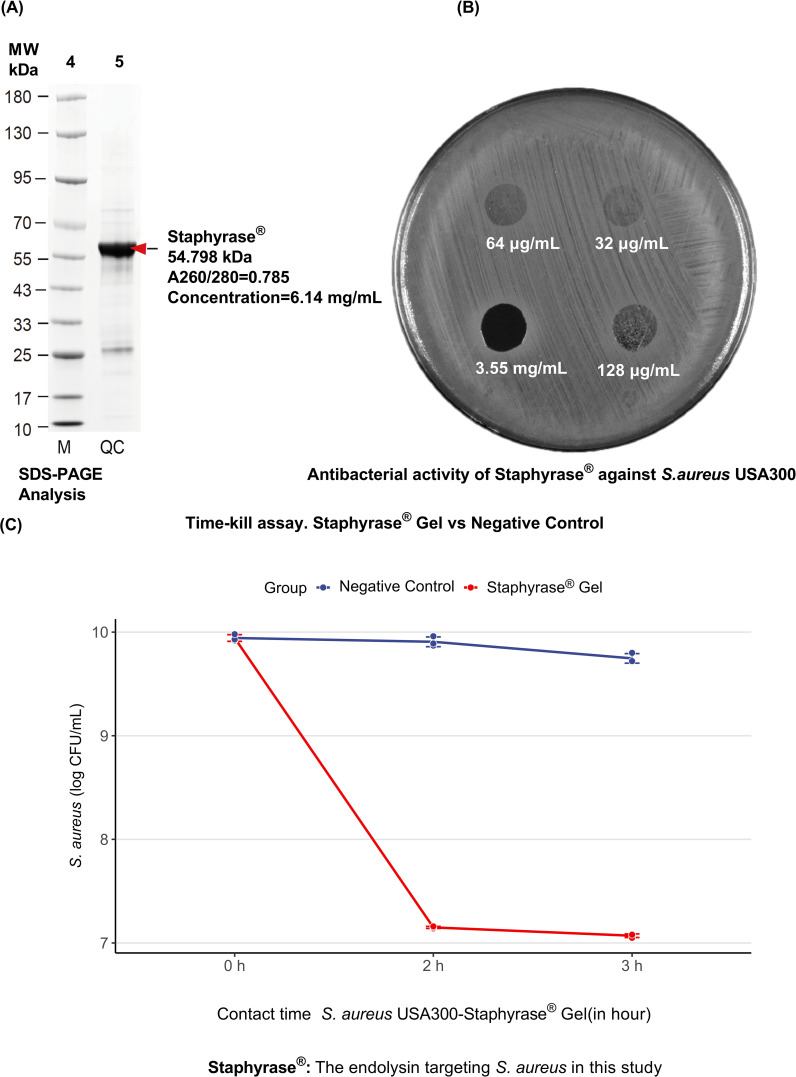 Figure 1
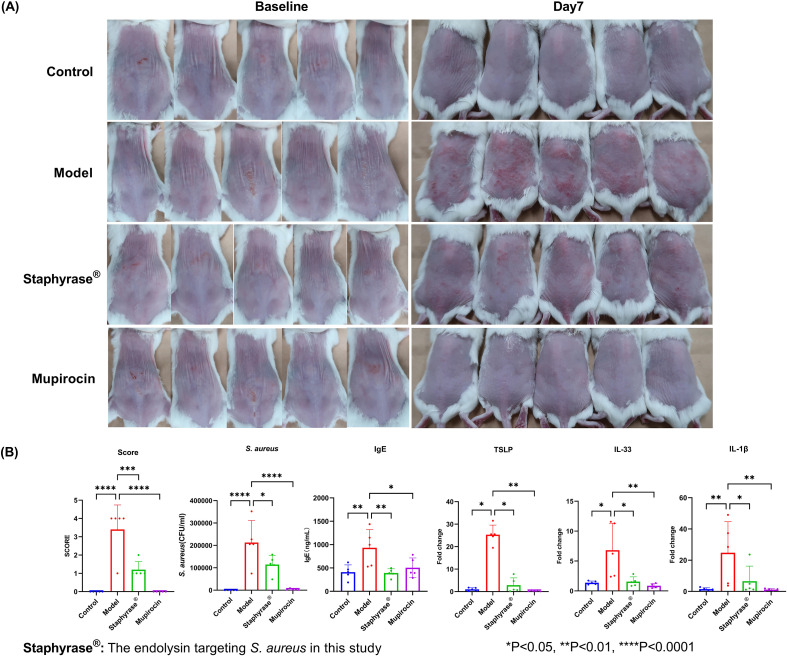 Figure 2
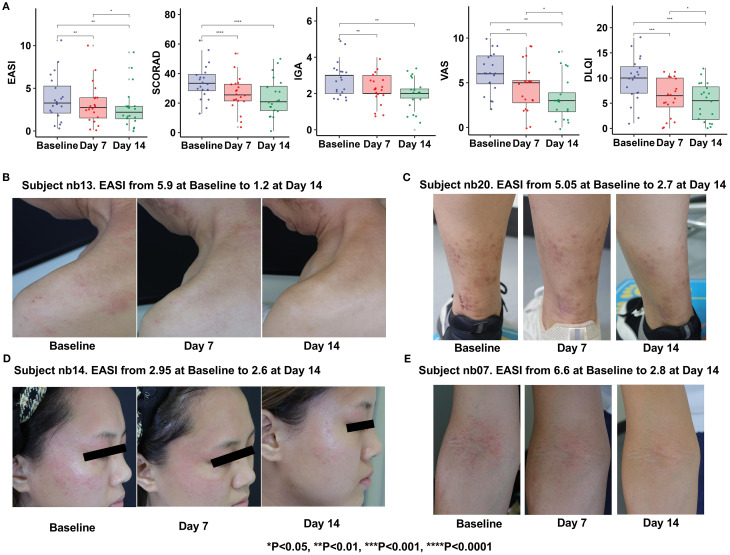 Figure 3
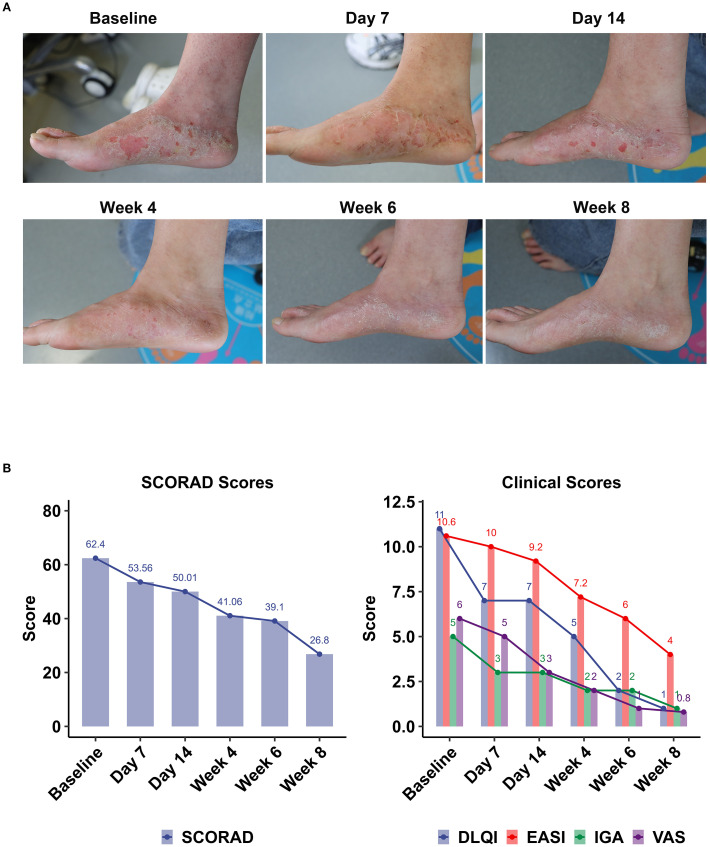 Figure 4
Peer Reviews
No public reviews on file for this paper yet. If you reviewed it on a platform where reviews are public (OpenReview, ICLR, NeurIPS, ICML), you can paste yours below so the community can read it here.
Videos
No videos yet. Explain this paper in a talk, walkthrough, or lecture? Add one.
Taxonomy
TopicsDermatology and Skin Diseases · Allergic Rhinitis and Sensitization · Food Allergy and Anaphylaxis Research