Face perception in the Japanese population using EEG
Kensaku Miki, Yasuyuki Takeshima, Shoko Watanabe, Ryusuke Kakigi

TL;DR
This paper reviews EEG studies on face perception in Japanese children and adults, highlighting differences in brain responses compared to Western populations and the role of cultural and experiential factors.
Contribution
The paper provides a focused review of face perception development and expertise effects in the Japanese population, contrasting it with Western findings.
Findings
Face detection in 13-year-old Japanese children is similar to adults, suggesting maturity at this age.
ERP patterns for facial emotional changes in Japanese children aged 7–14 differ from adults, indicating incomplete maturation by age 14.
Hospitality expertise may influence facial emotion perception in the Japanese population.
Abstract
The face contains abundant information and plays an important role in our interactive communication. Electroencephalography (EEG) has excellent temporal resolution, making it a useful tool for investigating the time-sequence of face perception processes. Studies on development, conducted in Western populations, found that event-related potential (ERP) changes in children begin in mid-childhood. However, there are few studies on developmental changes in Japanese children. In addition, few studies have investigated whether hospitality expertise affects these processes in Western and Japanese populations. In this review, we summarize evidence from EEG studies that investigated face perception processes, with a focus on three developmental and expertise-related studies with Japanese participants. These findings are compared with studies involving Western participants to explore the…
Genes, proteins, chemicals, diseases, species, mutations and cell lines named across the full text — each resolved to its canonical identifier and authoritative record.
Click any figure to enlarge with its caption.
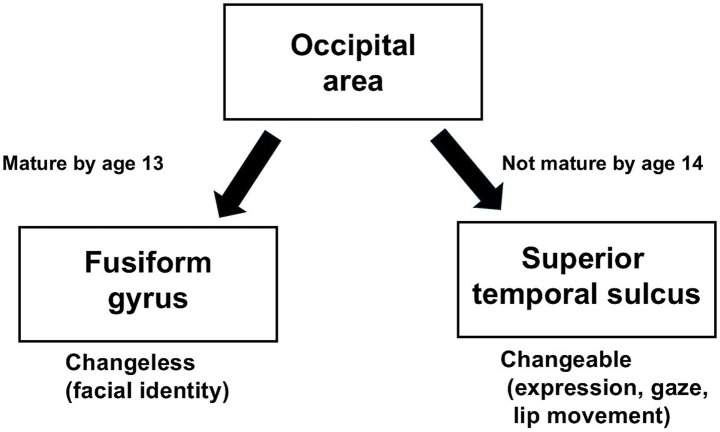 Figure 1
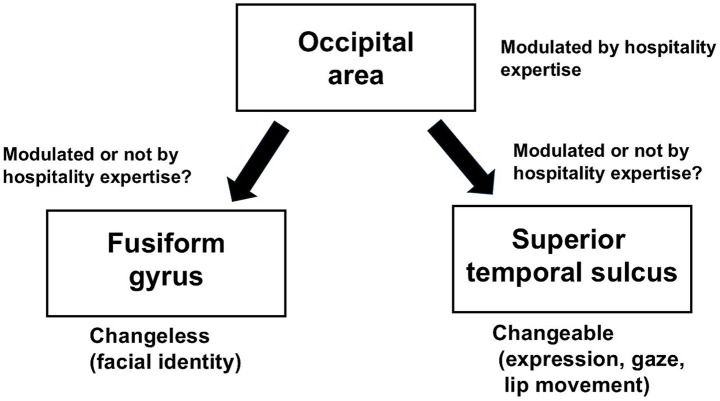 Figure 2
Peer Reviews
No public reviews on file for this paper yet. If you reviewed it on a platform where reviews are public (OpenReview, ICLR, NeurIPS, ICML), you can paste yours below so the community can read it here.
Videos
No videos yet. Explain this paper in a talk, walkthrough, or lecture? Add one.
Taxonomy
TopicsFace Recognition and Perception · Visual perception and processing mechanisms · Visual Attention and Saliency Detection