Comparative impact of supine vs prone positioning on dose distribution, acute toxicity, and setup error in postoperative radiotherapy for cervical cancer: a multidimensional propensity-matched cohort study
Nanjie Xiao, Cuiyun Yuan, Tianshu Zhao, Tie Xu, Jiaomei Zhou, Junfang Liao, Miao Peng, Chenbin Liu, Zhijian Chen, Jing Jin

TL;DR
This study compares supine and prone positioning in cervical cancer radiotherapy, finding that prone positioning reduces hematologic toxicity while supine positioning may protect against gastrointestinal issues.
Contribution
The study introduces a multidimensional analysis of positioning effects on dose distribution, toxicity, and setup error in cervical cancer radiotherapy.
Findings
Prone positioning reduces low-dose exposure to the bowel and rectum compared to supine positioning.
Prone positioning is associated with reduced hematologic toxicity, while supine positioning is protective against diarrhea.
Setup error is comparable between supine and prone positioning.
Abstract
Postoperative radiotherapy is standard for high-risk cervical cancer, but acute toxicities—particularly gastrointestinal and hematologic—remain clinically relevant. Patient positioning may influence organ dose exposure and setup accuracy, yet its multidimensional clinical impact is poorly characterized. This retrospective cohort study evaluated patients with cervical cancer treated with postoperative volumetric modulated arc therapy between 2019 and 2022. Propensity score matching (2:1) produced a balanced matched cohort of prone and supine treatments for comparative analyses. Primary endpoints included pelvic organ dose-volume parameters, interfractional setup error, and grade ≥2 hematologic and gastrointestinal toxicities, evaluated using multivariable logistic regression and linear mixed-effects models. In this single-center retrospective cohort (n = 168), propensity score matching…
Genes, proteins, chemicals, diseases, species, mutations and cell lines named across the full text — each resolved to its canonical identifier and authoritative record.
Click any figure to enlarge with its caption.
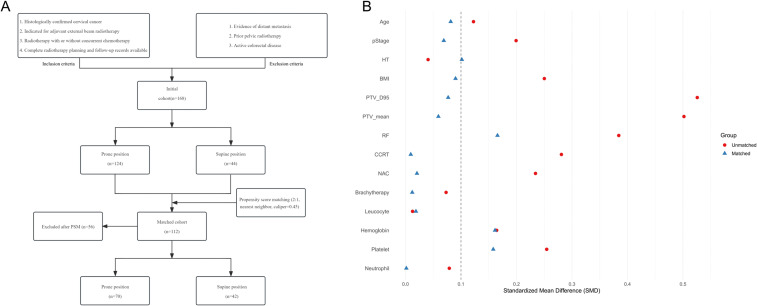 Figure 1
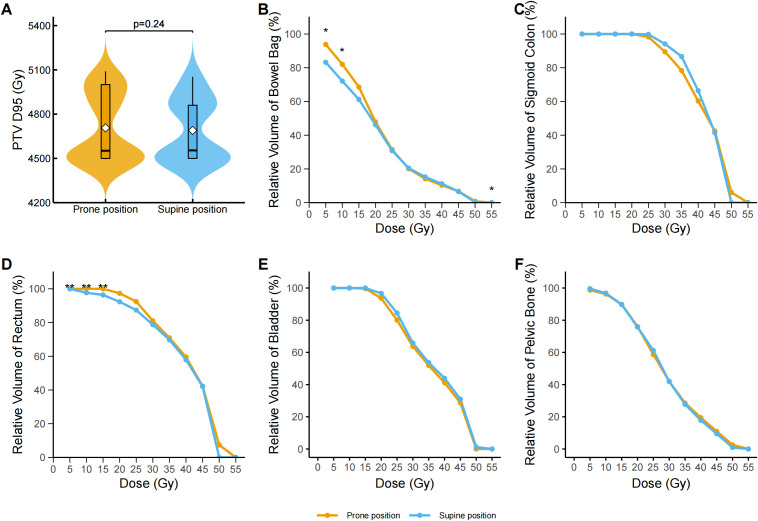 Figure 2
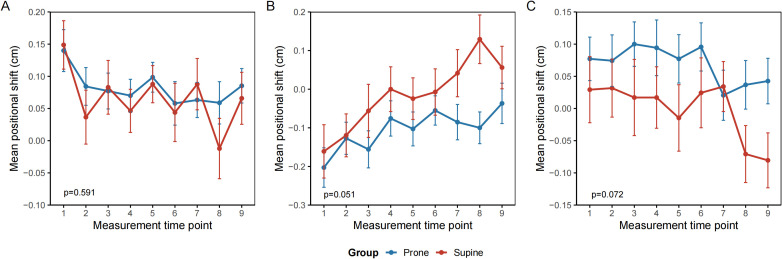 Figure 3
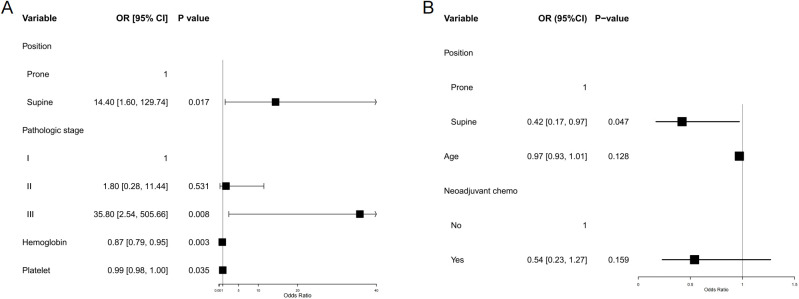 Figure 4
Peer Reviews
No public reviews on file for this paper yet. If you reviewed it on a platform where reviews are public (OpenReview, ICLR, NeurIPS, ICML), you can paste yours below so the community can read it here.
Videos
No videos yet. Explain this paper in a talk, walkthrough, or lecture? Add one.
Taxonomy
TopicsAdvanced Radiotherapy Techniques · Management of metastatic bone disease · Advances in Oncology and Radiotherapy