Solution structure of the Sox2 DNA-binding domain reveals conformational selection in DNA binding
Andrea Orsetti, Jonathan Slejfer, Satine Ha, Damian I Kevelam, Jan Tekkelenburg, Tjitske van Duijn, Anni Leppäkoski, Aren Sedrakyan, Ákos Szilagyi, Raymond D Schellevis, Abdenour Soufi, Vlad Cojocaru, Hugo van Ingen

TL;DR
The study reveals how the Sox2 protein binds to DNA by maintaining a pre-folded structure that allows for rapid and specific DNA recognition.
Contribution
The paper provides new structural insights into the Sox2 DNA-binding domain's conformational dynamics and DNA recognition mechanism.
Findings
The Sox2 DNA-binding domain's helical core is pre-structured in its free state, resembling its DNA-bound form.
Specific DNA binding involves rigidification of the C-terminal tail and overlaps with nonspecific binding interfaces.
High ionic strength stabilizes the Sox2 DNA-binding domain, and DNA binding involves conformational selection rather than induced fit.
Abstract
The transcription factor Sox2 is a master regulator of cell pluripotency. While structural studies have provided insights into its DNA-bound conformation, the mechanisms governing its free-state conformational dynamics and DNA recognition remain elusive. Based on solution NMR spectroscopy and supported by molecular dynamics simulations, we here report the solution structure of the Sox2 DNA-binding domain (DBD), revealing that its helical core is well-structured and arranged as in its DNA-bound state. The folded, free protein coexists in dynamic equilibrium with partially unfolded states, which are quenched upon specific DNA binding. We show that the electrostatic environment significantly influences the Sox2–DBD stability, with high ionic strength stabilizing the protein. NMR titration experiments demonstrate that the nonspecific and specific DNA binding interfaces of Sox2 largely…
Genes, proteins, chemicals, diseases, species, mutations and cell lines named across the full text — each resolved to its canonical identifier and authoritative record.
Click any figure to enlarge with its caption.
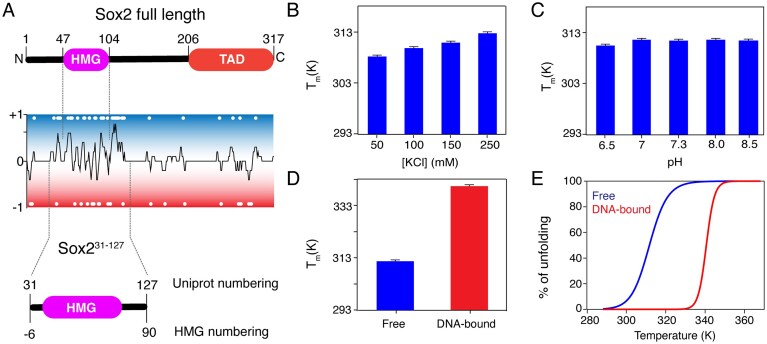 Figure 1
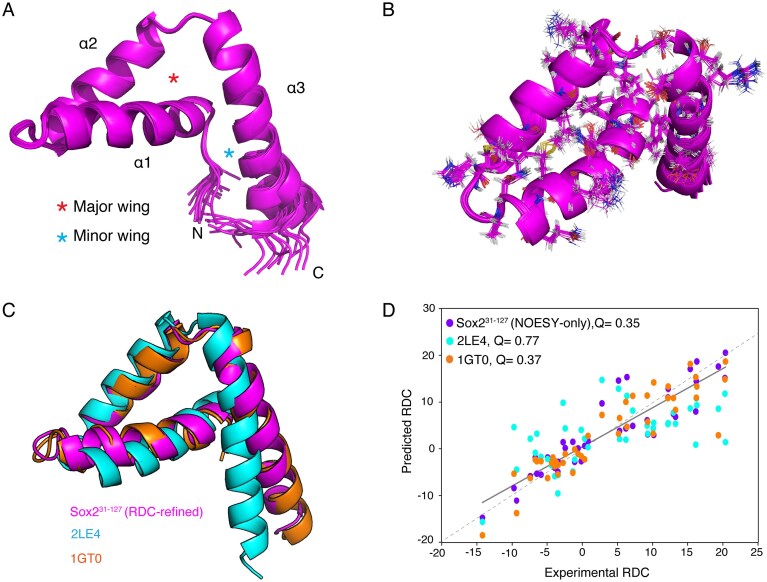 Figure 2
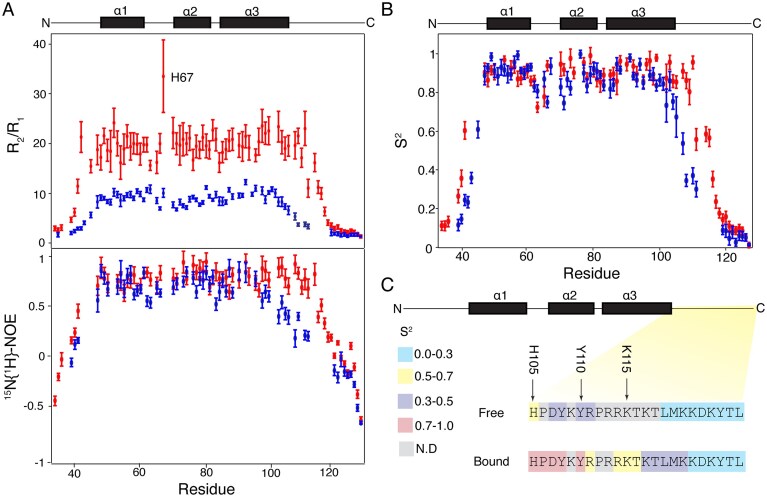 Figure 3
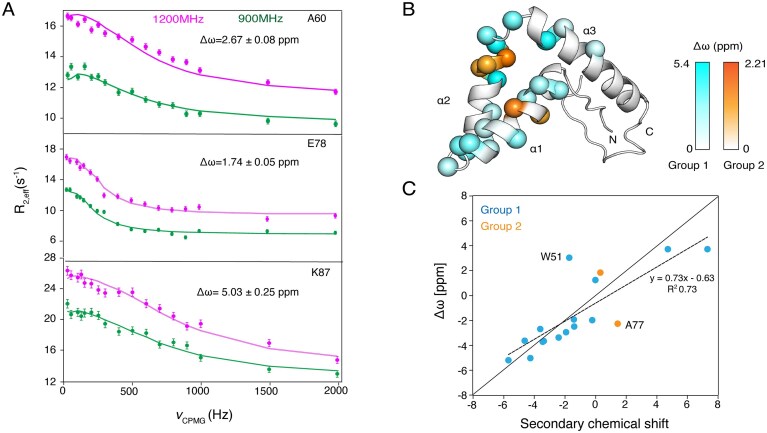 Figure 4
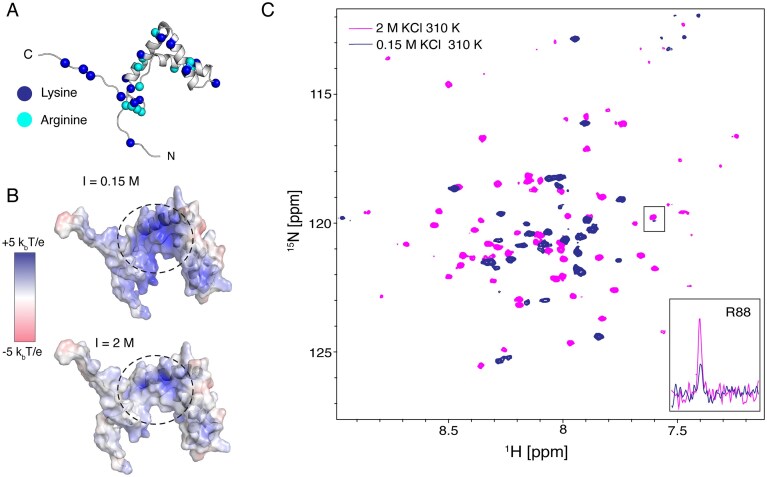 Figure 5
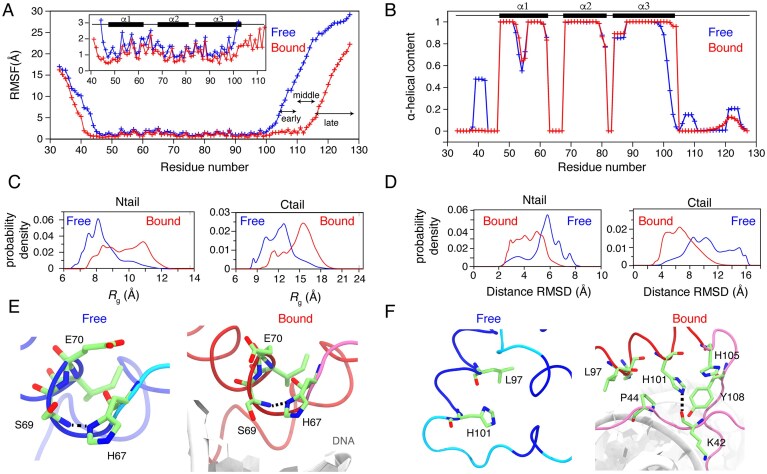 Figure 6
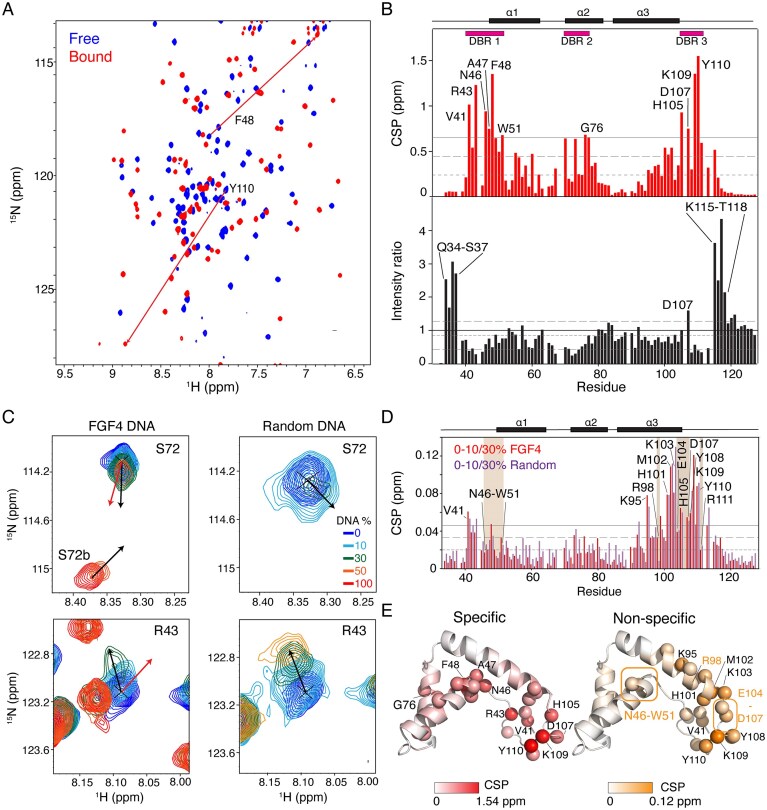 Figure 7
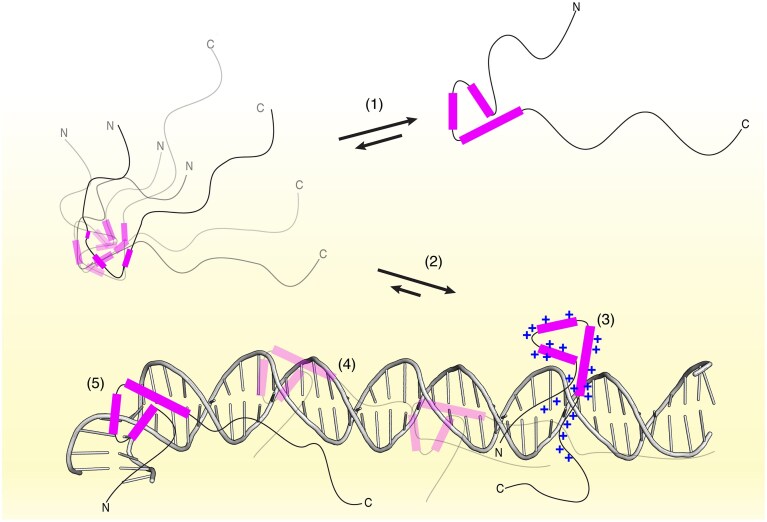 Figure 8
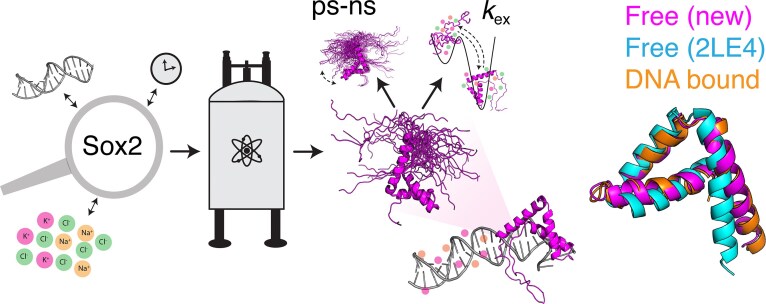 Figure 9
Peer Reviews
No public reviews on file for this paper yet. If you reviewed it on a platform where reviews are public (OpenReview, ICLR, NeurIPS, ICML), you can paste yours below so the community can read it here.
Videos
No videos yet. Explain this paper in a talk, walkthrough, or lecture? Add one.
Taxonomy
TopicsBacterial Genetics and Biotechnology · DNA Repair Mechanisms · Pluripotent Stem Cells Research