Chromatin context shapes DNA damage formation and nucleotide excision repair dynamics in Caenorhabditis elegans
Cansu Kose, Cem Azgari, Laura A Lindsey-Boltz, Ogün Adebali, Aziz Sancar

TL;DR
This study explores how chromatin and transcription influence DNA damage and repair in C. elegans, revealing new insights into repair mechanisms.
Contribution
The study reveals species-specific DNA repair dynamics and the role of chromatin in shaping repair efficiency in C. elegans.
Findings
Global repair predominates in removing UV-induced DNA lesions in C. elegans.
(6–4) photoproducts are efficiently removed by transcription-coupled repair, a novel finding in animals.
Repair efficiency, not damage formation, determines residual DNA damage in chromatin contexts.
Abstract
DNA damage formation and repair are influenced by the genomic landscape, yet how chromatin and transcriptional activity shape these processes at a whole-organism scale remains incompletely understood. Using Caenorhabditis elegans, a widely used model organism to study DNA repair and related processes, we present comprehensive, time-course maps of ultraviolet-induced DNA damage and excision repair, revealing how chromatin context and transcription dictate the spatiotemporal patterns of damage and repair. Of the two repair pathways—global repair and transcription-coupled repair—global repair predominates, removing the majority of the lesions; and notably, (6–4) photoproducts are removed by transcription-coupled repair at an extent comparable to cyclobutane pyrimidine dimers, a feature not previously observed in animals. Integration of damage and repair profiles with chromatin features…
Genes, proteins, chemicals, diseases, species, mutations and cell lines named across the full text — each resolved to its canonical identifier and authoritative record.
Click any figure to enlarge with its caption.
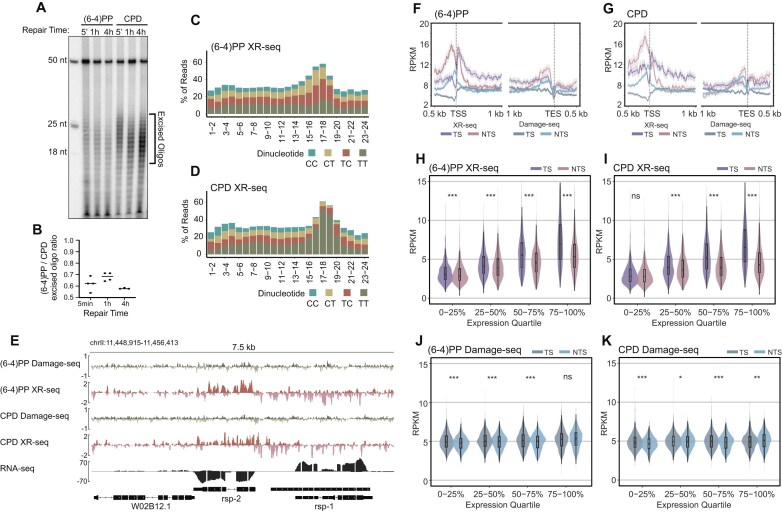 Figure 1
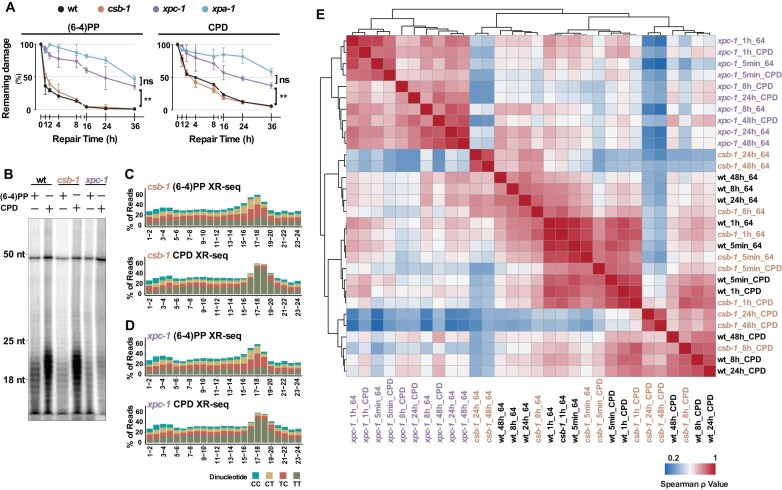 Figure 2
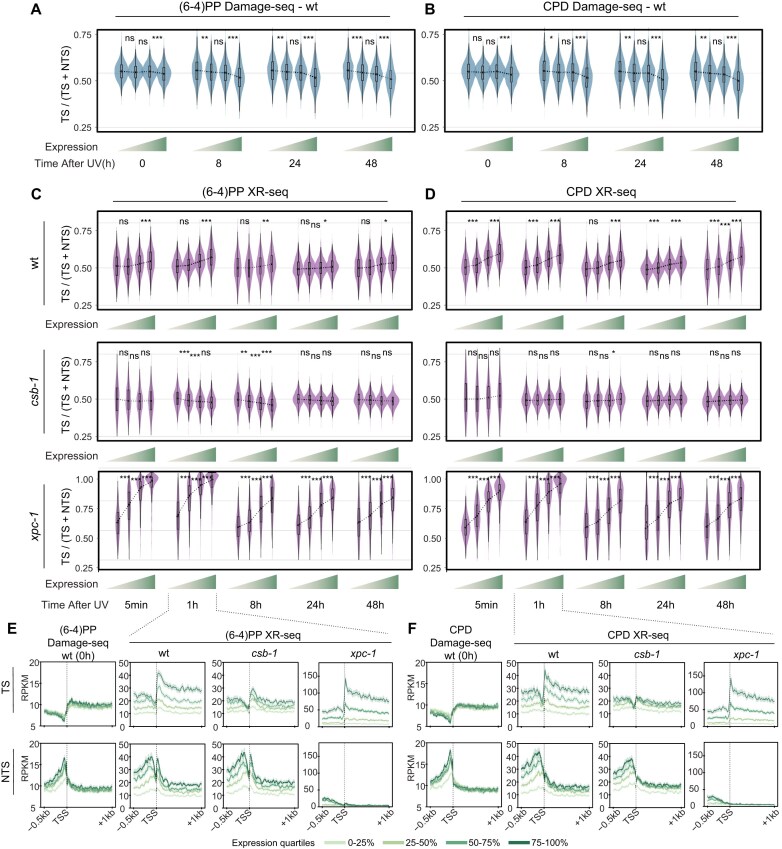 Figure 3
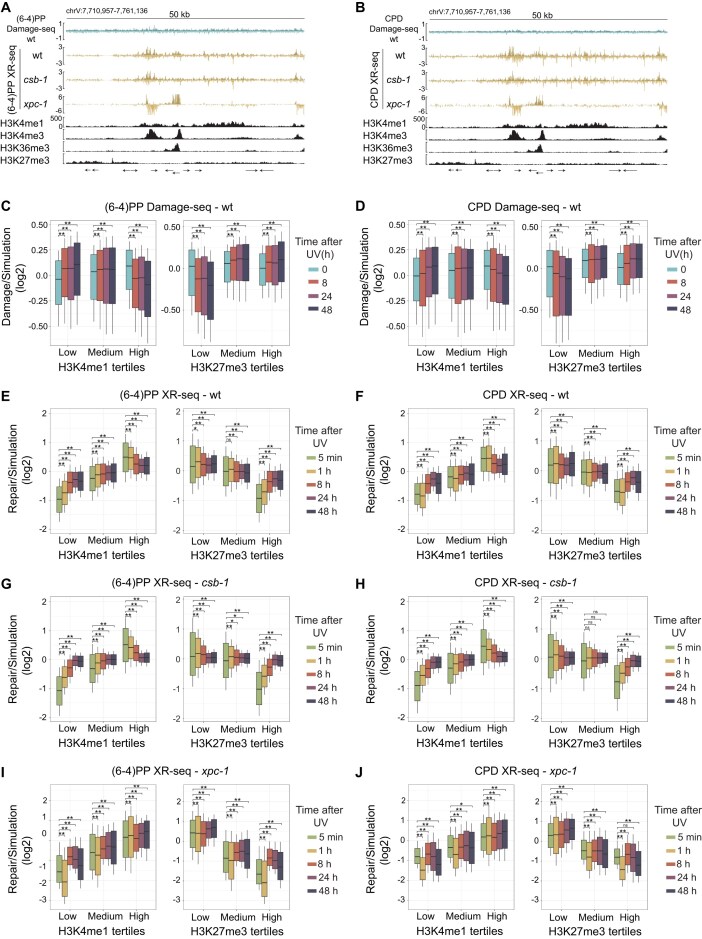 Figure 4
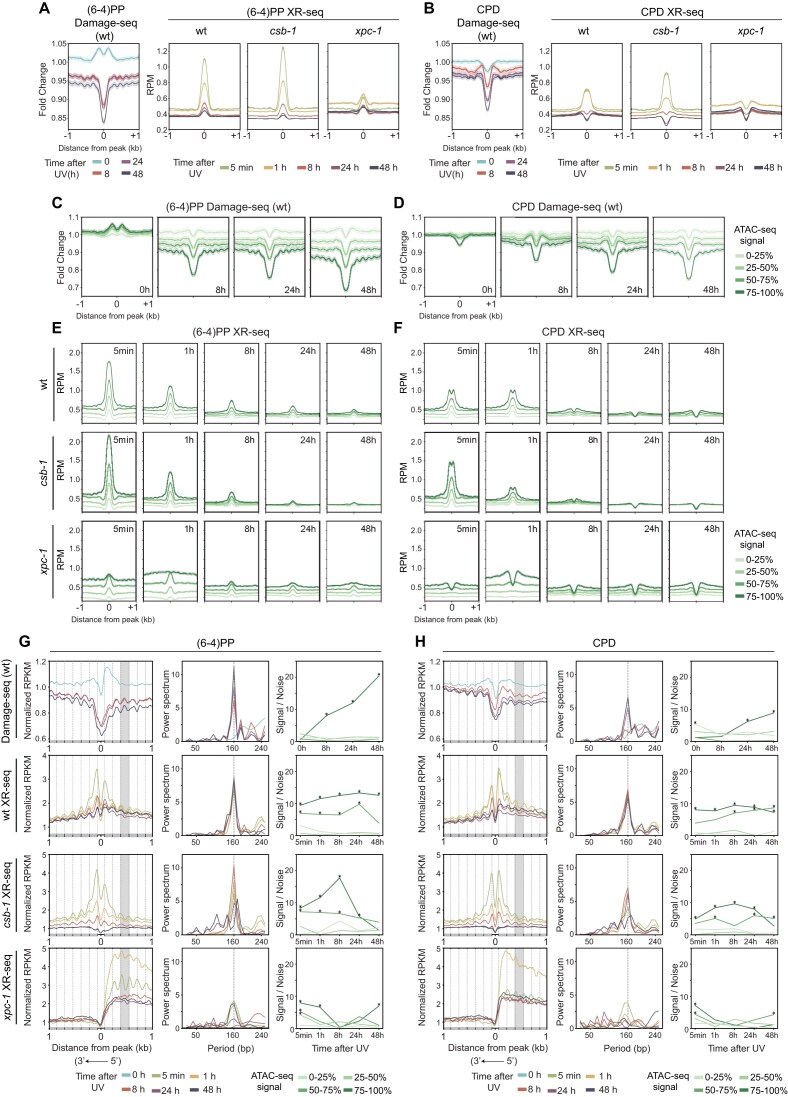 Figure 5
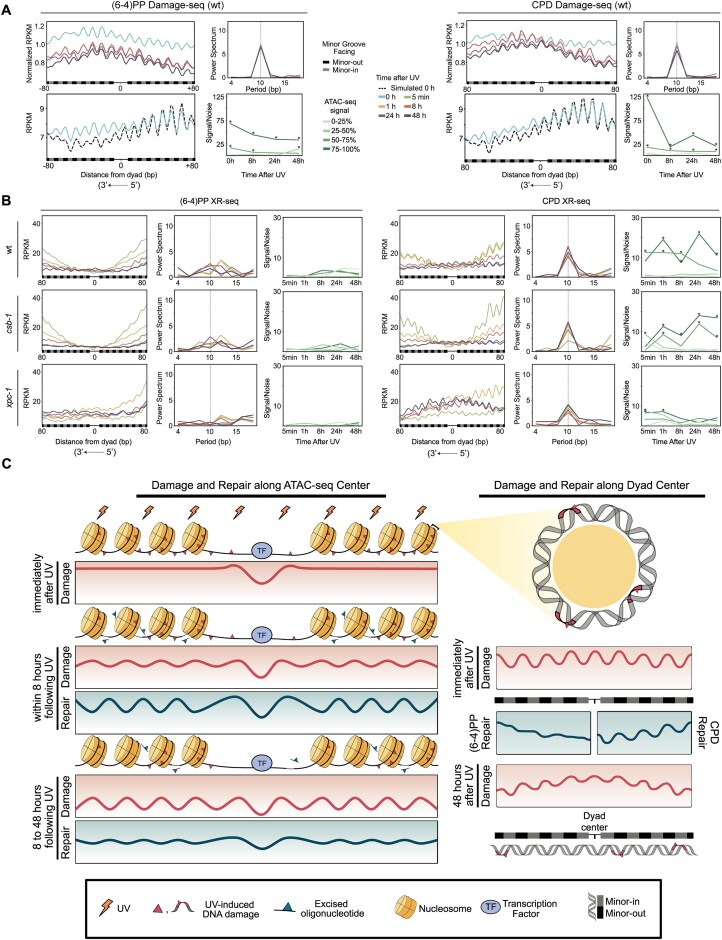 Figure 6
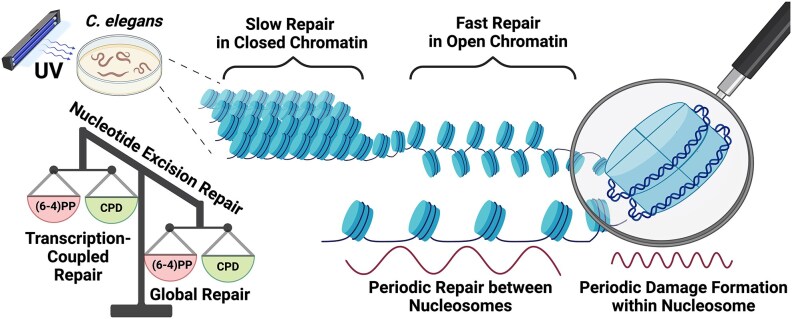 Figure 7
Peer Reviews
No public reviews on file for this paper yet. If you reviewed it on a platform where reviews are public (OpenReview, ICLR, NeurIPS, ICML), you can paste yours below so the community can read it here.
Videos
No videos yet. Explain this paper in a talk, walkthrough, or lecture? Add one.
Taxonomy
TopicsDNA Repair Mechanisms · Genetics, Aging, and Longevity in Model Organisms · PARP inhibition in cancer therapy