Proteolytic cleavage activates the mitochondrial isoform of TOP3A
Direnis Erdinc, Christin A Albus, Alejandro Rodríguez-Luis, Katja E Menger, Annika Thorsell, Ilian Atanassov, Urška Rovšnik, Maria Falkenberg, Claes M Gustafsson, Thomas J J Nicholls

TL;DR
A mitochondrial form of TOP3A is activated through proteolytic cleavage, which helps maintain mitochondrial DNA.
Contribution
The study reveals that proteolytic cleavage of mitochondrial TOP3A enhances its DNA decatenation activity and enables its autonomous function in mitochondria.
Findings
Mitochondrial TOP3A is cleaved by mitochondrial processing peptidase, removing ~90 amino acids from the C-terminus.
Cleavage increases single-stranded DNA binding and decatenation activity of mitochondrial TOP3A.
Mitochondrial TOP3A functions independently in mtDNA maintenance, uncoupled from nuclear BTRR complex interactions.
Abstract
The TOP3A gene encodes two isoforms, one targeted to the nucleus and one to mitochondria. Nuclear TOP3A functions as part of the BTRR complex to resolve double Holliday junctions during homologous recombination, while the mitochondrial isoform separates hemicatenated daughter mitochondrial DNA (mtDNA) molecules following DNA replication. Here, we show that the mitochondrial isoform of TOP3A undergoes proteolytic cleavage by the mitochondrial processing peptidase, removing ~90 amino acids from the C-terminus. This cleavage enhances the enzyme’s biochemical properties, increasing single-stranded DNA binding and decatenation activity. Notably, all BTRR complex subunits, except TOP3A, are absent from mitochondria, suggesting that proteolytic processing enables TOP3A to function autonomously in mtDNA maintenance. We propose that this cleavage represents a post-import maturation step that…
Genes, proteins, chemicals, diseases, species, mutations and cell lines named across the full text — each resolved to its canonical identifier and authoritative record.
Click any figure to enlarge with its caption.
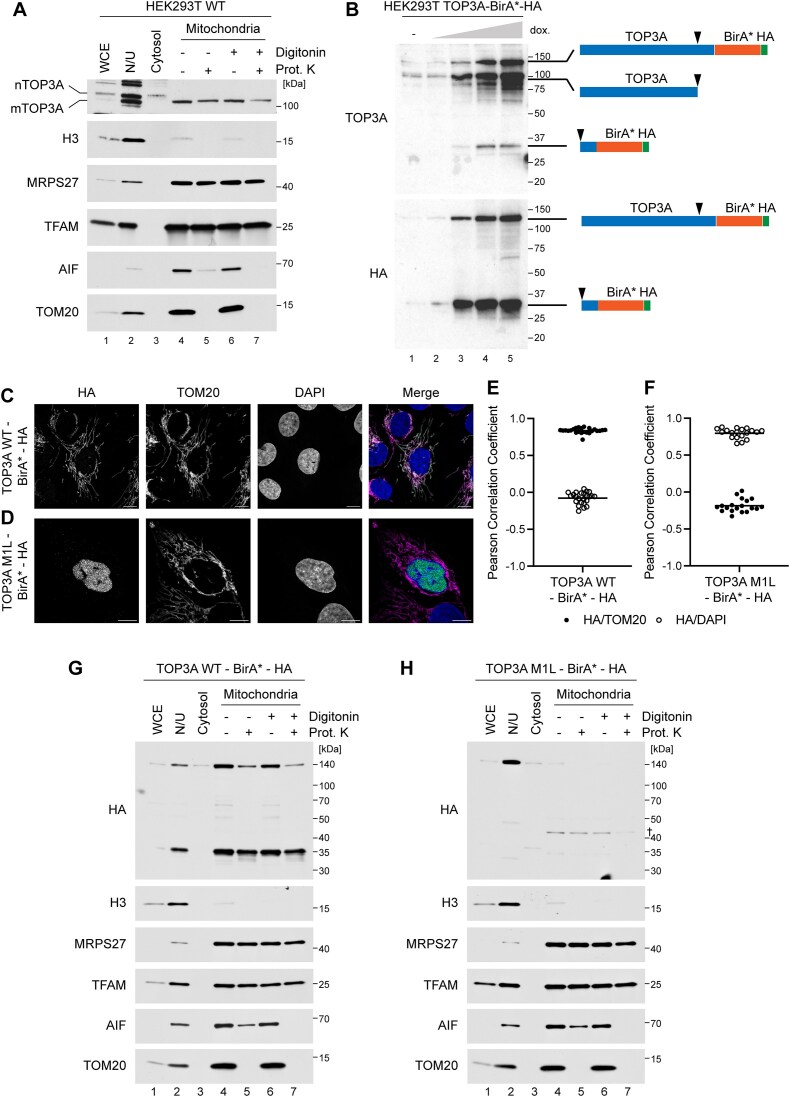 Figure 1
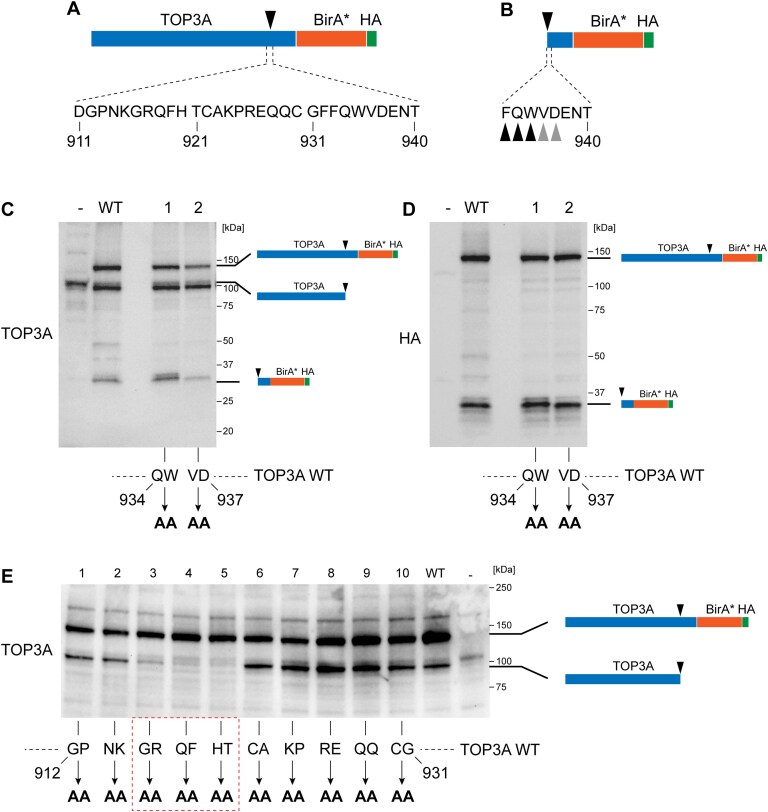 Figure 2
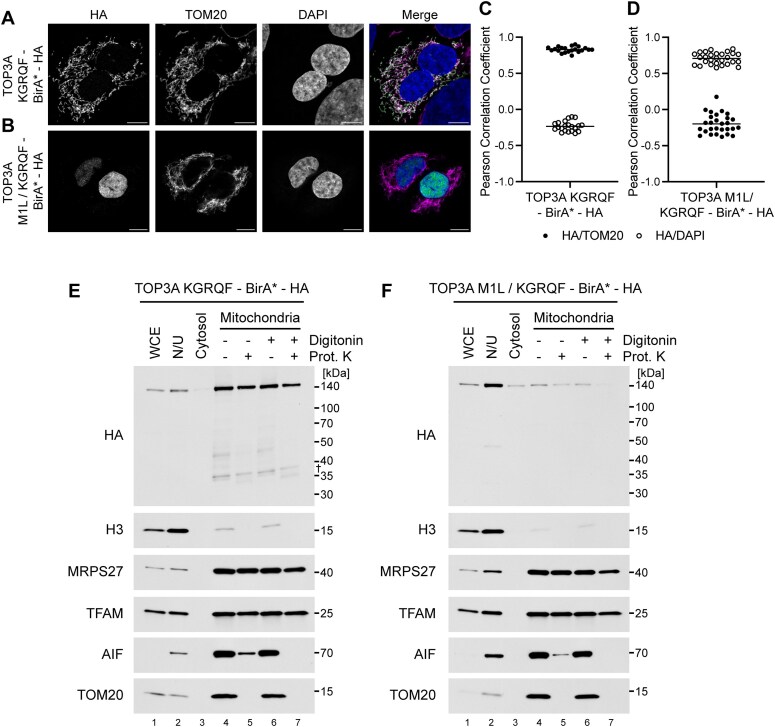 Figure 3
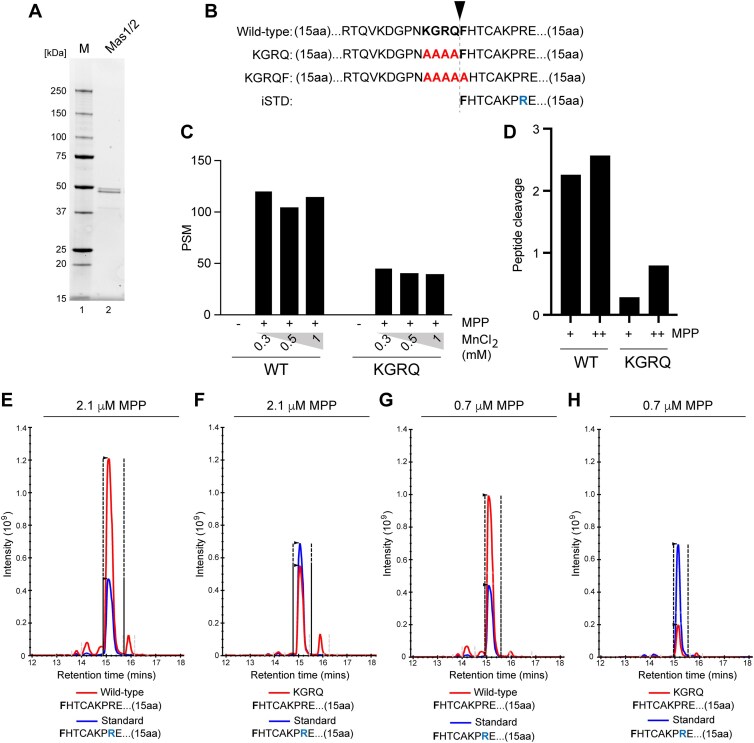 Figure 4
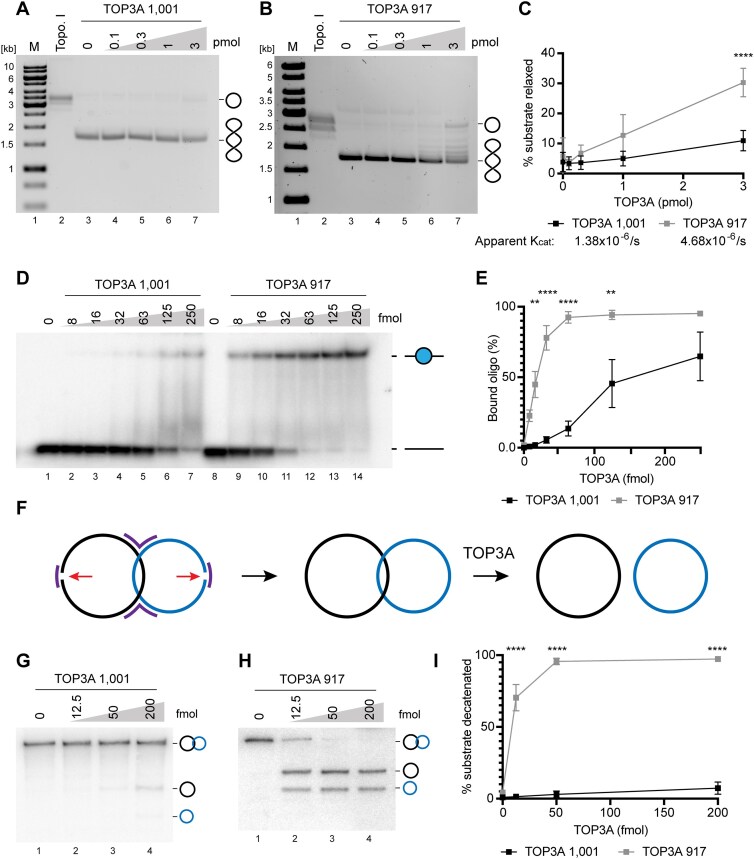 Figure 5
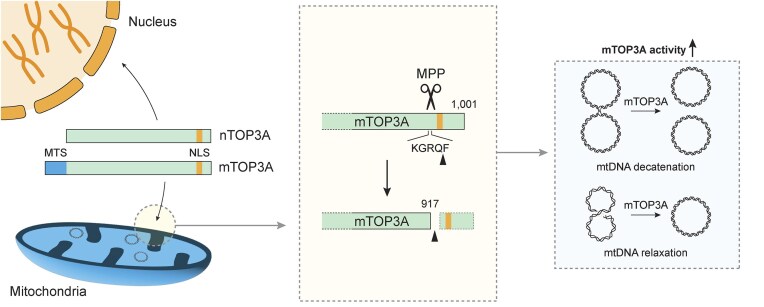 Figure 6
Peer Reviews
No public reviews on file for this paper yet. If you reviewed it on a platform where reviews are public (OpenReview, ICLR, NeurIPS, ICML), you can paste yours below so the community can read it here.
Videos
No videos yet. Explain this paper in a talk, walkthrough, or lecture? Add one.
Taxonomy
TopicsMitochondrial Function and Pathology · DNA Repair Mechanisms · Cell death mechanisms and regulation