Interplay between evolutionary history, morphological constraints and functional adaptations in the primate cochlea
Joaquin del Rio, Manuela Nowotny, Romain David, Alexander Stoessel

TL;DR
This study investigates how the primate cochlea evolved, showing that its shape is influenced by evolutionary history, physical constraints, and hearing needs.
Contribution
The paper provides new insights into the evolutionary and functional drivers of cochlear shape variation in primates using 3D morphometrics and phylogenetic analysis.
Findings
Cochlear shape variation is driven by evolutionary history, morphological constraints, and functional demands.
Ancestral lemuriforms retain a conical cochlea, while lorisiforms have a more coiled shape.
Cochlear coiling correlates with high-frequency hearing and cranial constraints in tarsiers.
Abstract
How the intricate mammalian cochlea evolved, and its functional implications, remain only partly understood. Here, we explore cochlear morphology across 101 extant and fossil species of the mammalian grand order Euarchonta using micro-computed tomography, three-dimensional geometric morphometrics and phylogenetic comparative analyses. We find substantial shape variation across taxa, likely driven by an interplay between evolutionary history, morphological constraints and potentially functional demands, although these remain difficult to interpret. Evolutionary models suggest the rate of cochlear shape evolution was heterogeneous, with some lineages showing particularly high rates, likely linked with adaptive selection pressures (e.g. tarsiers, Cercopithecus). Ancestral state reconstructions reveal lemuriforms retain the ancestral strepsirrhine cochlear shape—conical with around 2½…
Genes, proteins, chemicals, diseases, species, mutations and cell lines named across the full text — each resolved to its canonical identifier and authoritative record.
Click any figure to enlarge with its caption.
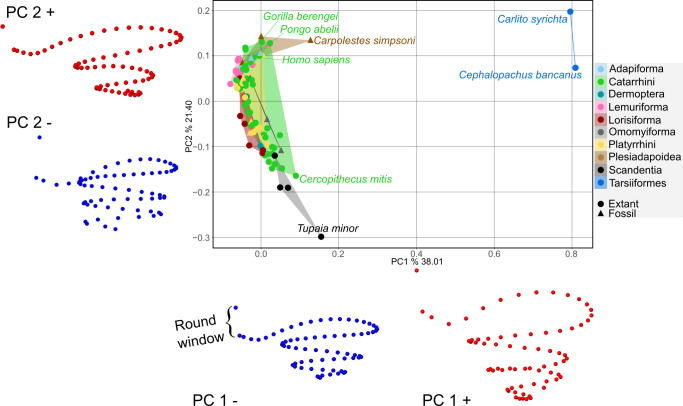 Figure 1
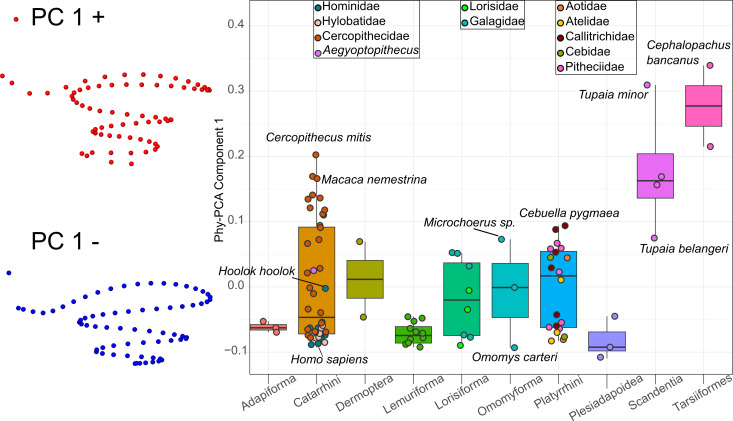 Figure 2
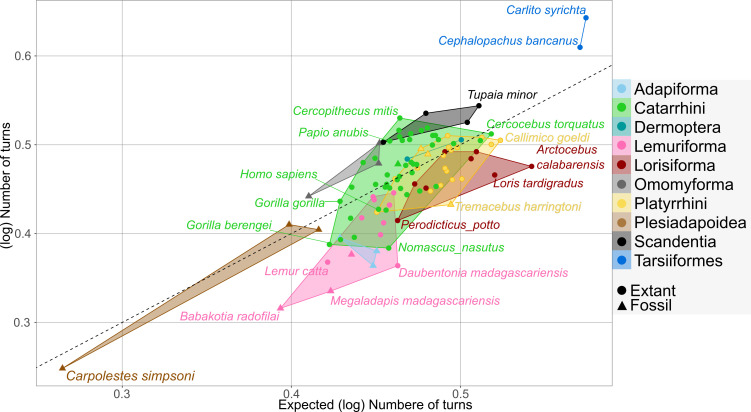 Figure 3
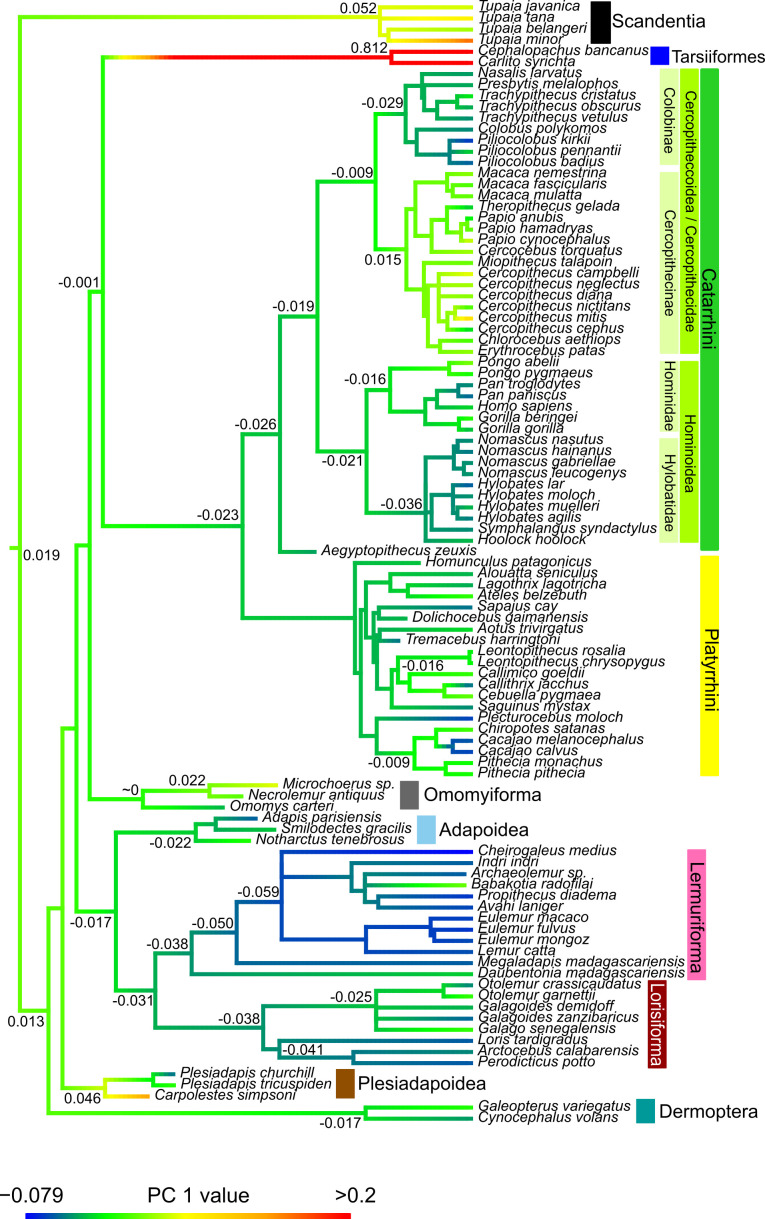 Figure 4
Peer Reviews
No public reviews on file for this paper yet. If you reviewed it on a platform where reviews are public (OpenReview, ICLR, NeurIPS, ICML), you can paste yours below so the community can read it here.
Videos
No videos yet. Explain this paper in a talk, walkthrough, or lecture? Add one.
Taxonomy
TopicsHearing, Cochlea, Tinnitus, Genetics · Primate Behavior and Ecology · Animal Vocal Communication and Behavior