Plastic responses of Plasmodium relictum to competent and non-competent mosquito bites
Valentin Chauvin, Arnaud Berthomieu, Claire Loiseau, Christian N. Tchana, Frédéric Angelier, Ana Rivero

TL;DR
The malaria parasite Plasmodium relictum responds similarly to bites from both competent and non-competent mosquitoes, suggesting a generalist transmission strategy.
Contribution
This study reveals that Plasmodium relictum does not distinguish between mosquito species, using a generalist strategy for transmission.
Findings
Parasite responses were stronger to non-competent mosquitoes than competent ones.
No species-specific modulation of gametocyte conversion or sex ratio was observed.
Mosquito community composition may influence parasite transmission dynamics.
Abstract
Environmental unpredictability challenges the transmission success of vector-borne parasites like Plasmodium, whose fitness depends on synchronizing the production of transmission forms, called gametocytes, with vector availability. Although mosquito bites are known to trigger Plasmodium responses, it remains unclear whether parasites respond specifically to competent vectors or adopt a generalist strategy. We experimentally infected birds with the avian malaria parasite Plasmodium relictum and exposed them to bites from either a competent (Culex quinquefasciatus) or a non-competent (Anopheles gambiae) vector species. Both exposures induced a rise in parasitaemia, but the response was significantly stronger to the non-competent species. Host inflammatory, humoral and stress markers remained similar across mosquito treatments, implying that unidentified physiological cues may underlie…
Genes, proteins, chemicals, diseases, species, mutations and cell lines named across the full text — each resolved to its canonical identifier and authoritative record.
Click any figure to enlarge with its caption.
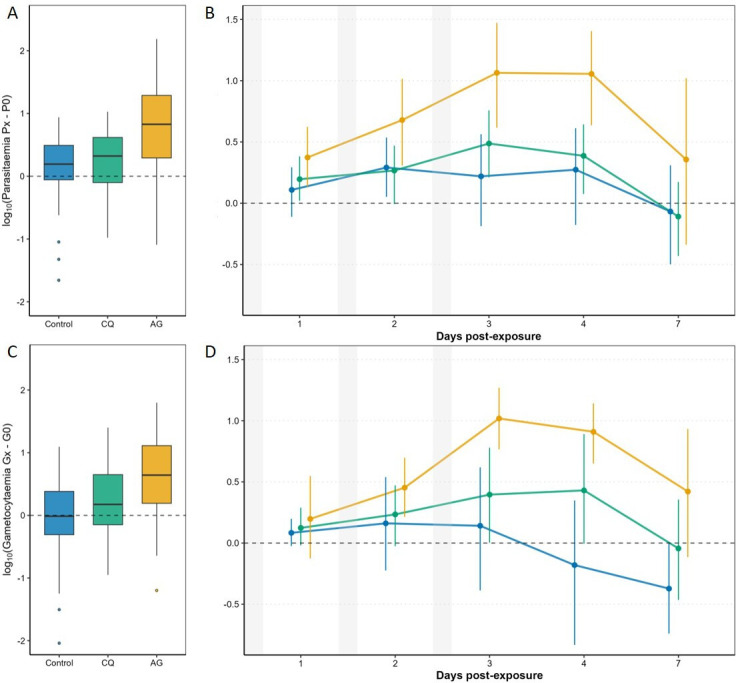 Figure 1
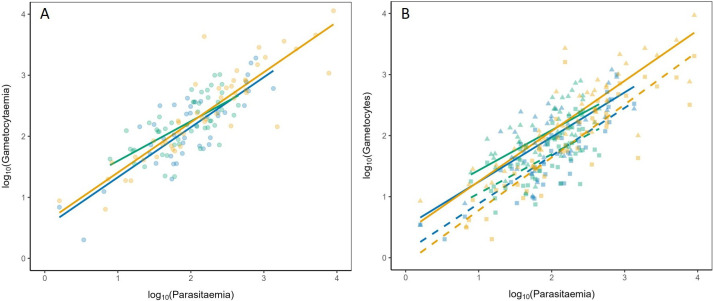 Figure 2
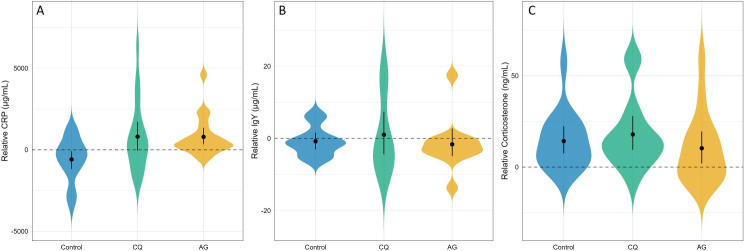 Figure 3
Peer Reviews
No public reviews on file for this paper yet. If you reviewed it on a platform where reviews are public (OpenReview, ICLR, NeurIPS, ICML), you can paste yours below so the community can read it here.
Videos
No videos yet. Explain this paper in a talk, walkthrough, or lecture? Add one.
Taxonomy
TopicsBird parasitology and diseases · Malaria Research and Control · Animal Behavior and Reproduction