Human Retinal Progenitor Cell (hRPC) Migration in Three-Dimensional (3D) Environments of Varying Stiffness and Composition
Peng Zhao, Joydip Kundu, Douglas Blanton, Mahboobeh Rezaeeyazdi, Madeleine J. Oudin, Miles A. Miller, Aaron S. Meyer, Sidi A. Bencherif, Petr Y. Baranov, Michael J. Young, Rebecca L. Carrier

TL;DR
This study explores how human retinal progenitor cells migrate in 3D environments with different stiffness and composition to improve retinal cell implantation success.
Contribution
The study identifies how material stiffness and soluble factors like SDF and HGF influence hRPC migration in 3D gels.
Findings
hRPCs migrated more in nonphoto crosslinked collagen gels with higher stiffness and gel component concentrations.
Soluble factors SDF and HGF increased hRPC migration compared to media alone.
Akt and MAPK signaling pathways were found to correlate with hRPC migration.
Abstract
Retinal degeneration is the leading cause of blindness worldwide. Subretinal implantation of human retinal progenitor cells (hRPCs) has shown great promise in models of retinal degeneration for restoration of vision but is limited by extremely low (< 2%) integration into the retina. Successful integration of implanted cells requires their migration from the site of implantation into the degenerating retina. Little is known about what cues promote RPC migration in the context of the postimplantation microenvironment, such as cues presented by a biomaterial carrier. We utilized a high-throughput assay to study the migration of hRPCs in three-dimensional hydrogel matrices of varying chemical composition and stiffness and, with exposure to different soluble factors, to identify cues important for hRPC migration and associated cell signaling events driving migration. Collagen type I,…
Genes, proteins, chemicals, diseases, species, mutations and cell lines named across the full text — each resolved to its canonical identifier and authoritative record.
Click any figure to enlarge with its caption.
 Figure 1
 Figure 2
 Figure 3
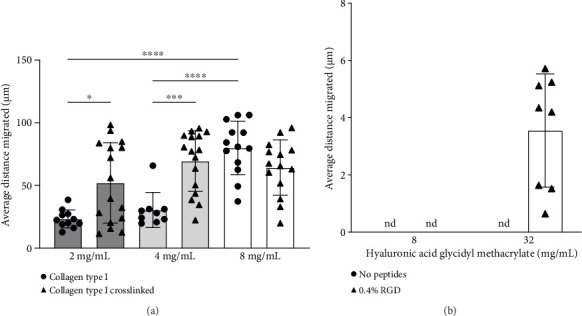 Figure 4
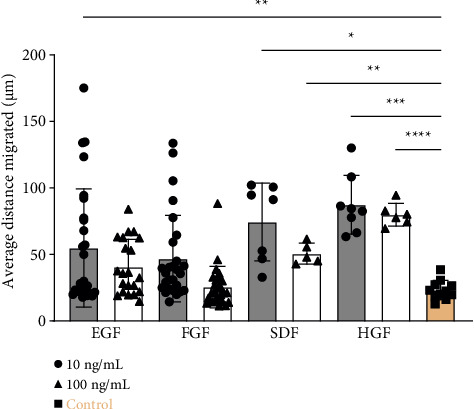 Figure 5
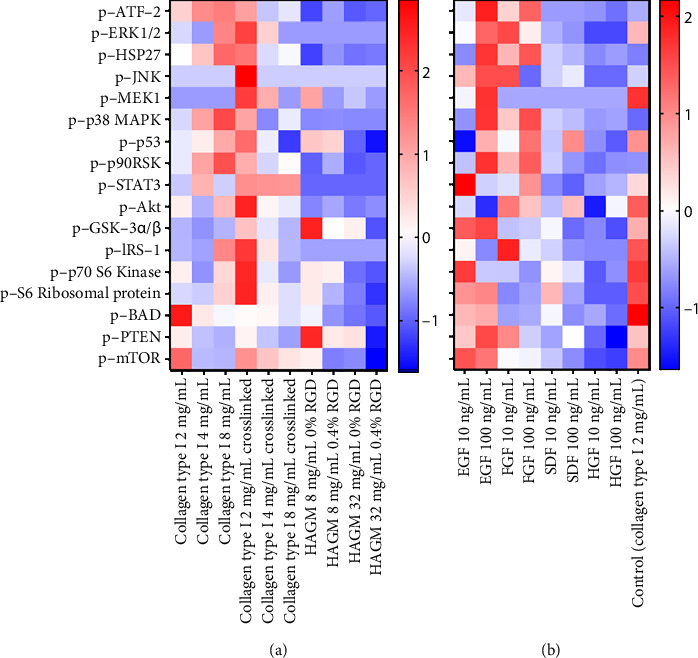 Figure 6
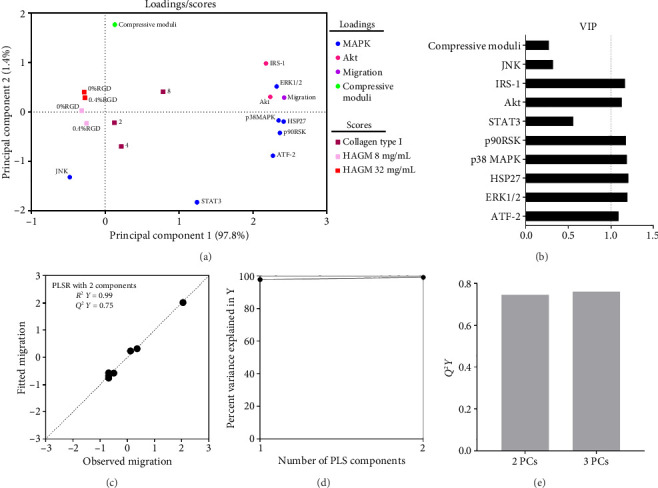 Figure 7
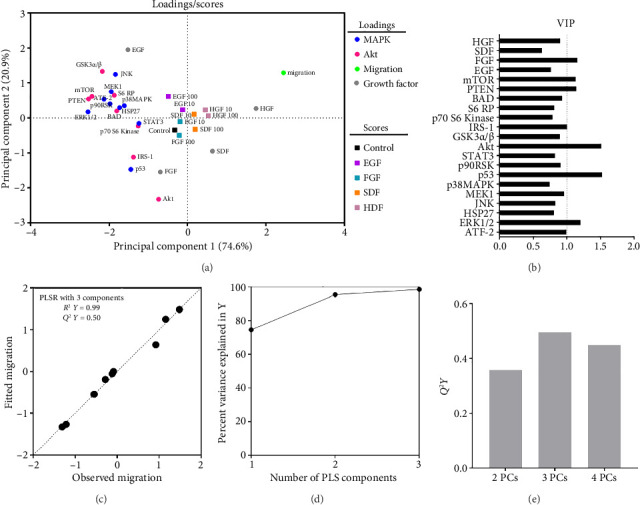 Figure 8
Peer Reviews
No public reviews on file for this paper yet. If you reviewed it on a platform where reviews are public (OpenReview, ICLR, NeurIPS, ICML), you can paste yours below so the community can read it here.
Videos
No videos yet. Explain this paper in a talk, walkthrough, or lecture? Add one.
Taxonomy
TopicsRetinal Development and Disorders · Neuroscience and Neural Engineering · Retinal and Macular Surgery