Invasive Meningococcal Disease in a Patient With Complement 7 Deficiency
Hiroaki Nishioka, Kazuki Maegawa, Shigeo Hara

TL;DR
A 35-year-old Japanese man with a complement 7 deficiency developed invasive meningococcal disease, highlighting the risk in otherwise healthy individuals.
Contribution
This case report adds to the limited understanding of invasive meningococcal disease in Japan associated with complement deficiency.
Findings
A Japanese man with complement component 7 deficiency developed invasive meningococcal disease caused by Neisseria meningitidis serogroup B.
The patient, who was otherwise healthy, fully recovered after antibiotic treatment.
Abstract
Neisseria meningitidis can cause invasive meningococcal disease (IMD). Individuals with primary complement deficiencies are at a higher risk of developing IMD. However, cases of IMD associated with complement deficiency have rarely been reported in Japan. In this case, a 35‐year‐old Japanese man presented with fever and a spreading skin rash. Blood culture identified N. meningitidis serogroup B. The patient was treated with antibiotics and fully recovered. Genetic analysis revealed a deficiency in complement component 7. This case highlights that IMD can occur in young, otherwise healthy individuals, some of whom may have underlying complement deficiency.
Genes, proteins, chemicals, diseases, species, mutations and cell lines named across the full text — each resolved to its canonical identifier and authoritative record.
Click any figure to enlarge with its caption.
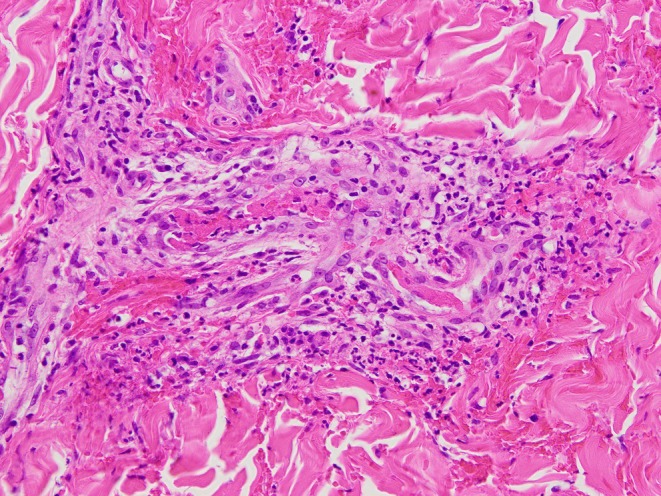 Figure 1
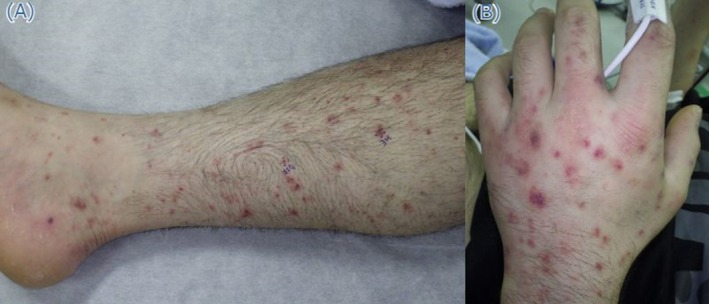 Figure 2
Peer Reviews
No public reviews on file for this paper yet. If you reviewed it on a platform where reviews are public (OpenReview, ICLR, NeurIPS, ICML), you can paste yours below so the community can read it here.
Videos
No videos yet. Explain this paper in a talk, walkthrough, or lecture? Add one.
Taxonomy
TopicsImmunodeficiency and Autoimmune Disorders · Bacterial Infections and Vaccines · Congenital Ear and Nasal Anomalies