Antiatherogenic and Cardioprotective Effects of a Xanthine Derivative KMUP-1 in ApoE Knockout Mice
Erna Sulistyowati, Shang-En Huang, Chih-Chieh Hsu, Yi-Chia Wu, Yu-Ying Chao, Jong-Hau Hsu, Bin-Nan Wu, Zen-Kong Dai, Ming-Chung Lin, Jwu-Lai Yeh

TL;DR
This study shows that a xanthine derivative called KMUP-1 can reduce atherosclerosis and heart damage in mice, suggesting it may be a promising treatment for cardiovascular diseases.
Contribution
The study demonstrates that KMUP-1 reduces atherosclerosis and cardiac remodeling in ApoE knockout mice through autophagy stimulation and anti-inflammatory effects.
Findings
KMUP-1 reduced aortic plaque area and intima-media thickness in HFD-induced ApoE knockout mice.
KMUP-1 decreased inflammatory cytokines IL-1β, TNF-α, IL-6, and MCP-1 in the serum of mice.
KMUP-1 attenuated cardiac hypertrophy and improved cardiac function while promoting autophagy-related gene activation.
Abstract
It is essential to manage cardiovascular disease related to atherosclerosis through understanding its disease progression mechanism. The effects of the xanthine derivative KMUP-1 on alleviating atherosclerosis and cardiac remodeling, as well as its underlying mechanisms, were examined. In this study, atherosclerosis and cardiac damage were induced in ApoE knockout (KO) mice by feeding them a high-fat diet (HFD) for 12 weeks. The co- and posttreatment of KMUP-1 was evaluated. Our results showed that KMUP-1 treatment significantly reduced body weight gain in HFD-induced mice. The Oil Red O and hematoxylin–eosin staining showed that KMUP-1 reduced the aortic plaque area, intima–media thickness, and intima–lumen thickness. KMUP-1 reduced inflammatory cytokines IL-1β, TNF-α, IL-6, and MCP-1 in the serum of mice through an ELISA assay. Moreover, echocardiography evaluation indicated that…
Genes, proteins, chemicals, diseases, species, mutations and cell lines named across the full text — each resolved to its canonical identifier and authoritative record.
Click any figure to enlarge with its caption.
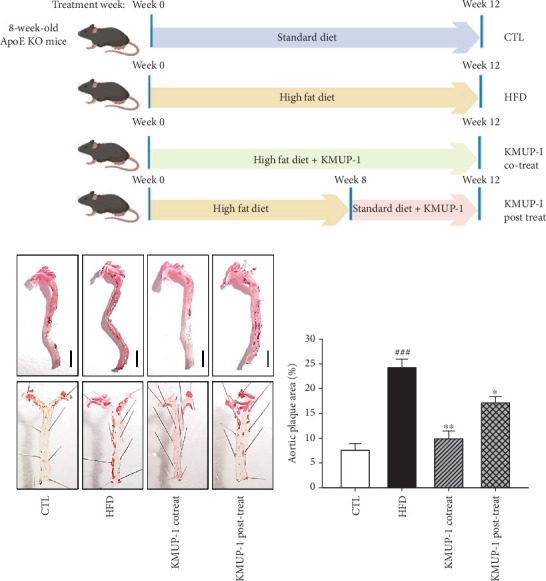 Figure 1
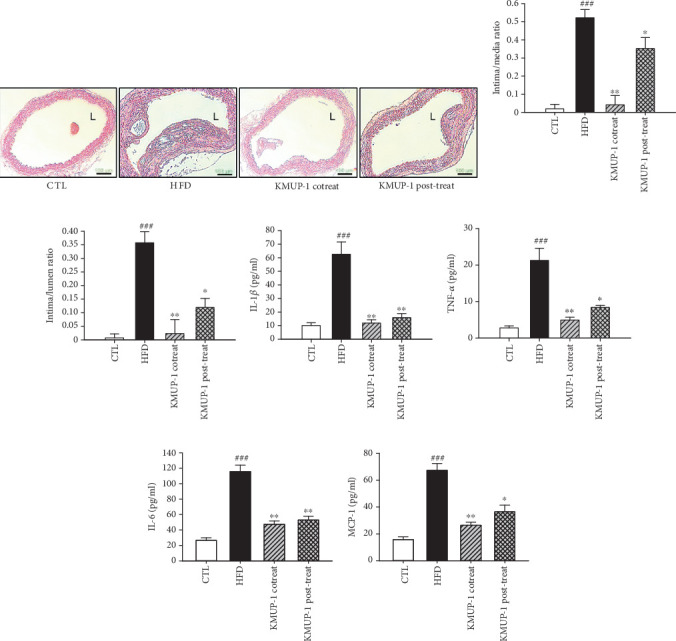 Figure 2
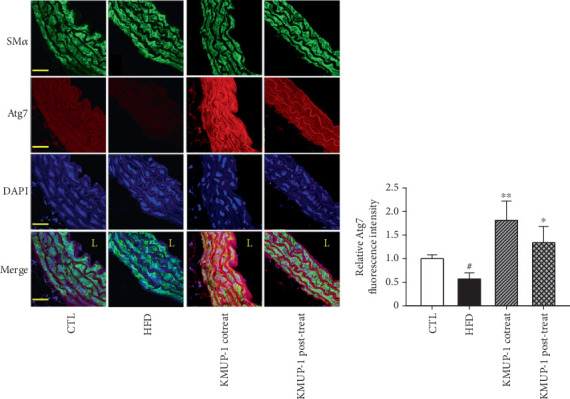 Figure 3
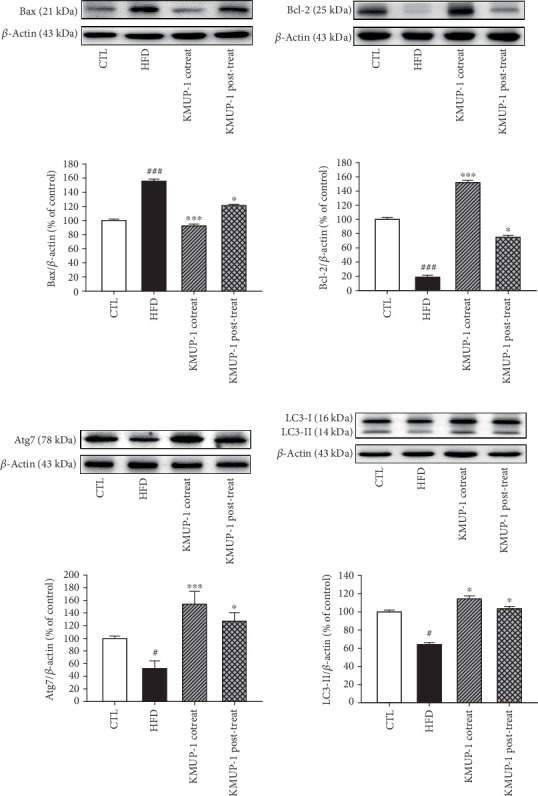 Figure 4
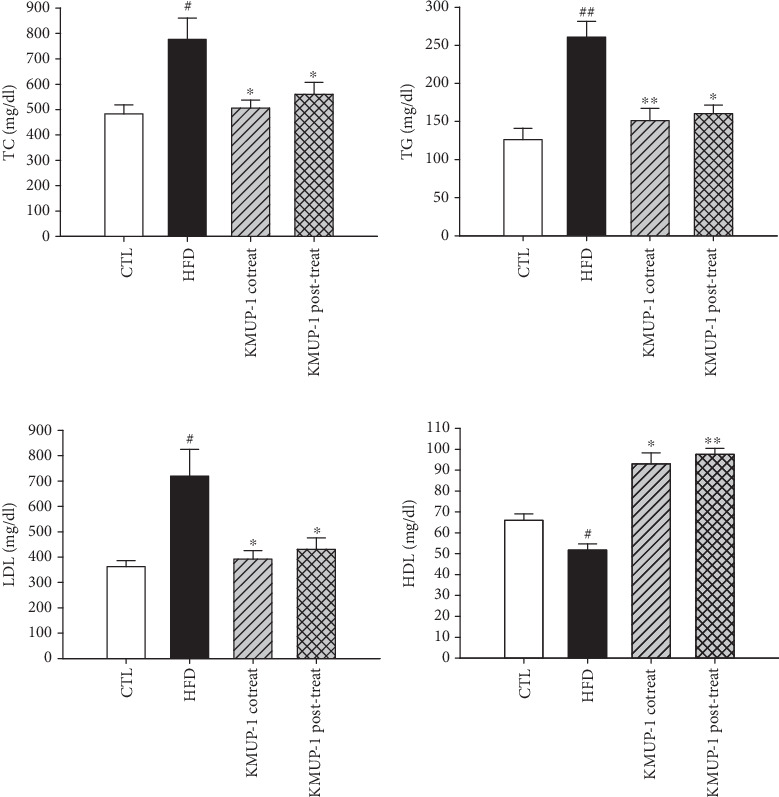 Figure 5
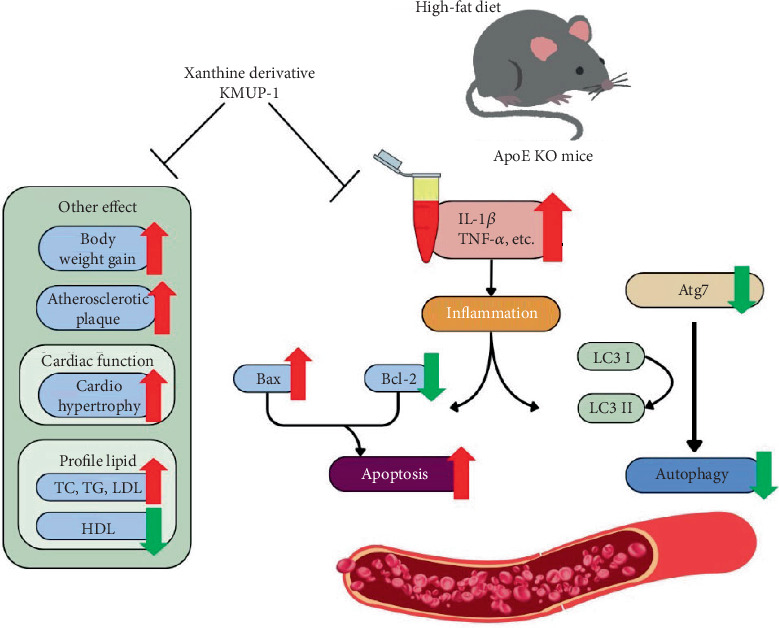 Figure 6
Peer Reviews
No public reviews on file for this paper yet. If you reviewed it on a platform where reviews are public (OpenReview, ICLR, NeurIPS, ICML), you can paste yours below so the community can read it here.
Videos
No videos yet. Explain this paper in a talk, walkthrough, or lecture? Add one.
Taxonomy
TopicsAutophagy in Disease and Therapy · Gout, Hyperuricemia, Uric Acid · Inflammasome and immune disorders