Protein carbamylation is associated with increased mortality and CKD progression in patients with CKD: results from the EQUAL study
Tilla C Folttmann, Antje M Haas, Nicholas C Chesnaye, Kitty J Jager, Fergus J Caskey, Maria Pippias, Friedo W Dekker, Merel van Diepen, Marie Evans, Claudia Torino, Antonio Vilasi, Maciej Szymczak, Christoph Wanner, Anders H Berg, Christiane Drechsler

TL;DR
Higher levels of carbamylated albumin in older patients with advanced kidney disease are linked to increased risk of death and dialysis.
Contribution
This study shows that carbamylated albumin is a novel predictor of mortality and dialysis need in advanced CKD patients.
Findings
Carbamylated albumin levels were higher in men and patients with heart failure.
Each increase in carbamylated albumin was associated with higher mortality and dialysis risk.
Carbamylated albumin correlated with kidney function decline but not with total albumin levels.
Abstract
Urea accumulated in CKD patients’ blood can spontaneously decompose into reactive isocyanate and bind to plasma proteins in a reaction called carbamylation. Recent studies suggest a direct link between protein carbamylation and the pathogenesis of cardiovascular events and mortality in dialysis patients. We investigated whether carbamylation of albumin (C-Alb) is associated with increased mortality, major adverse cardiovascular events, and need for dialysis in older patients with advanced CKD. The European Quality Study (EQUAL) is a multicentre prospective cohort study. CKD patients aged 65 or older with advanced CKD (eGFR ≤20 ml/min/1.73 m²) not on kidney replacement therapy were followed up for 5 years. In a subgroup of 1117 patients, C-Alb was measured at baseline using combined liquid chromatography and mass spectrometry. Multivariable analyses were adjusted for important…
Genes, proteins, chemicals, diseases, species, mutations and cell lines named across the full text — each resolved to its canonical identifier and authoritative record.
Click any figure to enlarge with its caption.
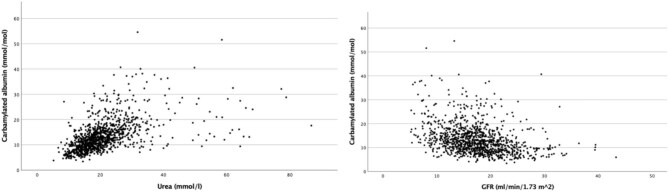 Figure 1
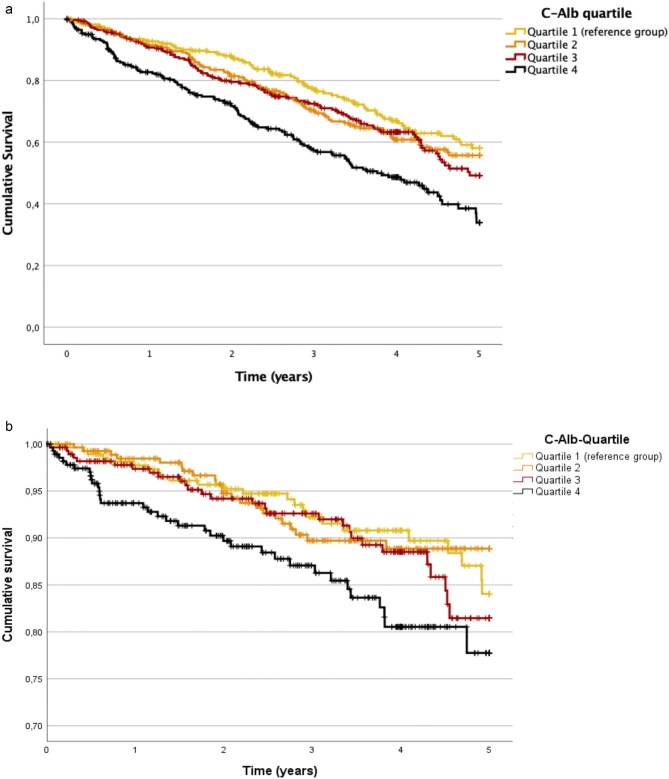 Figure 2
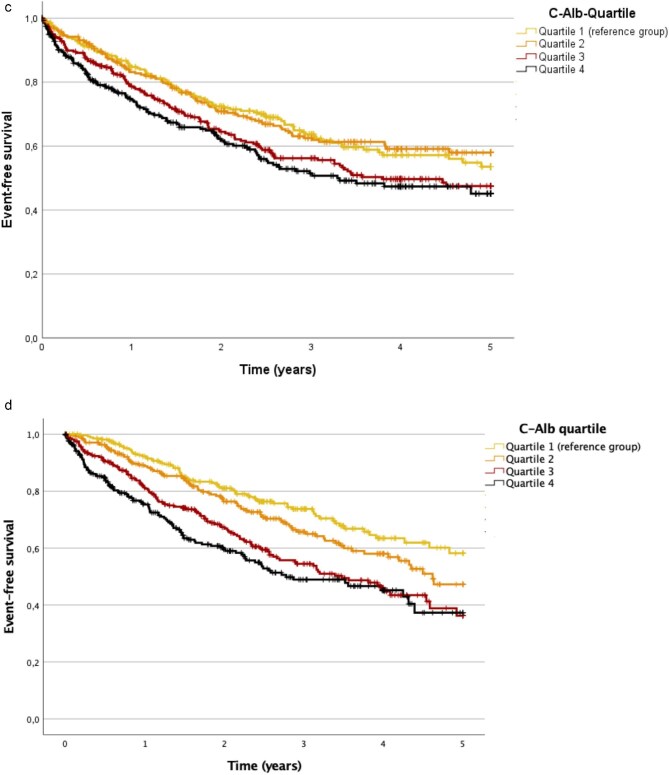 Figure 2
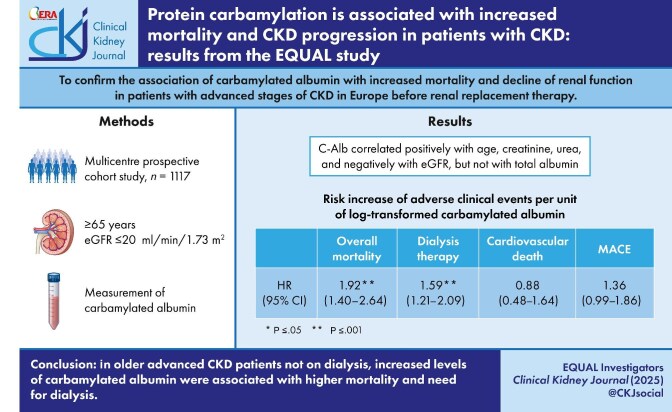 Figure 4
Peer Reviews
No public reviews on file for this paper yet. If you reviewed it on a platform where reviews are public (OpenReview, ICLR, NeurIPS, ICML), you can paste yours below so the community can read it here.
Videos
No videos yet. Explain this paper in a talk, walkthrough, or lecture? Add one.
Taxonomy
TopicsDialysis and Renal Disease Management · Chronic Kidney Disease and Diabetes · Blood Pressure and Hypertension Studies