Stepwise connectivity of the entorhinal cortex along connectomic gradients in Alzheimer’s disease
Jazlynn Xiu Min Tan, Min Su Kang, Yi-Hsuan Yeh, Gleb Bezgin, Firoza Z Lussier, Seok-Jun Hong, Jonah Isen, Nesrine Rahmouni, Paolo Vitali, Maxime Montembeault, Jesse M Klostranec, Arthur C Macedo, Tevy Chan, JoAnne McLaurin, Walter Swardfager, Boris C Bernhardt, Bojana Stefanovic

TL;DR
This paper explores how tau protein spreads in Alzheimer’s disease by analyzing brain connectivity patterns using advanced graph theory and connectome gradients.
Contribution
The study introduces a novel integration of stepwise connectivity and connectome gradients to reveal multi-step connectivity patterns in Alzheimer’s disease.
Findings
Hypoconnectivity is observed from the entorhinal cortex to the transmodal end of the functional gradient and posterior end of the structural gradient.
Multi-step connections from the entorhinal cortex show increased connectivity toward unimodal and transmodal networks, potentially enabling new tau spread pathways.
Tau–connectivity correlations shift from the default mode network in preclinical stages to the frontoparietal system in clinical stages of Alzheimer’s disease.
Abstract
The entorhinal cortex is one of the earliest sites of tau tangle deposition in Alzheimer’s disease. Existing connectome studies focus on tau propagation along direct, first-order connections between brain regions, overlooking multi-step, higher-order connections that contribute to the spread of pathology in the brain. We propose a novel quantitative integration of graph theory-based stepwise connectivity with low-dimensional connectome gradient space, which reflects the brain’s hierarchical organization. This allows us to elucidate multi-step connectivity between the entorhinal cortex (seed region) and the rest of the brain along the major axes of functional and structural brain organization. In this study, we included 213 participants from the Translational Biomarkers in Aging and Dementia (103 amyloid-negative cognitively normal, 35 amyloid-positive cognitively normal, and 75…
Genes, proteins, chemicals, diseases, species, mutations and cell lines named across the full text — each resolved to its canonical identifier and authoritative record.
Click any figure to enlarge with its caption.
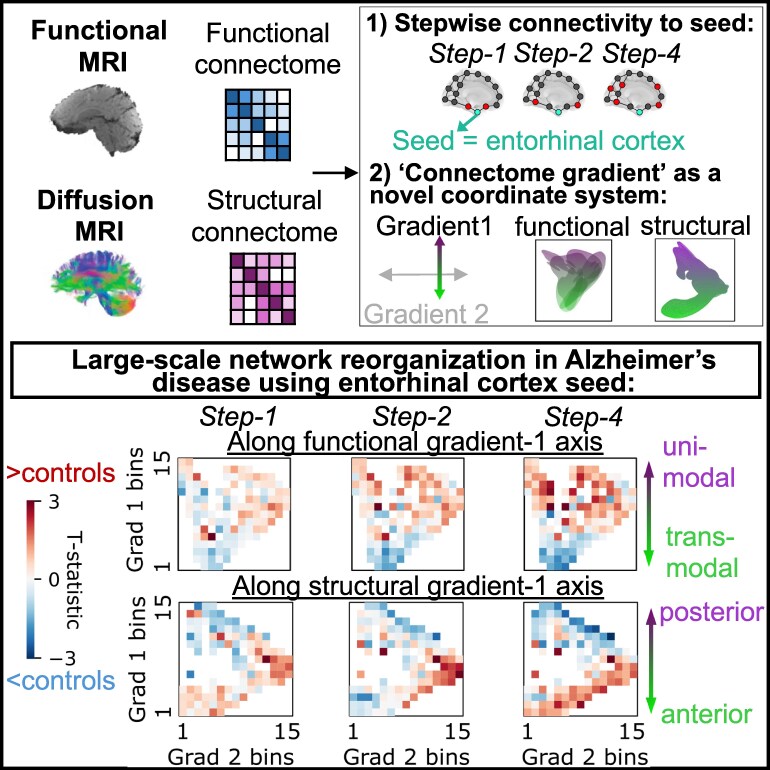 Figure 1
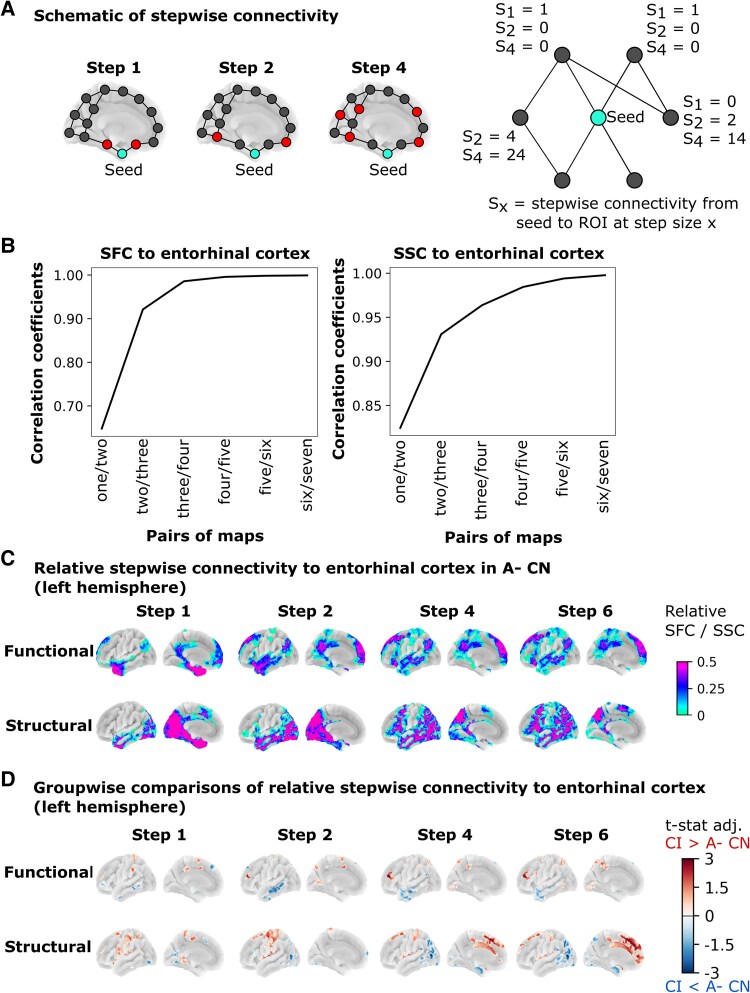 Figure 2
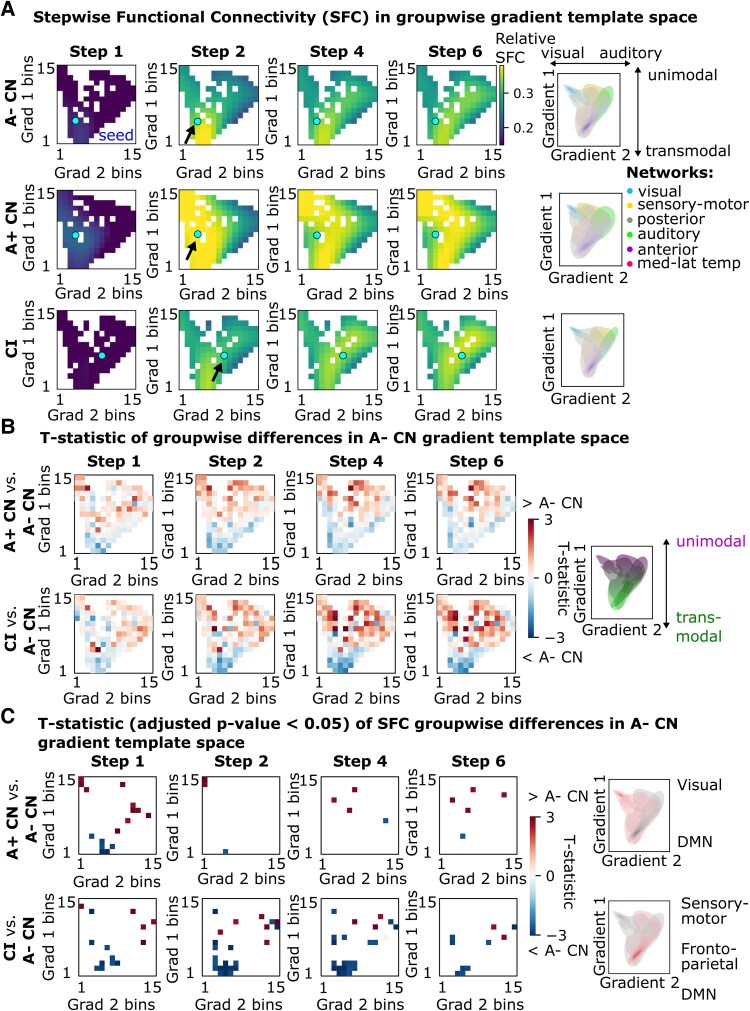 Figure 3
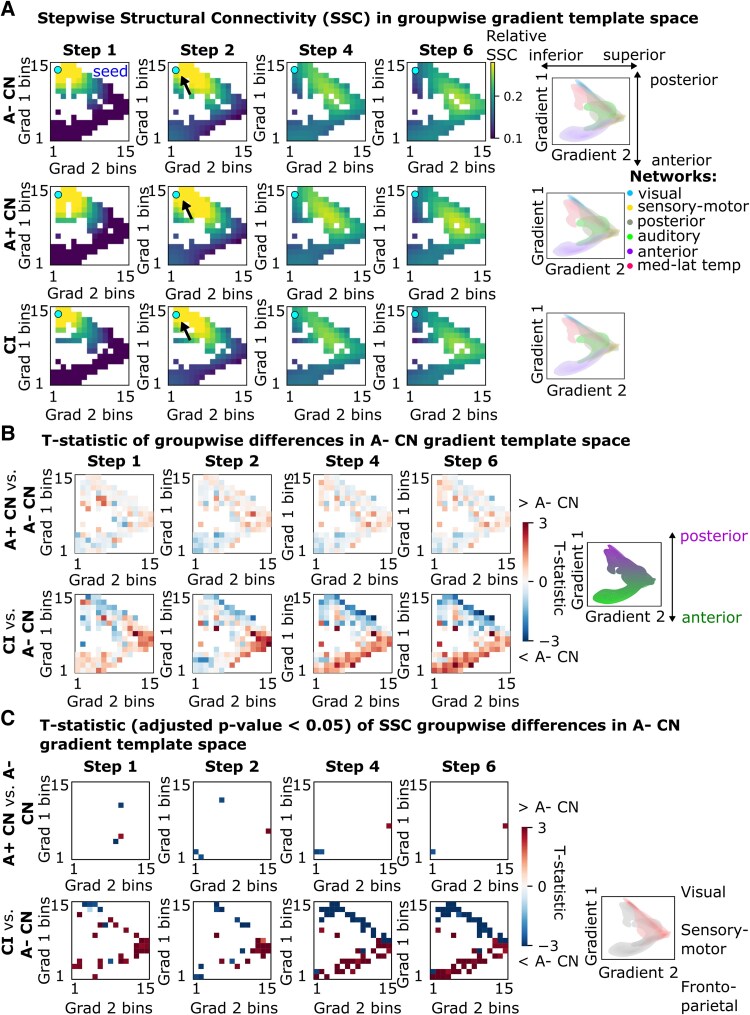 Figure 4
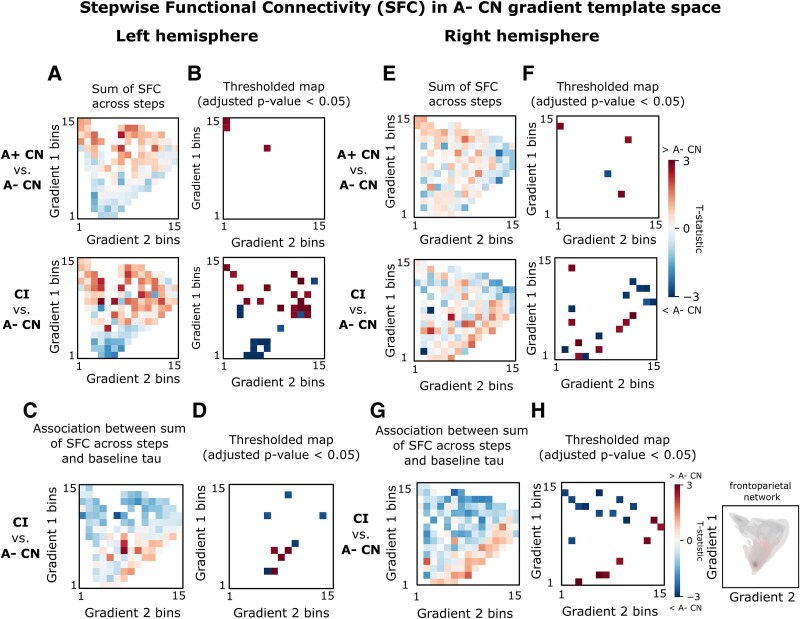 Figure 5
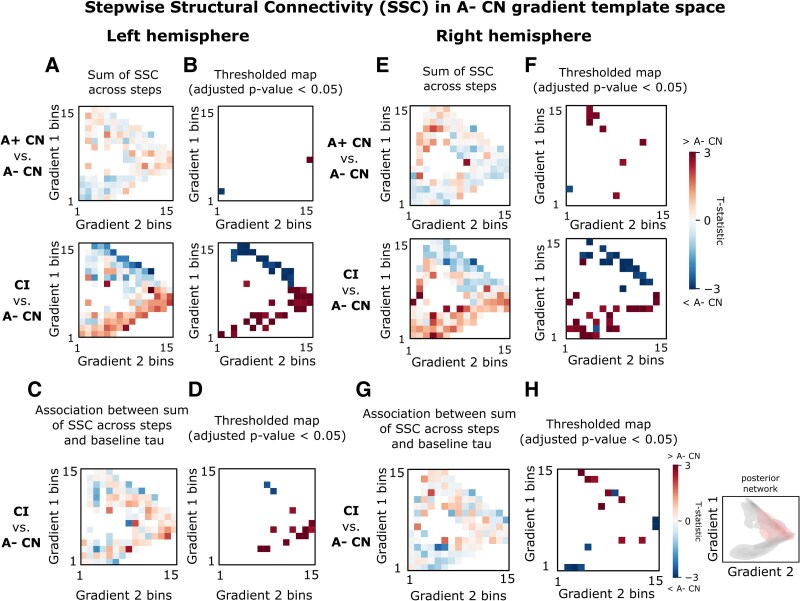 Figure 6
Peer Reviews
No public reviews on file for this paper yet. If you reviewed it on a platform where reviews are public (OpenReview, ICLR, NeurIPS, ICML), you can paste yours below so the community can read it here.
Videos
No videos yet. Explain this paper in a talk, walkthrough, or lecture? Add one.
Taxonomy
TopicsAlzheimer's disease research and treatments · Memory and Neural Mechanisms