Island Syndrome in the Critically Endangered Lord Howe Island Cockroach Panesthia lata
Susannah K. Coady, Maxim W. D. Adams, Harley A. Rose, James A. Walker, Ian Hutton, Ros Gloag, Nathan Lo

TL;DR
A critically endangered island cockroach shows reduced aggression and increased group behavior compared to its mainland relative, suggesting similar evolutionary patterns seen in island vertebrates.
Contribution
First evidence of behavioral island syndrome in an invertebrate, specifically reduced intraspecific aggression and increased aggregation.
Findings
Lord Howe Island cockroach (P. lata) shows significantly less male aggression compared to its mainland sister species.
P. lata forms large aggregations of unrelated individuals, unlike most Panesthia species that maintain family groups.
Courtship behavior remains stable across populations, suggesting potential for interbreeding among fragmented populations.
Abstract
Following island colonisation, organisms experience a unique array of selective pressures, giving rise to a somewhat predictable suite of morphological, demographic and ecological adaptations known as the “island syndrome”. Studies of the island syndrome have provided valuable insights into processes of speciation, community assembly, adaptive radiation and ecological release, alongside many others. However, to date, behavioural aspects of island adaptation have comparatively received little scientific attention, especially among invertebrates. In this study, we examined the agonistic, courtship and aggregation behaviour of the critically endangered Lord Howe Island cockroach, Panesthia lata, and compared these to its Australian sister species, Panesthia cribrata. Behavioural assays revealed that while courtship behaviour was relatively stable across the two species, there was a…
Genes, proteins, chemicals, diseases, species, mutations and cell lines named across the full text — each resolved to its canonical identifier and authoritative record.
Click any figure to enlarge with its caption.
 Figure 1
 Figure 2
 Figure 3
 Figure 4
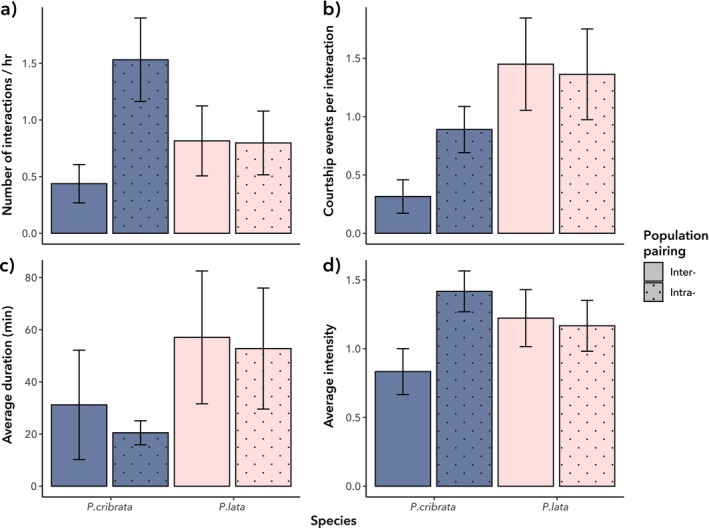 Figure 5
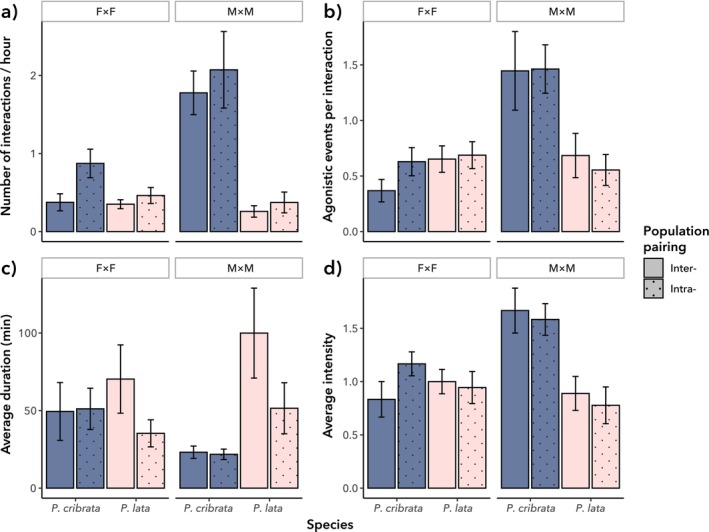 Figure 6
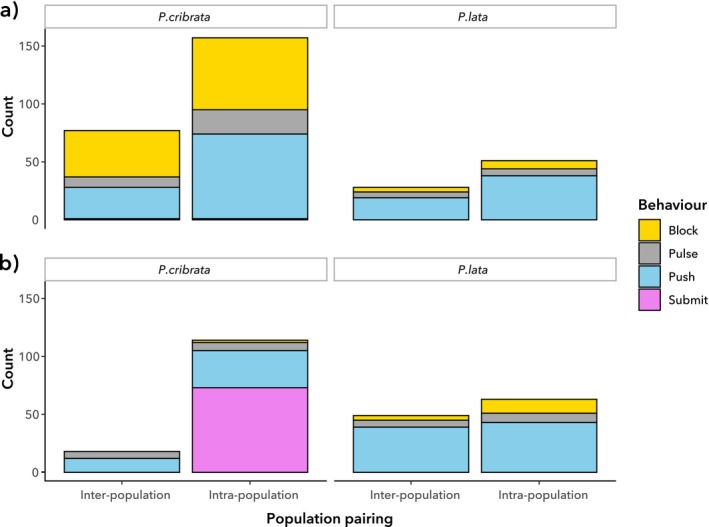 Figure 7
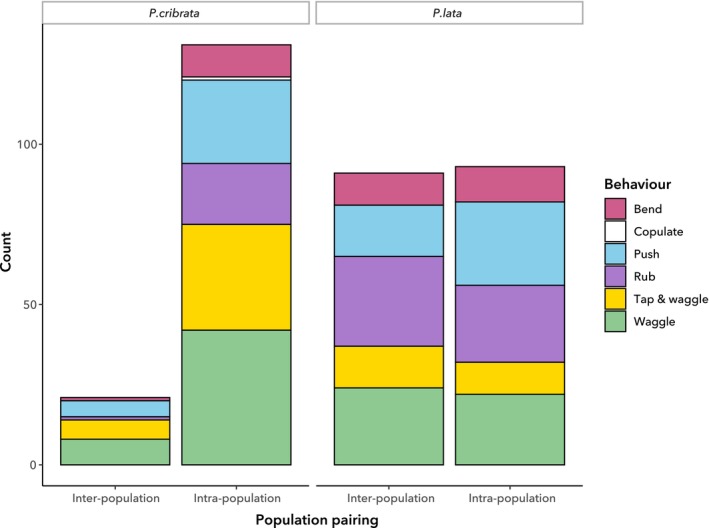 Figure 8
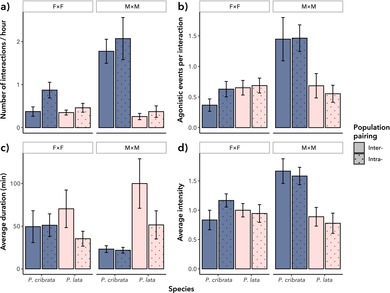 Figure 9
Peer Reviews
No public reviews on file for this paper yet. If you reviewed it on a platform where reviews are public (OpenReview, ICLR, NeurIPS, ICML), you can paste yours below so the community can read it here.
Videos
No videos yet. Explain this paper in a talk, walkthrough, or lecture? Add one.
Taxonomy
TopicsInsects and Parasite Interactions · Animal Ecology and Behavior Studies · Insect and Arachnid Ecology and Behavior