Cytoplasmic sequestering of a fungal stress-activated MAPK in response to a host plant phenolic acid
Rina Zuchman, Roni Koren, Tamar Ziv, Yael Lupu-Haber, Nitsan Dahan, Ofri Levi, Benjamin A. Horwitz, Bart P.H.J. Thomma, Huiquan Liu, Bart P.H.J. Thomma, Huiquan Liu, Bart P.H.J. Thomma, Bart P.H.J. Thomma

TL;DR
A fungal pathogen's stress response protein, Hog1, is trapped in cytoplasmic granules by a plant compound, affecting both host defense and pathogen survival.
Contribution
A novel signaling mode where Hog1 is sequestered in cytoplasmic granules, altering its stress response to a host-derived compound.
Findings
Hog1 forms cytoplasmic foci in response to ferulic acid, preventing its nuclear localization and downstream gene expression.
RNA-binding proteins and mitochondrial proteins are enriched in the FA-dependent sub-proteome associated with Hog1 foci.
Sequestering Hog1 in RNA-containing granules may help the pathogen survive host stress while also aiding the host in disease suppression.
Abstract
Fungal pathogens employ conserved signaling pathways to survive in the host. The stress-activated MAP kinase Hog1 of the maize pathogen Cochliobolus heterostrophus undergoes dephosphorylation upon exposure to ferulic acid, a phenolic compound abundant in the host plant. Unlike its nuclear localization during osmotic stress, Hog1 forms cytoplasmic foci in response to FA, indicating its sequestering to a compartment or condensate. FA prevents several characteristic responses of the Hog1 pathway to osmotic stress: hyperphosphorylation of Hog1, nuclear localization, and expression of a monosaccharide transporter gene, MST1. Under FA stress, mRNA-containing foci are formed, as visualized by sm-FISH. Hog1 foci extensively colocalize with mRNA foci. Hog1 did not colocalize with nuclei or peroxisomes. Fragmented mitochondria, appearing upon FA exposure with a delayed time course compared to…
Genes, proteins, chemicals, diseases, species, mutations and cell lines named across the full text — each resolved to its canonical identifier and authoritative record.
Click any figure to enlarge with its caption.
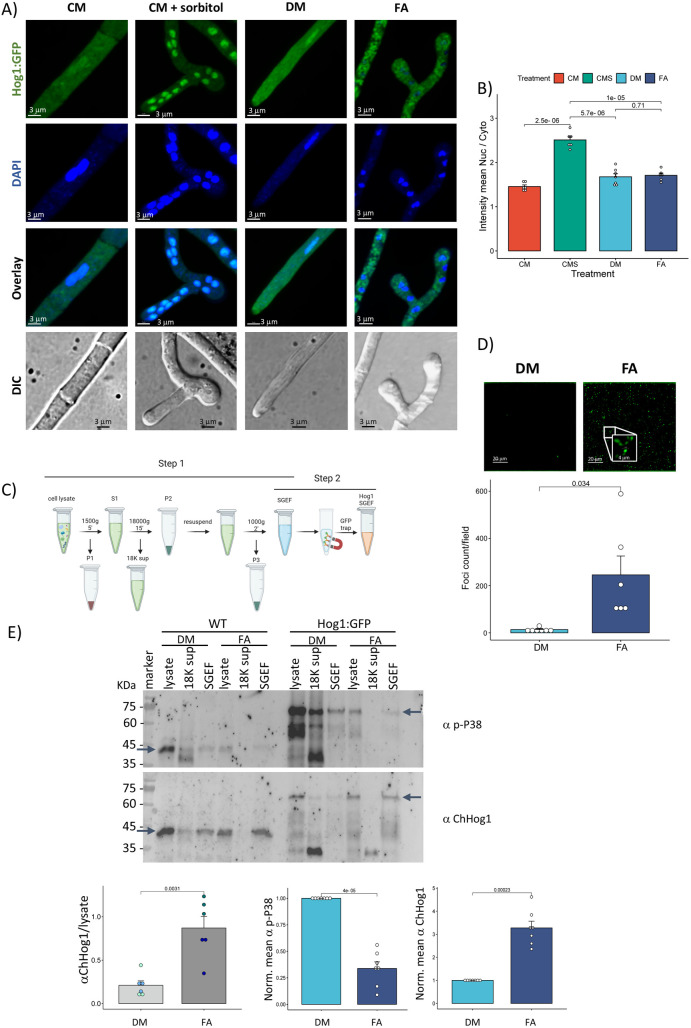 Figure 1
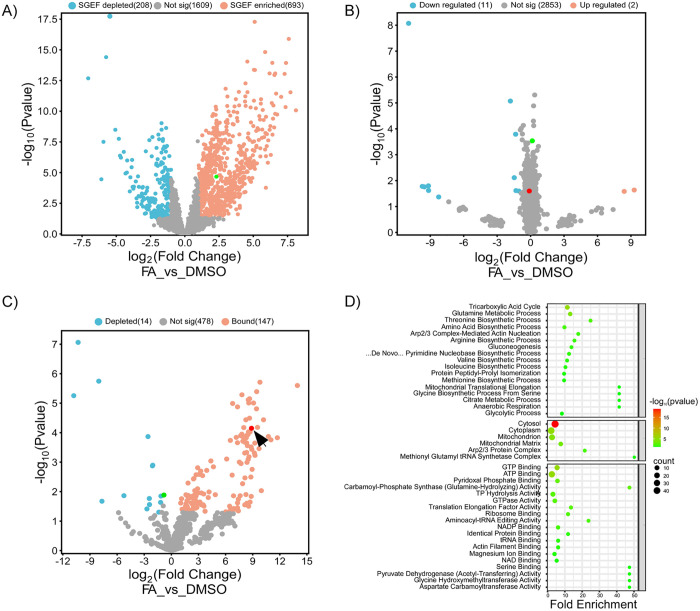 Figure 2
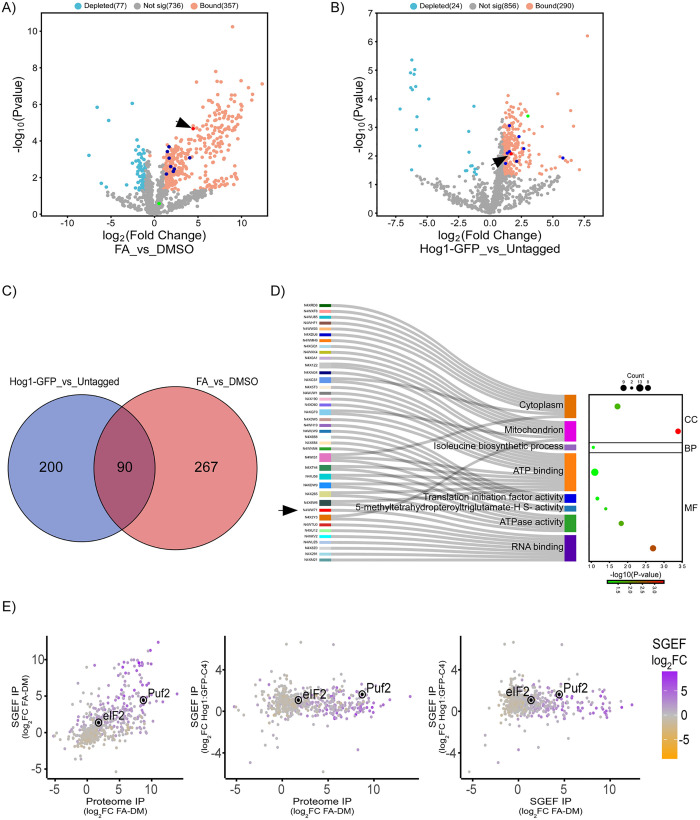 Figure 3
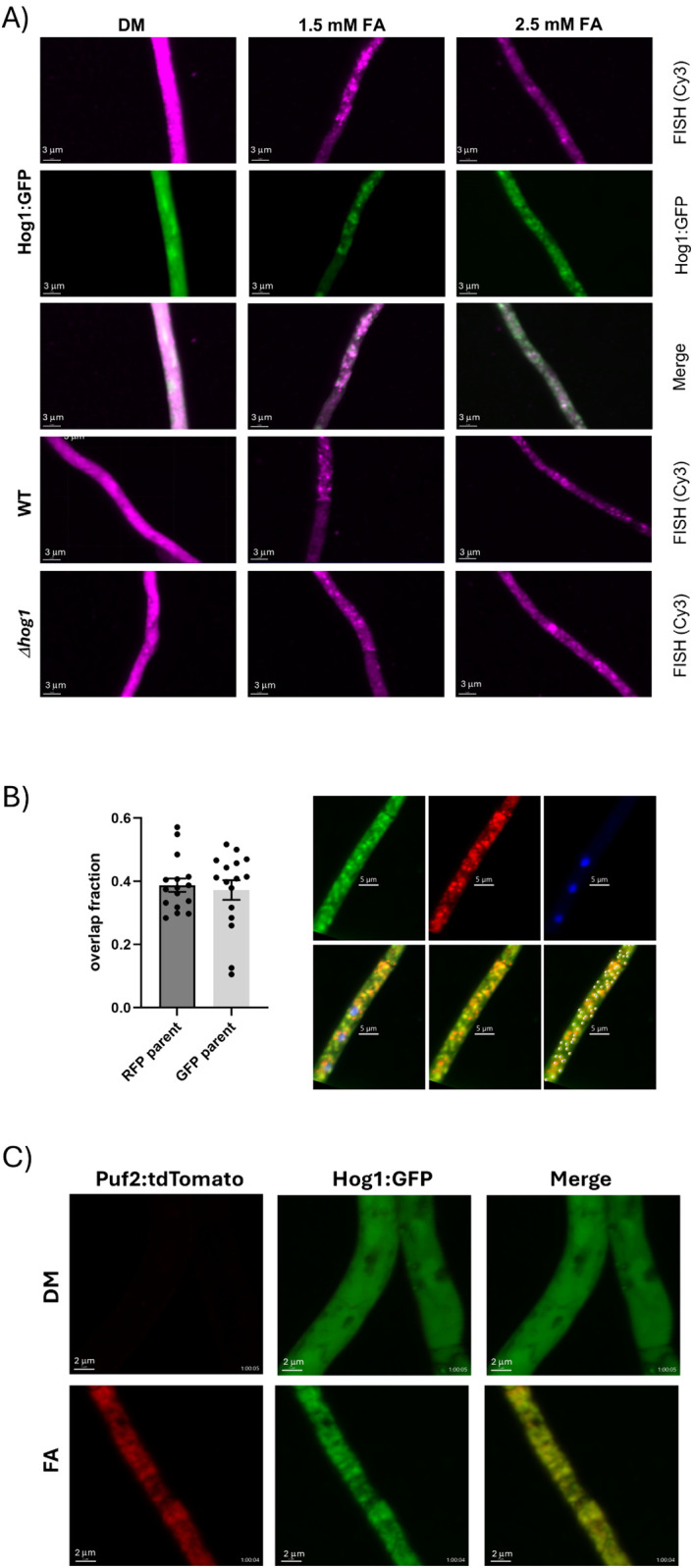 Figure 4
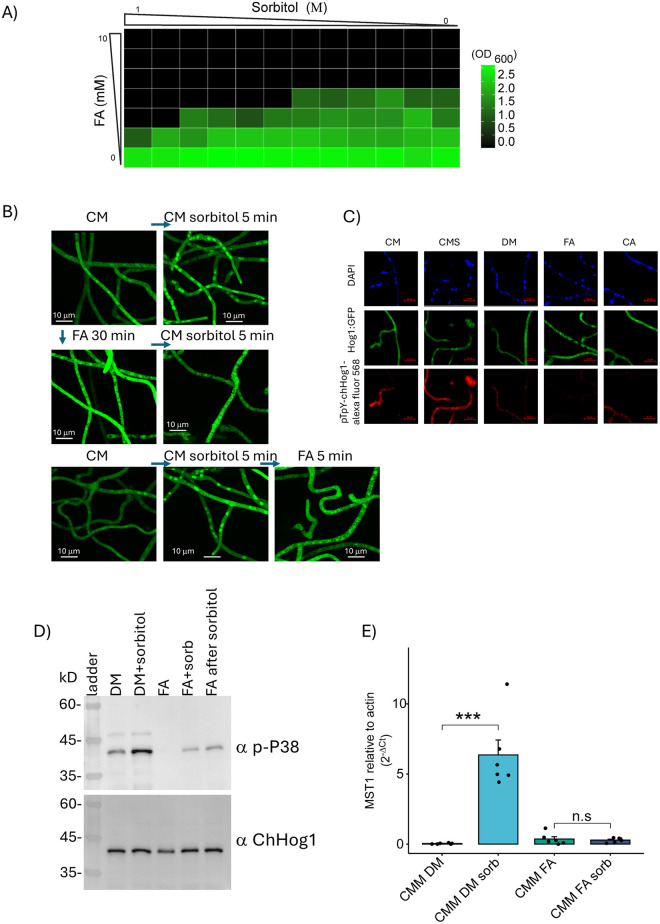 Figure 5
Peer Reviews
No public reviews on file for this paper yet. If you reviewed it on a platform where reviews are public (OpenReview, ICLR, NeurIPS, ICML), you can paste yours below so the community can read it here.
Videos
No videos yet. Explain this paper in a talk, walkthrough, or lecture? Add one.
Taxonomy
TopicsFungal and yeast genetics research · Plant-Microbe Interactions and Immunity · Mycorrhizal Fungi and Plant Interactions