Trophic niche variation across the pan-Arctic coastal continuum
Nathan D. McTigue, Katrin Iken, Ashley Ehrman, Bodil A. Bluhm, Guillaume Bridier, Rolf Gradinger, Joanna Legeżyńska, Maeve McGovern, Bailey McMeans, Frédéric Olivier, Amanda Poste, Paul E. Renaud, Virginie Roy, Janne E. Søreide, Maria Włodarska-Kowalczuk, Kenneth H. Dunton

TL;DR
This study examines how Arctic coastal food webs are changing due to climate-driven shifts in organic matter sources and terrestrial influence.
Contribution
The paper presents a large-scale, multi-decade isotopic analysis of Arctic coastal ecosystems across four habitat types.
Findings
δ13C values in pelagic and sediment organic matter decreased by 2.1‰ and 2.2‰ per decade, respectively.
Arctic consumers assimilated multiple organic matter sources, showing trophic plasticity.
Terrestrial organic matter inputs and reduced sea ice are likely driving isotopic shifts in coastal food webs.
Abstract
We analyzed stable carbon and nitrogen isotope values (δ13C and δ15N, respectively) for pan-Arctic coastal primary producers and consumers to detect large-scale regional trends both temporally and spatially. To facilitate comparison, we grouped coastal habitats into fjords, lagoons, shelves, and straits as four “coastscapes”. We gathered over 12,000 rows of data collected over 24 years (between 1999 and 2022) from 34 different field campaigns across the coastal Arctic (63 to 81°N and 177°W to 33°E). Our goal was to examine the isotopic patterns in pelagic and sediment particulate organic matter (pPOM and sPOM, respectively) and four consumer groups (deposit feeders, opportunists/scavengers, predators, and suspension feeders) among the four coastscapes. We found that despite the enormous spatial range of data, both pPOM and sPOM became 2.1‰ and 2.2‰ more 13C-depleted per decade,…
Genes, proteins, chemicals, diseases, species, mutations and cell lines named across the full text — each resolved to its canonical identifier and authoritative record.
Click any figure to enlarge with its caption.
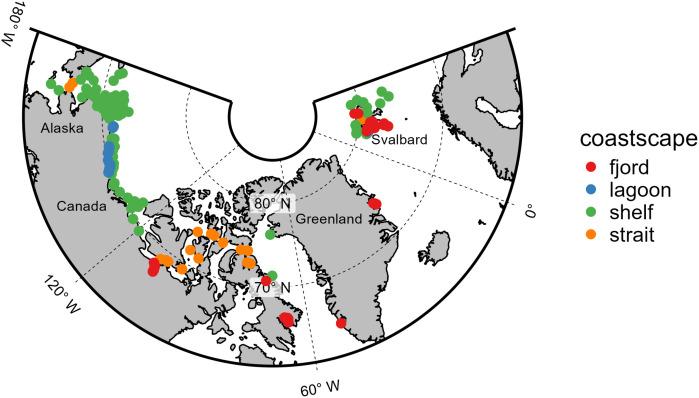 Figure 1
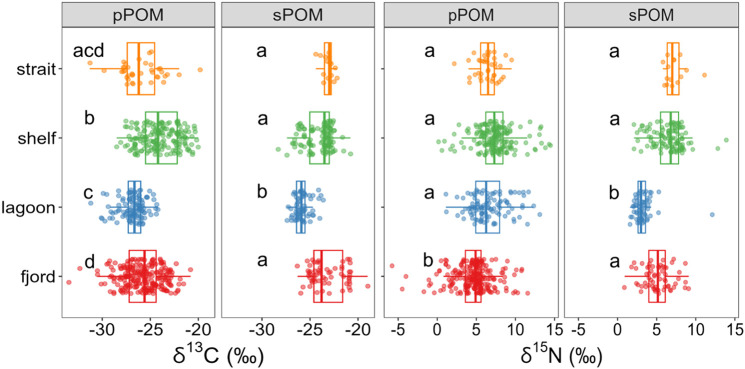 Figure 2
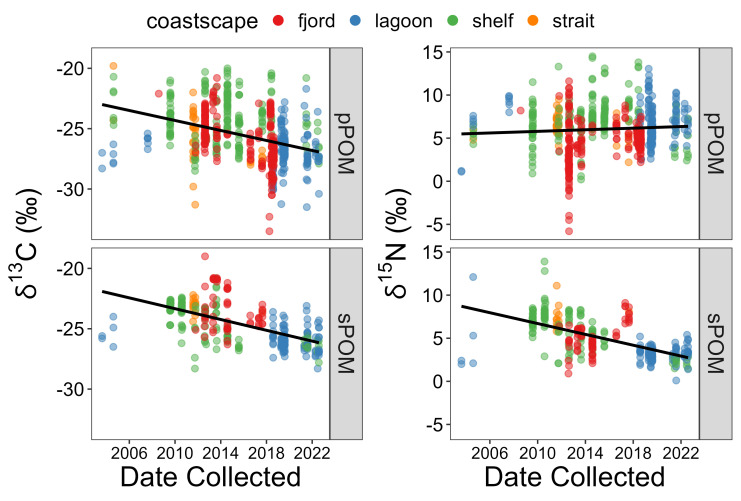 Figure 3
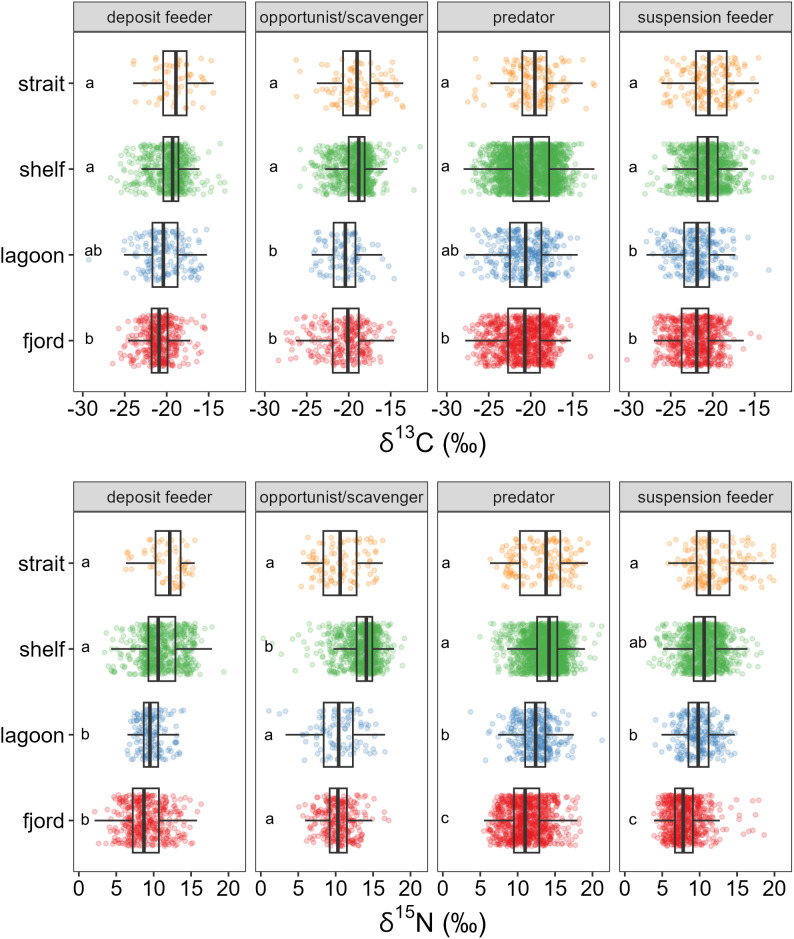 Figure 4
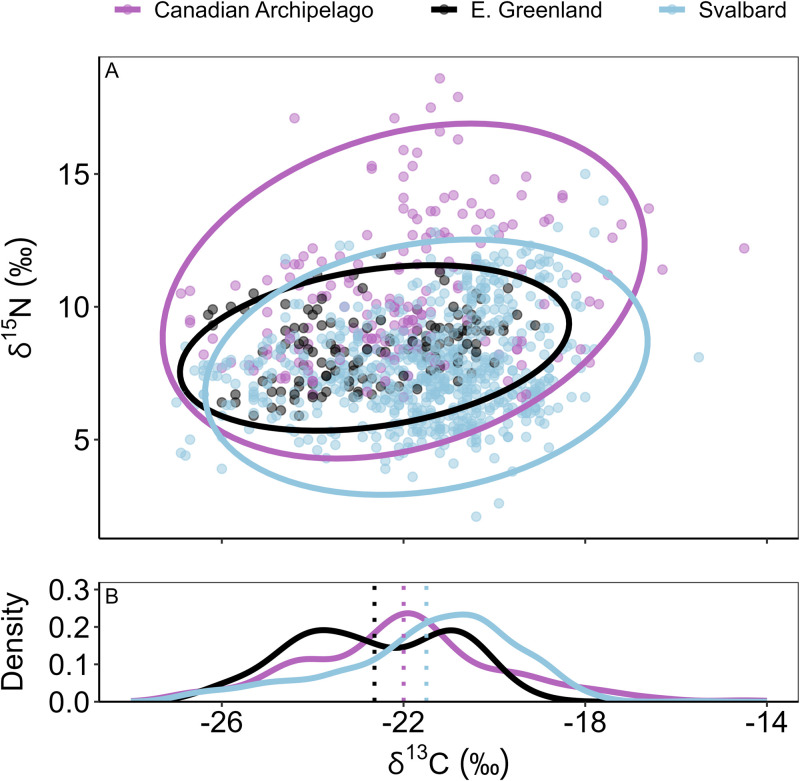 Figure 5
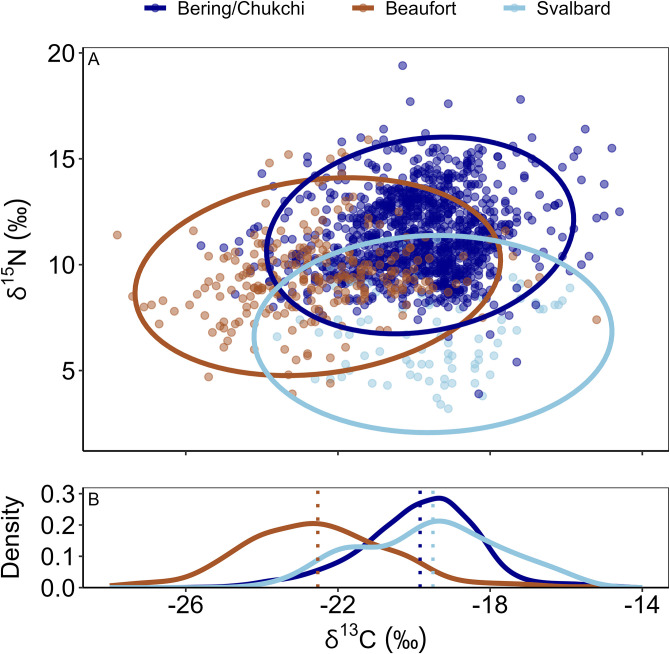 Figure 6
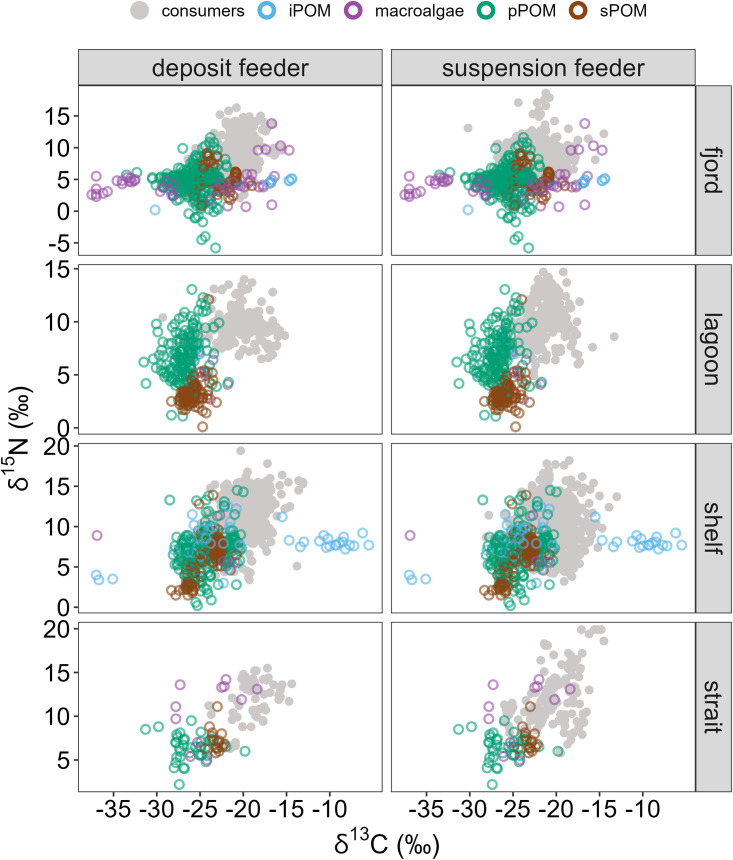 Figure 7
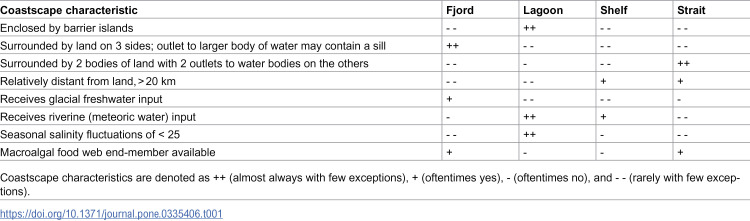 Figure 8
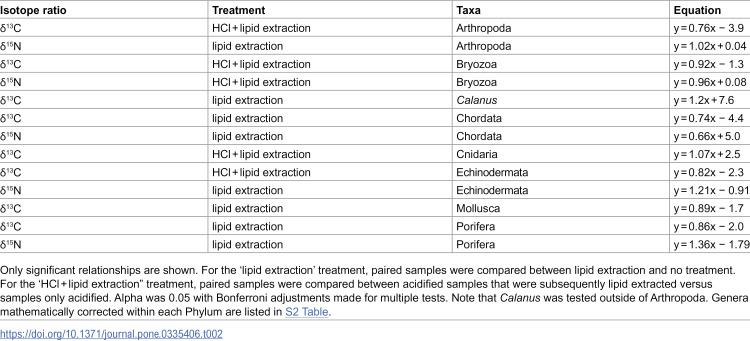 Figure 9
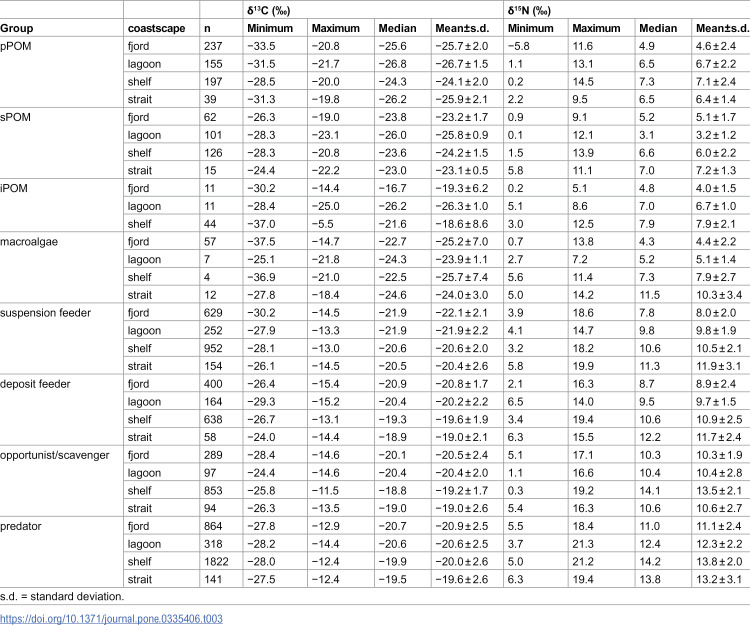 Figure 10
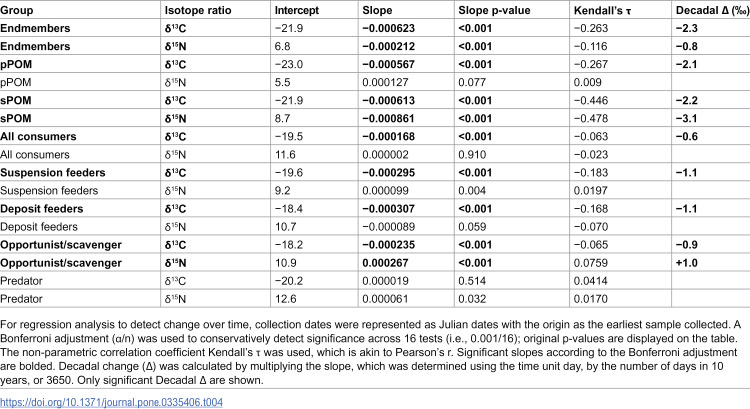 Figure 11
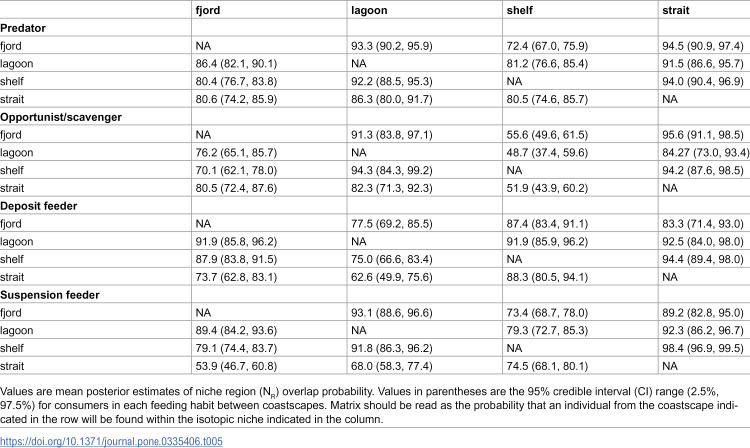 Figure 12
 Figure 13
 Figure 14
Peer Reviews
No public reviews on file for this paper yet. If you reviewed it on a platform where reviews are public (OpenReview, ICLR, NeurIPS, ICML), you can paste yours below so the community can read it here.
Videos
No videos yet. Explain this paper in a talk, walkthrough, or lecture? Add one.
Taxonomy
TopicsIsotope Analysis in Ecology · Marine and coastal ecosystems · Arctic and Antarctic ice dynamics