Delineating SARS-CoV-2 spike protein and antibodies interaction interfaces via siamese neural networks: A geometric and image-based analysis
Gemma Loreti, Paola Vottero, Elena Carlotta Olivetti, Enrico Vezzetti, Jack Tuszynski, Federica Marcolin, Maral Aminpour

TL;DR
This paper uses a deep learning model to analyze how antibodies interact with the SARS-CoV-2 spike protein, helping design better vaccines and therapies.
Contribution
A novel Siamese Neural Network integrating depth maps and geometric descriptors to predict stable antibody-antigen interactions.
Findings
The model achieved 90% accuracy in predicting stable versus unstable antibody-antigen interactions.
Combining depth maps and geometric descriptors improves the ability to detect shape complementarity in molecular interfaces.
The approach is robust and applicable to designing new antibodies and vaccines.
Abstract
The analysis of molecular interactions between antigens and antibodies is crucial for understanding the immunological mechanisms underlying the immune response and for developing effective therapies against various diseases. In this context, the ability to distinguish between protein interfaces that form stable and unstable complexes is a key step in the design of therapeutic antibodies and vaccines. In recent years, deep learning models have provided advanced tools for biomedical research. This work introduces a novel approach to analyzing antibody-antigen interactions, and in particular SARS-CoV-2 spike protein-targeting antibodies, using a Siamese Neural Network specifically designed to integrate depth maps with geometric descriptors of molecular surfaces. By combining these representations, the model captures geometrical shape complementarity to differentiate between stable and…
Genes, proteins, chemicals, diseases, species, mutations and cell lines named across the full text — each resolved to its canonical identifier and authoritative record.
Click any figure to enlarge with its caption.
 Figure 1
 Figure 2
 Figure 3
 Figure 4
 Figure 5
 Figure 6
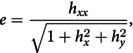 Figure 7
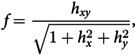 Figure 8
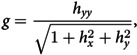 Figure 9
 Figure 10
 Figure 11
 Figure 12
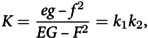 Figure 13
 Figure 14
 Figure 15
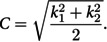 Figure 16
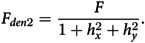 Figure 17
 Figure 18
 Figure 19
 Figure 20
 Figure 21
 Figure 22
 Figure 23
 Figure 24
 Figure 25
 Figure 26
 Figure 27
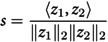 Figure 28
 Figure 29
 Figure 30
 Figure 31
 Figure 32
 Figure 33
 Figure 34
 Figure 35
 Figure 36
 Figure 37
 Figure 38
 Figure 39
 Figure 40
 Figure 41
 Figure 42
 Figure 43
 Figure 44
 Figure 45
 Figure 46
 Figure 47
 Figure 48
 Figure 49
 Figure 50
Peer Reviews
No public reviews on file for this paper yet. If you reviewed it on a platform where reviews are public (OpenReview, ICLR, NeurIPS, ICML), you can paste yours below so the community can read it here.
Videos
No videos yet. Explain this paper in a talk, walkthrough, or lecture? Add one.
Taxonomy
Topicsvaccines and immunoinformatics approaches · Computational Drug Discovery Methods · SARS-CoV-2 and COVID-19 Research